Ambien Rebound Insomnia: Why Sleep Gets Worse Before It Gets Better
Here’s the part that catches people off guard: the sleep problem after stopping Ambien can feel worse than the original problem. That’s not your old insomnia coming back. It has its own name, its own timeline, and its own explanation. Doctors call it rebound insomnia. Understanding it changes how the whole experience feels.
Rebound Insomnia Isn’t the Same as Your Old Insomnia
This distinction matters more than it might seem. Rebound insomnia is a temporary, medication-driven spike in sleep difficulty. It shows up because the brain adjusted to the drug and now has to readjust without it. It often feels more intense than the original sleep trouble. That intensity is exactly why people mistake it for proof that they need the medication permanently.
Why It Happens
Ambien works by boosting GABA activity in the brain. GABA is the chemical system that calms things down and eases the transition into sleep. With regular use, brain receptors adjust to that extra support. Remove the medication, especially abruptly, and those receptors aren’t ready for a night without it. The result is a kind of temporary overcorrection: more wakefulness, more restlessness, more trouble settling. All of it stems from the sudden absence of support the brain had gotten used to.
What Rebound Insomnia Actually Feels Like
- Trouble falling asleep that feels more intense than before starting the medication
- Frequent waking through the night
- A racing or wired feeling at bedtime, even when genuinely tired
- Sleep that feels lighter or more fragmented than usual
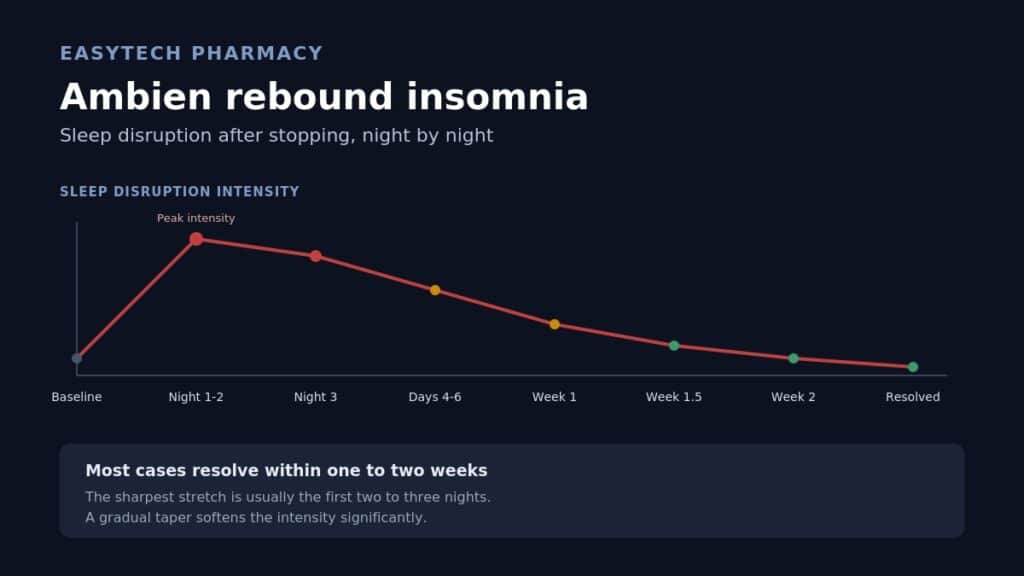
These symptoms tend to show up quickly. Most people notice them within the first one to three nights after cutting or stopping a dose.
How Long It Typically Lasts
Most cases resolve within a few days to about two weeks. The roughest stretch usually lands in the first two to three nights. Some people notice milder disruption lingering longer in the background, but the sharpest phase is usually short-lived. Knowing this timeline ahead of time makes the experience easier to sit with. It’s easy to read a bad night three or four days in as proof that nothing is improving. In reality, that night is often just part of a predictable curve.
Why Tapering Changes Everything
One factor matters more than any other: whether you stop the medication abruptly or reduce it gradually. Cutting the dose slowly gives the brain’s receptors time to recalibrate in smaller steps. That meaningfully softens the rebound effect. Think of it as the difference between one steep drop and a series of small, manageable ones.
Our guide on the zolpidem withdrawal timeline covers the fuller stage-by-stage picture of what happens after stopping. Rebound insomnia is really the opening chapter of that larger process, the sharpest and most immediate piece of it.
What Actually Helps During This Stretch
- Stick to a consistent sleep and wake time, even on rough nights. This helps anchor the body’s rhythm while the brain recalibrates.
- Skip the extra dose. Taking more to push through a bad night tends to restart the same cycle instead of resolving it.
- Cut caffeine and alcohol during this window. Both interfere with an already unsettled nervous system.
- Lean on non-drug wind-down strategies. Dim lighting, a consistent pre-bed routine, and fewer screens give the body extra sleep cues while it adjusts.
- Remember the timeline. The worst of it typically passes within a week or two. That knowledge makes it easier to ride out instead of panic through.
When It’s More Than Rebound Insomnia
Sleep trouble that stays intense well past the two-week mark points to something beyond a typical rebound pattern. The same goes for significant anxiety or tremor alongside it. Bring these to a pharmacist or prescriber directly. Our guide on Ambien Tolerance covers broader patterns worth watching for if sleep struggles tie into a longer history of use.
The Bottom Line
Rebound insomnia is real, well-documented, and temporary. It doesn’t mean natural sleep is out of reach. It tends to peak within the first few nights and typically resolves within one to two weeks. A gradual taper makes it faster and more comfortable than an abrupt stop. Knowing what to expect, and having a plan for the roughest nights, makes this stretch far more manageable.
The National Library of Medicine’s overview of sedative-hypnotic withdrawal covers the underlying receptor changes in more clinical depth.
Frequently asked questions
How long does Ambien rebound insomnia last?
Most cases resolve within a few days to about two weeks. The most intense stretch typically hits in the first two to three nights after stopping or reducing the dose.
Is rebound insomnia the same as my original sleep problem coming back?
No. Rebound insomnia is a temporary, medication-driven reaction. It’s often more intense than the original insomnia because the brain is readjusting to the drug’s absence.
Does tapering really make a difference?
Yes. Gradually reducing the dose gives the brain’s receptors time to adjust in smaller steps. That meaningfully reduces how intense rebound insomnia feels.
Should I take an extra dose if rebound insomnia hits hard?
No. Extra medication to push through a rough night tends to restart the same cycle. Non-drug strategies and sticking to the taper plan work better.
For local pharmacy access, our Ambien near me guide covers options across the world.
👉 Visit EasyTech Pharmacy — find the right sleep medication for your situation today.