The Best Ambien Alternative for Seniors
Age changes how the body handles almost every medication, and sleep drugs are no exception. What works reasonably well for a 40-year-old can carry meaningfully more risk for someone 20 or 30 years older, not because the drug changed, but because the body processing it did. Here’s what actually qualifies as a safer path forward for seniors dealing with insomnia.
Why This Isn’t Just “Same Options, Lower Dose”
The American Geriatrics Society’s Beers Criteria, a widely used, evidence-based list of medications considered potentially inappropriate for older adults, specifically flags both Z-drugs like Ambien and benzodiazepines for use in this population. This isn’t a minor caution. The 2023 update recommends avoiding these medications in older adults due to documented risk of falls, fractures, cognitive impairment, and motor vehicle crashes, a concern we’ve covered in more depth in our guide on Ambien and fall risk in elderly patients. This changes the alternatives conversation meaningfully: the goal isn’t finding a slightly gentler version of the same drug, it’s finding options built around a genuinely different risk profile.
The Two Medications That Actually Made the Beers-Compliant List
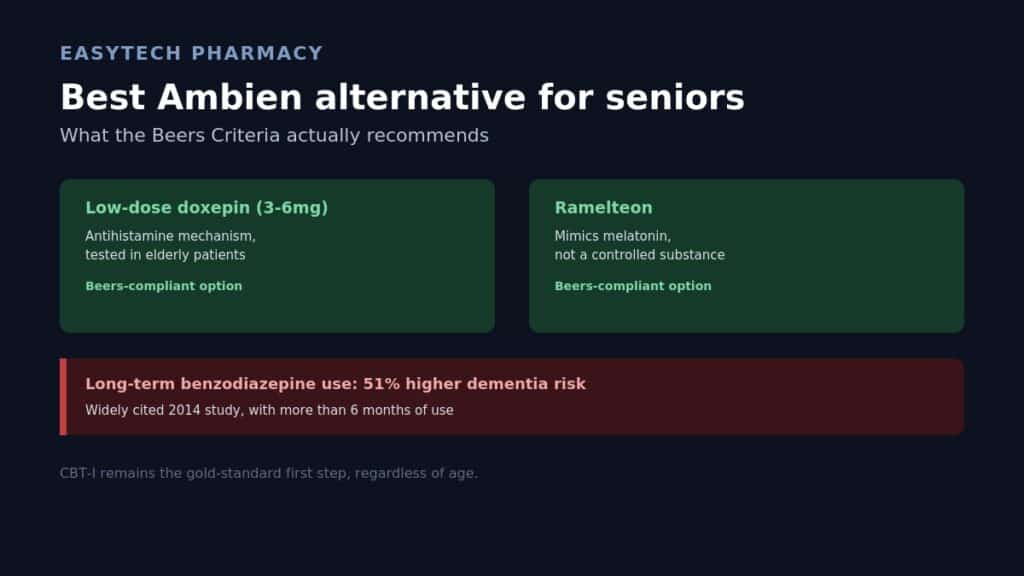
Low-Dose Doxepin (3-6 mg)
This is one of the few pharmacological options that carries real supporting research specifically for older adults. A 12-week sleep laboratory and outpatient trial in elderly subjects with chronic primary insomnia found low-dose doxepin, at just 1 mg and 3 mg, both effective and well tolerated. At these low doses, doxepin works through antihistamine activity rather than the direct GABA mechanism Ambien uses, offering a structurally different, lower-risk path for sleep maintenance specifically.
Ramelteon
Ramelteon works by mimicking melatonin’s action on sleep-wake regulation, rather than sedating the brain directly. It carries lower fall risk than Z-drugs and benzodiazepines and isn’t a controlled substance at all, a genuinely different risk category from Ambien covered in more depth in our guide on Ambien alternatives. It tends to suit sleep-onset difficulty specifically rather than frequent nighttime waking.
Melatonin: Genuinely Useful, With a Real Dosing Nuance
Melatonin production naturally declines with age, which may explain part of why sleep-onset trouble becomes more common later in life. Research on low-dose melatonin, generally in the 0.5 to 1 mg range, sometimes up to 3 mg, has shown real benefit for seniors specifically, with low grogginess risk at proper doses. This mirrors a broader pattern covered in our guide on Ambien vs. melatonin: more isn’t automatically better, and starting low genuinely matters more in this population.
Orexin Receptor Antagonists: A Promising Newer Category
This newer drug class, including suvorexant and similar medications, works by blocking orexin, a wakefulness-promoting brain chemical, rather than sedating the brain broadly. Clinical research suggests these may offer a safer and more effective long-term option than older pharmacologic products for some seniors, though as newer, still-patented medications, cost and insurance coverage remain real practical considerations worth checking directly.
CBT-I: Still the Gold Standard, Even Here
Cognitive behavioral therapy for insomnia is considered the safest and most effective first-line treatment overall for older adults, and it carries genuinely zero medication-related side effect risk. Research on CBT-I implementation in geriatric primary care has found it effective in this population specifically, not just as a general recommendation borrowed from younger patients. For seniors especially, where medication risk runs higher across the board, this makes CBT-I worth prioritizing before, or alongside, any pharmacological option.
A Sobering Data Point Worth Knowing
Research has found an association between long-term benzodiazepine use and increased dementia risk, with one widely cited 2014 study finding a 51% increased risk, particularly with long-acting benzodiazepines used for more than six months. Correlation isn’t the same as proven causation, but the potential risk is significant enough that experts specifically advise avoiding these medications for chronic insomnia in seniors, a caution worth weighing alongside anything we’ve covered in our comparisons of Ambien vs. Xanax and Ambien vs. Klonopin.
If a Senior Is Already on Ambien: The Deprescribing Conversation
For anyone already taking Ambien or a similar medication long-term, stopping abruptly isn’t the right approach. Withdrawal can trigger severe rebound insomnia and other symptoms, a process covered in our guide on the zolpidem withdrawal timeline. Tapering guidelines generally recommend a gradual reduction over four to eight weeks rather than an abrupt stop, planned directly with a pharmacist or prescriber rather than attempted independently.
How to Actually Approach This
- Bring a full medication list to any conversation about sleep options, including OTC products and supplements, since interactions become more consequential with age
- Ask specifically about the Beers Criteria when discussing any sleep medication
- Start with CBT-I or sleep hygiene changes before medication, given how strongly these are recommended as first-line for this population
- If medication is needed, ask about low-dose doxepin, ramelteon, or an orexin antagonist specifically, rather than defaulting to a Z-drug or benzodiazepine
- Never stop a long-term sleep medication abruptly, given the documented rebound and withdrawal risks
The Bottom Line
For seniors, the calculation around Ambien and similar medications genuinely shifts, not because the drugs themselves changed, but because age changes how the body processes and tolerates them. Low-dose doxepin and ramelteon stand out as the pharmacological options most consistent with current geriatric safety guidelines, melatonin offers real benefit at low, carefully chosen doses, and CBT-I remains the gold-standard starting point regardless of age. None of this makes Ambien automatically off-limits, but it does mean the alternatives deserve serious consideration before it, not after.
For a full clinical review of insomnia treatment in older adults, see the Cleveland Clinic Journal of Medicine’s review of treatment options.
Frequently asked questions
Why is Ambien riskier for seniors specifically?
Aging changes how the body clears medications, and Ambien is specifically flagged on the Beers Criteria due to documented risk of falls, fractures, and cognitive impairment in older adults.
What’s the safest sleep medication for seniors, according to current guidelines?
Low-dose doxepin and ramelteon are the two pharmacological options most consistent with current Beers Criteria guidance, both carrying lower fall and cognitive risk than Z-drugs or benzodiazepines.
Is melatonin safe for elderly people to use regularly?
Research supports low-dose melatonin, generally 0.5 to 1 mg, for seniors specifically, with low grogginess risk at appropriate doses. Higher doses don’t reliably improve results.
Should a senior stop taking Ambien suddenly if it’s on the Beers Criteria list?
No. Abrupt discontinuation can trigger severe rebound insomnia and withdrawal symptoms. A gradual taper over four to eight weeks, planned with guidance, is the safer approach.
Related reading
- Ambien and fall risk in elderly patients: what the data shows
- Zolpidem withdrawal timeline: what each stage feels like
- Ambien alternatives: a full overview of your options
- Best Ambien Alternative for Anxiety-Related Insomnia
Caring for or managing sleep concerns for an older adult? Talk to your pharmacist about safer options. EasyTech Pharmacy can help you think it through.
For local pharmacy access near you, our Ambien near me guide covers pharmacies across the world.
Visit EasyTech Pharmacy — sleep medication with real pharmacist guidance.