CBT-I vs. Ambien: Which Actually Works Better?
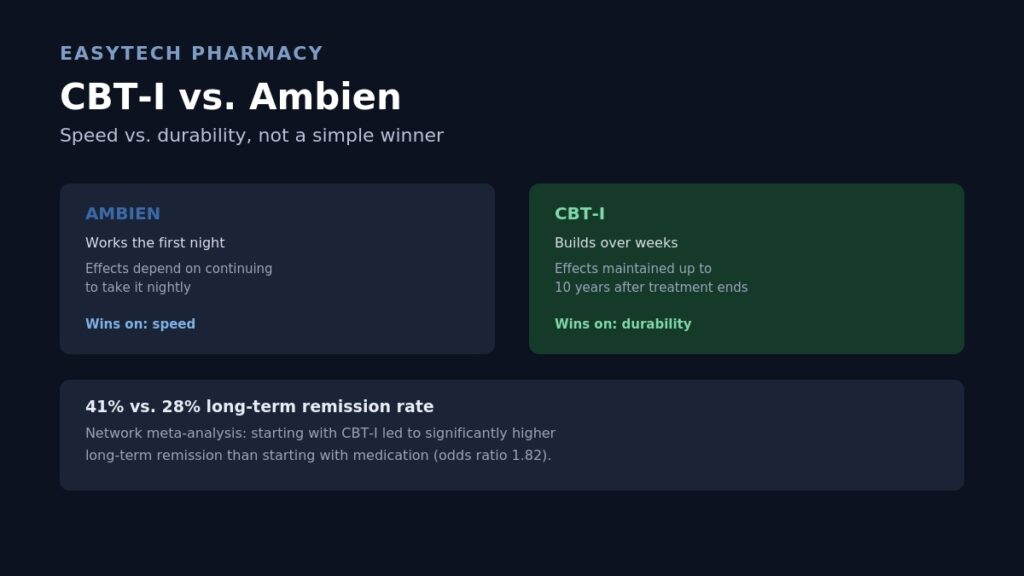
This comparison shows up constantly in sleep medicine research, and the answer isn’t as simple as picking a winner. CBT-I and Ambien aren’t really competing on the same timeline. One is built for speed. The other is built to last. Here’s what the actual trial data says about each.
What CBT-I Actually Is
Cognitive behavioral therapy for insomnia is a structured, multi-component approach that addresses both the thoughts and the behaviors that perpetuate poor sleep. It typically includes stimulus control, sleep restriction, and cognitive techniques aimed at breaking the cycle of anxious anticipation around bedtime. It’s not a supplement or a lifestyle tip. It’s a real, evidence-based clinical intervention, delivered in person, through telehealth, or increasingly through structured digital programs.
Short-Term: Ambien Often Wins on Speed
For the first few nights, medication tends to work faster. Ambien chemically induces sedation immediately, while CBT-I requires learning and applying new habits before results build. A network meta-analysis comparing initial treatment choices for chronic insomnia found that short-term outcomes generally favored CBT-I over pharmacotherapy, with one notable exception: total sleep time, where medication can produce a faster initial bump. For someone who needs relief tonight, this timeline difference is real and worth acknowledging honestly.
Long-Term: The Data Shifts Substantially Toward CBT-I
This is where the comparison changes shape. The same network meta-analysis found CBT-I more beneficial than pharmacotherapy in the long term, with a remission odds ratio of 1.82, meaning people starting with CBT-I were significantly more likely to reach lasting remission than those starting with medication. Given an average long-term remission rate of 28% in medication-first groups, CBT-I produced a remission rate of 41%. CBT-I also showed fewer treatment dropouts than medication in this analysis.
The Ten-Year Data Point Worth Knowing
One of the more striking findings in this entire field comes from a long-term follow-up study: participants who completed CBT-I maintained significant improvement at both one-year and ten-year follow-ups, with 64% and 66% of participants respectively no longer meeting criteria for an insomnia diagnosis at those points. A separate case series found CBT-I’s effect maintained up to 10 years after treatment ended, with the added finding that patients who relied on CBT-I techniques alone to manage relapses did better than those who returned to medication.
Why the Durability Gap Exists
The mechanism explains the outcome difference clearly. Medication manages the symptom while it’s present in the body. Once it’s stopped, the underlying pattern that caused the insomnia is often still there, which is part of why rebound insomnia is such a common experience after discontinuing a sleep medication, a pattern covered in our guide on Ambien rebound insomnia. CBT-I works differently: it changes the actual thoughts and behaviors driving the sleep problem, so the improvement doesn’t depend on continuing to take something nightly.
Real-World Comparison Data: The COZI Study
A recent multi-center randomized trial, known as the COZI study, directly compared digital CBT-I, medication (patient and provider choice of zolpidem or trazodone), and the combination of both in rural adults with chronic insomnia. This kind of head-to-head, real-world comparison is exactly what’s been missing from a lot of earlier research, and it reflects growing interest in answering this question with data rather than assumption, particularly for populations where access to in-person therapy has historically been limited.
Side Effects: A Real Point of Separation
Ambien carries documented risks including next-day drowsiness, memory issues, and, less commonly, complex sleep behaviors covered in our guide on Ambien’s black box warning. CBT-I carries essentially none of these, since it’s a behavioral intervention rather than a substance. This isn’t a minor detail. It’s part of why professional guidelines consistently recommend CBT-I as the first-line approach.
Combining Both: Often the Most Practical Path
These two don’t have to be an either-or choice. Starting CBT-I while still using medication allows the behavioral and cognitive changes to build while sleep continuity is maintained in the meantime. Once CBT-I has established real improvement, tapering off the medication tends to go more smoothly with that foundation already in place, an approach that connects to the tapering principles covered in our guide on the zolpidem withdrawal timeline.
How to Actually Decide
- Need relief tonight, situational or short-term insomnia? Medication’s faster onset genuinely matters here.
- Dealing with chronic, persistent insomnia? The long-term data favors starting with CBT-I, or combining both from the start.
- Worried about what happens after stopping medication? This is exactly the gap CBT-I is built to close.
- Limited access to in-person therapy? Digital CBT-I programs, studied directly in trials like COZI, offer a real, researched alternative to in-person-only delivery.
The Bottom Line
CBT-I and Ambien aren’t really rivals on the same axis. Ambien wins on speed, delivering relief within the first night. CBT-I wins on durability, with real data showing benefit maintained a full decade after treatment ends, something no medication trial has demonstrated. For genuine chronic insomnia, the long-term evidence increasingly points toward starting with CBT-I, alone or alongside medication, rather than medication alone.
For the full network meta-analysis on this comparison, see “Initial Treatment Choices for Long-Term Remission of Chronic Insomnia Disorder in Adults”.
Frequently asked questions
Does Ambien work faster than CBT-I?
Yes, generally. Ambien produces immediate sedation, while CBT-I requires building new habits and thought patterns before results fully take hold.
Does CBT-I really work better than Ambien long-term?
Research supports this. A network meta-analysis found CBT-I associated with significantly higher long-term remission rates than medication, and separate studies have found its benefits maintained up to ten years after treatment.
Can I do CBT-I while still taking Ambien?
Yes, and this is often a practical approach. Starting CBT-I alongside medication lets behavioral changes take hold while sleep continuity is maintained, often making a later medication taper easier.
Is digital CBT-I as effective as in-person therapy?
Research, including the COZI study, has directly studied digital CBT-I delivery, reflecting growing evidence that it’s a legitimate, accessible option, particularly where in-person therapy access is limited.
Related reading
- OTC Sleep Aids vs. Prescription Sleep Aids: How to Actually Decide
- Herbal Sleep Aids vs. Ambien: Which Plants Actually Have Evidence
- Ambien alternatives: a full overview of your options
- Best non-habit-forming sleep aids: ranked and compared
Curious whether CBT-I might fit alongside or instead of your current sleep routine? Talk to your pharmacist. EasyTech Pharmacy can help you think it through.
For local pharmacy access near you, our Ambien near me guide covers pharmacies across the world.
Visit EasyTech Pharmacy — sleep medication with real pharmacist guidance.