How to Help Insomnia Naturally: Proven Ways to Sleep Better
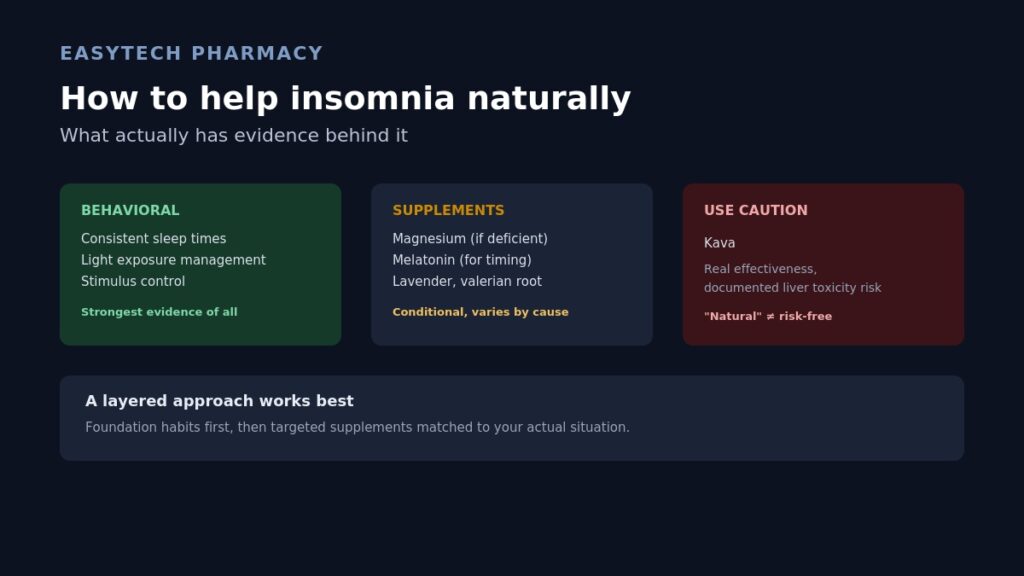
“Naturally” gets used loosely in sleep advice, sometimes meaning genuinely evidence-backed behavioral techniques, sometimes meaning a supplement with thin research behind it. This guide separates the two, organized by what the actual evidence supports, not by what sounds gentle.
The Behavioral Foundation: Stronger Evidence Than Most Supplements Combined
Before any specific technique, it’s worth knowing this plainly: cognitive behavioral therapy for insomnia, CBT-I, has stronger long-term evidence than every supplement covered in this guide combined, with real data showing benefit maintained up to ten years after treatment, covered in full in our guide on is there’s a cure for insomnia. The techniques below overlap heavily with CBT-I’s core components and can be started independently.
Sleep Hygiene Fundamentals Worth Taking Seriously
- Consistent sleep and wake times, even on weekends, anchors your circadian rhythm more effectively than almost any single supplement
- Light exposure management, bright light in the morning, dim light in the evening, directly supports the natural melatonin signaling covered in our guide on Ambien vs. melatonin
- Reducing screens before bed, since blue light specifically interferes with the evening melatonin rise that helps initiate sleep
- Keeping the bedroom cool, dark, and used only for sleep, reinforcing the mental association between the space and rest rather than wakeful activity
Stimulus Control: A Specific, Research-Backed Technique
This is a core CBT-I component you can apply on your own: if you’re not asleep within roughly 20 minutes, get out of bed and do something calm in dim light until you feel genuinely sleepy, then return. This breaks the mental link between bed and frustrated wakefulness, a pattern that otherwise reinforces itself night after night.
Addressing Racing Thoughts Directly
For sleep-onset difficulty specifically tied to a mind that won’t quiet down, a pattern rooted in nervous system hyperarousal covered in our guide on the best sleep aid for trouble falling asleep, a simple written brain dump before bed, jotting down tomorrow’s worries and to-dos, can measurably reduce the mental loop that keeps sleep at bay. This isn’t a supplement or a mechanism in the pharmacological sense, but it directly targets the same hyperarousal pattern medication works around chemically.
Where Natural Supplements Genuinely Fit
A few supplements covered in depth elsewhere on this site carry real, if conditional, evidence:
- Magnesium, genuinely helpful specifically for people who are actually deficient, with real trial data in older adults, covered in our guide on Ambien vs. magnesium for sleep
- Melatonin, better suited to circadian timing issues than general insomnia, and most commercial doses run far higher than what research actually supports
- Lavender, with some research suggesting effectiveness comparable to a prescription benzodiazepine in specific studies, covered in our guide on herbal sleep aids vs. Ambien
- Valerian root, the most studied herbal option, though with genuinely inconsistent results across individual trials, covered in our guide on Ambien vs. valerian root
One supplement worth avoiding despite real effectiveness data: kava carries documented liver toxicity risk serious enough to warrant bans or restrictions in multiple countries, a genuine exception to “natural equals safe” covered in our herbal sleep aids guide.
Movement and Timing
Regular physical activity supports deeper, more consolidated sleep, though timing matters. Exercising too close to bedtime can be activating rather than calming for some people, so earlier in the day tends to work better for sleep specifically, even though any regular movement beats none.
What “Natural” Doesn’t Mean
It’s worth being direct about this: natural doesn’t mean risk-free, and it doesn’t mean equally effective to medication for every situation. For genuine, persistent insomnia unrelated to an underlying cause, natural approaches work best as a first step or as a complement to other treatment, not necessarily a complete substitute, especially if symptoms have persisted for months despite consistent effort.
When Natural Approaches Aren’t Enough on Their Own
If sleep hygiene, stimulus control, and supplement options haven’t meaningfully helped after a genuine trial period, that’s a reasonable point to look at the fuller landscape covered in our website also which maps out behavioral therapy, OTC options, and prescription treatments by pattern and situation.
A Practical Starting Sequence
- Week one: Fix sleep and wake times, reduce evening light and screens, try a pre-bed brain dump
- Week two: Add stimulus control if sleep onset remains difficult
- Week three: Consider a targeted supplement, magnesium if deficiency is plausible, melatonin if timing seems off, lavender if anxiety is part of the picture
- Beyond that: If improvement remains limited, a structured CBT-I program or a conversation about other options becomes the reasonable next step
The Bottom Line
Helping insomnia naturally works best as a layered approach: consistent sleep timing and light exposure as the foundation, stimulus control and a pre-bed brain dump for racing thoughts specifically, and targeted supplements, matched to your actual situation rather than chosen by marketing, as an additional layer. None of this replaces professional-grade behavioral therapy if symptoms persist, but it’s a genuinely evidence-backed starting point, not just a gentler-sounding placeholder before “real” treatment.
For more on the clinical evidence behind behavioral sleep techniques, see the Sleep Foundation’s overview of insomnia treatment approaches.
Frequently asked questions
What’s the most effective natural way to help insomnia?
Behavioral techniques like consistent sleep timing and stimulus control have stronger, more durable evidence than most supplements, since they address the underlying pattern rather than just managing a symptom.
Is melatonin the best natural supplement for sleep?
It depends on the problem. Melatonin fits circadian timing issues well, but most commercial doses run far higher than what research actually supports, and it isn’t built to address general sleep-onset or maintenance difficulty.
Are all natural sleep aids safe?
No. Kava, despite real effectiveness data, carries documented liver toxicity risk serious enough to warrant bans or restrictions in several countries, a clear exception to assuming natural options are automatically safe.
How long should I try natural approaches before considering medication?
A few weeks of consistent effort with behavioral techniques and targeted supplements is a reasonable trial period before exploring other options if symptoms persist.
Trying natural approaches and want a second opinion on what might help? Talk to your pharmacist. EasyTech Pharmacy can help you think it through.
For local pharmacy access near you, our Ambien near me guide covers pharmacies across the world.
Visit EasyTech Pharmacy — sleep medication with real pharmacist guidance.