How to Stop Ambien Safely: A Practical Step-by-Step Plan
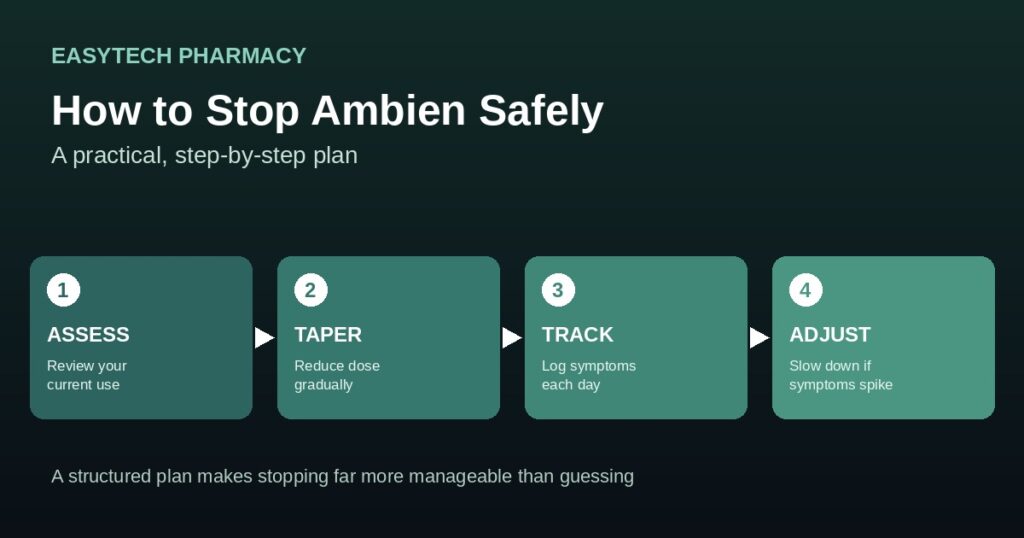
Deciding to stop Ambien is one thing. Actually doing it safely is another. Most people who struggle with this step aren’t struggling because it’s medically complicated. They’re struggling because they never had a clear plan, and they end up guessing their way through it.
This guide gives you that plan. It walks through the actual steps, in order, from assessing where you stand right now to knowing what success looks like on the other side.
Why a Plan Matters More Than Willpower
Stopping zolpidem cold, especially after regular use, can trigger rebound insomnia and withdrawal symptoms. Our guide on zolpidem withdrawal symptoms covers that timeline in detail. A plan doesn’t eliminate every rough night. But it turns an unpredictable process into a manageable one, with clear steps and a way to track progress.
Step 1: Assess Where You Actually Stand
Before you touch your dose, get honest about your current pattern. Write down three things: how long you’ve used Ambien, what dose you take, and how often you take it. This single step shapes everything that follows.
Someone using 5mg a few nights a week for three weeks faces a very different process than someone using 10mg nightly for a year. Longer duration and higher doses call for a slower, more careful taper. Our guide on can you take Ambien long term covers how extended use changes this picture.
Step 2: Build a Realistic Taper Schedule
Tapering means reducing your dose gradually, instead of stopping all at once. This gives your brain’s GABA system time to recalibrate in small steps, which softens withdrawal symptoms significantly.
There’s no single schedule that fits everyone. Someone on a low dose for a short time might taper over one to two weeks. Someone on a higher dose for months may need four to six weeks, or longer. Our guide on Ambien dosage covers the ranges involved, which helps you understand what a reasonable step-down actually looks like.
Work this schedule out with a pharmacist or prescriber before you start. They can tailor the pace to your specific situation, and adjust it if things move faster or slower than expected.
Step 3: Set a Target Timeline, Not Just a Target Dose
It helps to think in weeks, not just doses. Mark a calendar with your planned reduction points. Having a visual timeline makes the process feel finite. It’s no longer an open-ended struggle. It’s a defined project with an end date.
Build in flexibility from the start. Life happens. A stressful week might call for holding at the current dose an extra few days before stepping down again. That’s normal, not failure.
Step 4: Prepare Your Sleep Environment Before You Start
Don’t wait until you’ve stopped to start working on sleep habits. Build them in advance, while you still have the medication as a backup. This gives your body a head start once the taper gets harder.
- Lock in a consistent wake time — even on weekends, even after a rough night
- Cut caffeine after early afternoon — withdrawal already raises restlessness; caffeine adds to it
- Keep the bedroom cool and dark — small environmental factors matter more during this transition
- Practice a wind-down routine now — so it’s already a habit once the medication is no longer doing the work
Our guide on how can I sleep quickly covers these habits in more depth, and they’re worth establishing well before your final dose.
Step 5: Track Your Progress Every Day
Keep a simple daily log. Note your dose, how long it took to fall asleep, how many times you woke up, and your mood the next day. This doesn’t need to be elaborate. A few lines each morning is enough.
This log does two things. It shows you the overall trend, which is genuinely reassuring on hard nights. And it gives your pharmacist or prescriber real information if the pace needs adjusting.
Step 6: Get Through the Hard Nights Without Panicking
Some nights during a taper will be rough. That’s expected, not a sign something’s wrong. A few practical tools help:
- Slow breathing — a simple, extended exhale pattern can calm the nervous system when anxiety spikes
- Get up if you can’t settle — lying awake, frustrated, tends to make things worse. A short break in another room, then trying again, often helps more
- Avoid checking the clock repeatedly — this reliably increases sleep-related anxiety
- Remind yourself it’s temporary — rebound insomnia during a taper resolves. It’s not a permanent state
Step 7: Know When to Slow Down or Speed Up
A good taper schedule isn’t rigid. If symptoms feel manageable and sleep is holding steady, you may be able to step down a little faster than planned. If withdrawal symptoms feel intense, or rebound insomnia is severe, slow down and hold your current dose a bit longer before the next reduction.
This is exactly where checking in with a pharmacist matters most. They can help you read your own symptoms accurately, rather than guessing whether what you’re feeling is normal or worth addressing differently.
Red Flags That Need Prompt Attention
Most tapers go smoothly with a reasonable plan. But a few signs call for prompt medical attention rather than waiting it out:
- A seizure of any kind
- Severe confusion or disorientation
- Hallucinations that feel distressing or frightening
- Symptoms that feel medically alarming, not just uncomfortable
If any of these happen, seek emergency care immediately. This isn’t something to manage alone at home.
Step 8: Line Up Support for After You Stop
Stopping Ambien doesn’t mean abandoning support for sleep entirely. Line up your next steps before you finish the taper, not after.
If the underlying insomnia is still an issue, non-habit-forming options are worth discussing. Our guide on sleeping pills not habit forming and our comparison of trazodone vs Ambien both cover alternatives with a different risk profile. Our overview of Ambien Abuse and our guide on vitamins for sleeplessness cover non-pharmaceutical support worth building into your routine.
If you’re also managing another condition alongside stopping Ambien, like blood pressure, review your full medication list with your pharmacist during this transition. Our guide on does Ambien lower blood pressure covers one relevant interaction worth knowing about.
If sleep trouble persists well after the taper ends, that’s worth a proper evaluation rather than restarting Ambien by default. Our guide on when sleeplessness needs a doctor covers the signs that mean it’s time for that conversation.
According to MedlinePlus, doctors recommend gradually reducing the dose of zolpidem rather than stopping suddenly, particularly after regular use, to minimize withdrawal effects.
Frequently Asked Questions
What’s the safest way to stop taking Ambien?
A gradual, planned taper is the safest approach for anyone who’s used it regularly. This means reducing the dose in small steps over one to several weeks, guided by a pharmacist or prescriber, rather than stopping all at once.
How long does it take to safely stop Ambien?
It depends on your dose and how long you’ve used it. Short-term, lower-dose use might taper over one to two weeks. Longer-term, higher-dose use often needs four to six weeks or more.
Can I stop Ambien on my own without help?
For short-term, low-dose use, some people manage without significant issues. For anyone using it regularly over an extended period, working with a pharmacist or prescriber on the taper schedule makes the process meaningfully safer.
What should I do if withdrawal symptoms feel too intense?
Slow the taper down and hold your current dose a bit longer before the next reduction. Check in with your pharmacist or prescriber, since they can help adjust the pace based on what you’re actually experiencing.
Will my sleep go back to normal after I stop?
For most people, yes, though it can take a few weeks for sleep to fully stabilize. If insomnia persists well beyond that window, it’s worth a proper evaluation to identify what’s actually driving it.
Bottom Line — A Plan Beats Guesswork Every Time
Stopping Ambien safely isn’t about toughing it out. It’s about following a clear plan: assess your pattern, build a realistic taper, track your progress, and adjust the pace as you go. That structure turns an intimidating process into a series of manageable steps.
If you’re ready to start, the first move is a conversation with a pharmacist or your prescriber to map out the schedule that fits your specific situation. From there, it’s a matter of following the plan, one step at a time.
For local pharmacy access, our Ambien near me guide covers options across the world.
👉 Visit EasyTech Pharmacy — find the right sleep medication for your situation today.