Does Ambien Lower Blood Pressure? The Real Answer for People Managing Both
It is a reasonable question that does not get a clear answer in most places. People managing hypertension — or taking blood pressure medications — want to know what happens when they add Ambien to the picture. Does it lower pressure further? Interact with their existing medications? Create risks they need to plan around?
The answer involves some genuine nuance. Ambien does affect blood pressure — but not in the way most people think, and not in a way that makes it a treatment for hypertension. Understanding exactly what happens, and what it means practically, is more useful than a simple yes or no.
This guide covers does Ambien lower blood pressure completely — the actual mechanisms, the relationship between sleep and blood pressure over the long term, who needs to be most careful, and how to manage sleep medication safely when you are already managing BP.
The Short Answer — Slightly, Indirectly, and Temporarily
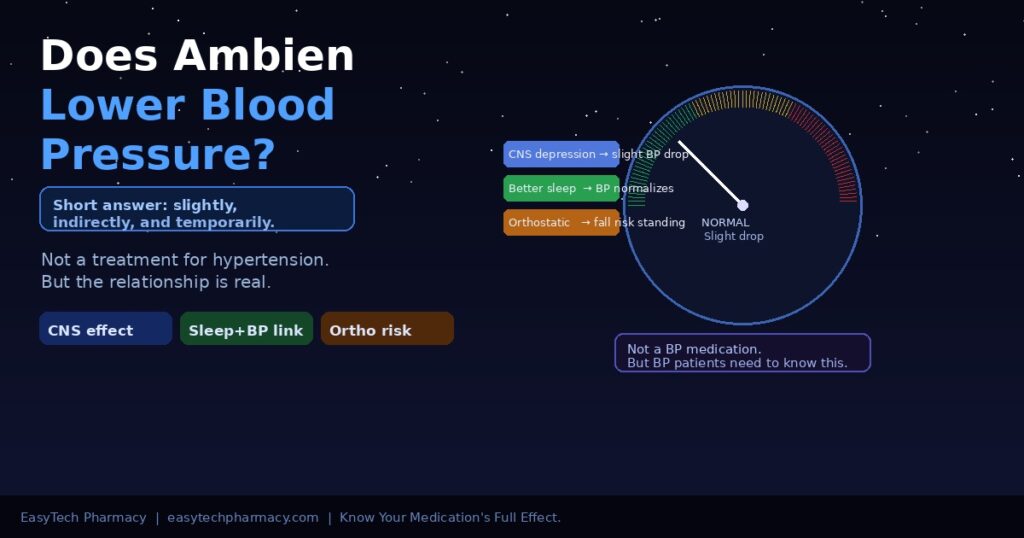
Ambien (zolpidem) does not directly lower blood pressure through any cardiovascular mechanism it is not a vasodilator it does not block calcium channels it does not inhibit ACE enzymes. None of the mechanisms that blood pressure medications use to lower BP are part of how zolpidem works.
However, Ambien does produce a mild, temporary, indirect blood pressure effect through two pathways worth understanding.
CNS depression and vasodilation: Zolpidem’s broad central nervous system depression produces mild relaxation of the autonomic nervous system’s sympathetic tone — the “active alert” state that keeps blood pressure elevated during waking hours. As sedation deepens, heart rate slows modestly and blood pressure typically drops slightly from pre-sleep levels. This is not unique to Ambien — all sedatives produce some version of this effect as part of general CNS depression.
Sleep itself and blood pressure: Normal, healthy sleep is associated with a natural “nocturnal dip” — blood pressure typically falls 10% to 20% during sleep compared to waking levels. This dip is physiologically important — it is when the cardiovascular system recovers from the sustained pressure of waking activity. People who do not experience this nocturnal dip (called “non-dippers” in cardiology) have measurably higher cardiovascular risk. Ambien, by facilitating sleep in people who struggle to sleep, may restore some degree of this beneficial nocturnal dip.
The Sleep-Blood Pressure Connection — Why This Matters Long Term
The relationship between sleep quality and blood pressure goes significantly deeper than what happens during the night. Poor sleep is an independent risk factor for hypertension — and the mechanism is well understood.
According to the American Heart Association, consistently sleeping fewer than 6 hours per night is associated with a significantly elevated risk of developing hypertension. The mechanism involves cortisol and sympathetic nervous system activation — the same systems that chronic stress activates — becoming persistently elevated when sleep is inadequate.
Chronically elevated cortisol keeps the sympathetic nervous system in a state of sustained arousal. This maintains blood pressure at higher levels than it would be with adequate sleep recovery. Furthermore, sleep deprivation impairs the body’s insulin sensitivity and inflammatory regulation — both of which contribute to vascular stiffness and elevated blood pressure over time.
What this means practically: for someone whose insomnia has been ongoing for months or years, treating the insomnia effectively — including with medication if necessary — can produce modest blood pressure improvements as a secondary benefit. Not through any direct drug effect on BP, but through restoring the sleep that the cardiovascular system needs to regulate pressure normally.
Orthostatic Hypotension — The Risk Worth Knowing About
This is the BP-related concern that is most practically significant for people taking Ambien — and it is a risk of pressure going too low, not staying high.
Orthostatic hypotension is a sudden drop in blood pressure when moving from lying down to standing. It causes lightheadedness, dizziness, and in some cases fainting. It is a common cause of falls — which is already a documented Ambien risk independently of any blood pressure effect.
Several factors make orthostatic hypotension more likely when taking Ambien:
- Getting up during the night while still sedated — to use the bathroom, for example
- Taking Ambien alongside blood pressure medications — particularly alpha-blockers, calcium channel blockers, and ACE inhibitors, which already lower BP independently
- Dehydration — common in older adults and those who take diuretic BP medications
- Older age — orthostatic regulation becomes less efficient with age
The practical management is straightforward. If you take Ambien and also take blood pressure medication, sit at the edge of the bed for 30 seconds before standing whenever you get up during the night. This allows time for the cardiovascular system to adjust to the positional change before full weight-bearing standing.
Ambien and Specific Blood Pressure Medications — What to Know
The interaction picture between Ambien and BP medications varies by class.
ACE Inhibitors and ARBs (Lisinopril, Losartan, etc.)
No significant pharmacokinetic interaction with zolpidem. The primary concern is the combined BP-lowering effect — both ACE inhibitors and zolpidem’s mild vasodilation can add together, increasing orthostatic hypotension risk. Not a contraindication, but worth monitoring for dizziness on standing during the first few nights of combined use.
Beta-Blockers (Metoprolol, Atenolol, etc.)
Beta-blockers themselves commonly cause insomnia and vivid dreams as side effects — one of the most commonly reported sleep-disrupting medication classes. The beta-blocker effect on melatonin suppression is well documented. For people taking beta-blockers whose insomnia is partly drug-induced, Ambien can be useful as a counterbalancing sleep support. No dangerous pharmacokinetic interaction, but the beta-blocker insomnia side effect is worth discussing with your pharmacist as it may be manageable by changing timing or formulation of the BP medication.
Calcium Channel Blockers (Amlodipine, Verapamil, etc.)
Some calcium channel blockers inhibit the CYP3A4 liver enzyme that metabolizes zolpidem. Verapamil and diltiazem in particular can slow zolpidem clearance, potentially elevating blood levels and extending the duration of Ambien’s effects. This increases both therapeutic effect and next-morning impairment risk. Starting at the lower 5mg dose of Ambien is particularly important in people taking these BP medications.
Alpha-Blockers (Doxazosin, Prazosin, etc.)
Alpha-blockers already carry significant orthostatic hypotension risk on their own — they directly relax vascular smooth muscle and can cause sudden BP drops on standing. Combining with Ambien meaningfully increases this risk. Standing slowly, adequate hydration, and being aware of this interaction are particularly important for people on both medications.
Diuretics (HCTZ, Furosemide, etc.)
No direct pharmacokinetic interaction. However, diuretics cause fluid loss and can produce mild dehydration — which compounds orthostatic hypotension risk when combined with Ambien’s CNS depression. Adequate fluid intake during the day (not in the hours before bed, which disrupts sleep) reduces this risk.
Can Poor Sleep Raise Blood Pressure — And Can Treating It Help
This question is increasingly important in cardiology and sleep medicine research. The short answer based on current evidence is yes — on both counts.
A 2021 meta-analysis in the journal Hypertension found that insomnia was associated with a 20% increased risk of hypertension compared to normal sleepers. The relationship appeared dose-dependent — worse insomnia correlated with higher hypertension risk.
Furthermore, several clinical trials have shown that treating insomnia — both with CBT-I and with sleep medication — produces modest but measurable reductions in daytime blood pressure over weeks to months. The reductions are not large enough to replace BP medication, but they are real and clinically meaningful as part of a comprehensive cardiovascular risk management approach.
The mechanisms are the same ones described above — reduced cortisol, improved sympathetic regulation, restored nocturnal dipping, and better inflammatory control from adequate sleep. For our guide on the fastest ways to improve sleep quality through behavioral approaches, see our guide on how can I sleep quickly.
Who Should Be Most Careful With Ambien and Blood Pressure
- Older adults on multiple BP medications: The combination of age-related orthostatic hypotension risk, multiple BP-lowering medications, and Ambien’s CNS depression creates the highest combined fall risk. Starting at the lowest dose (5mg) and reviewing all medications with a pharmacist before starting is particularly important.
- People on CYP3A4-inhibiting BP medications: Verapamil and diltiazem slow zolpidem clearance. Lower starting doses and awareness of extended next-morning effects are appropriate.
- People with naturally low blood pressure: Baseline low BP plus Ambien’s mild BP-lowering effect can produce more pronounced orthostatic episodes than in people with normal baseline pressure.
- People taking alpha-blockers: The combined orthostatic risk is the highest of any BP medication class combined with Ambien.
Practical Safety Steps for People Managing Both BP and Sleep
- Tell your pharmacist your complete BP medication list before starting Ambien — interaction checking for CYP3A4 inhibition and combined orthostatic effects takes two minutes and can meaningfully affect dose recommendations
- Start at 5mg regardless of what the standard starting dose might be — this is particularly important when adding to an existing BP medication regimen
- Sit for 30 seconds before standing whenever getting up during the night
- Stay hydrated during the day — particularly if taking diuretic BP medications
- Do not combine with alcohol — alcohol’s own vasodilatory effect adds to the orthostatic risk on top of everything else
- Monitor morning BP for the first two weeks after starting Ambien — note any consistent changes and discuss with your pharmacist
For the full side effect picture beyond blood pressure, our complete guide on Ambien side effects covers every documented effect from common to serious. And for dosing guidance that accounts for age and health conditions, our guide on Ambien dosage covers the FDA-recommended framework for different patient groups.
Non-Pharmaceutical Approaches First — For BP Patients Especially
For people managing blood pressure who want to improve sleep without adding another medication to their regimen, behavioral and natural approaches are worth trying first — and often produce meaningful improvement.
The behavioral approaches that most directly benefit both sleep and blood pressure simultaneously include consistent exercise (which improves both sleep quality and BP independently), fixed wake times that anchor the circadian rhythm, and cool bedroom temperatures that support both the nocturnal BP dip and faster sleep onset.
Natural supplements with relevant mechanisms include magnesium glycinate — which supports both sleep quality and vascular relaxation through its effects on calcium channel regulation — and L-theanine, which reduces cortisol and sympathetic arousal. Our guide on natural Ambien alternatives covers every option with doses and evidence levels.
Trazodone is often preferred over Ambien for people managing cardiovascular conditions because its non-controlled status, lower fall risk, and different mechanism make it more compatible with long-term BP management. Our guide on trazodone vs Ambien covers that comparison fully.
Frequently Asked Questions
Does Ambien lower blood pressure?
Slightly and indirectly. Ambien produces mild CNS depression that reduces sympathetic nervous system tone and can cause a modest temporary BP drop. It also supports the natural nocturnal dipping of BP that occurs during healthy sleep. It is not a blood pressure medication and cannot be used to treat hypertension.
Is it safe to take Ambien if I have high blood pressure?
Generally yes, with appropriate precautions. The main concerns are orthostatic hypotension (dizziness on standing, especially at night), potential interactions with certain BP medication classes (particularly calcium channel blockers and alpha-blockers), and the combined effect of multiple BP-lowering agents. A pharmacist review of your complete medication list before starting is the most important step.
Can Ambien interact with blood pressure medication?
Yes — in several specific ways depending on the medication class. Verapamil and diltiazem slow zolpidem metabolism. Alpha-blockers compound orthostatic hypotension risk. All BP medications combined with Ambien increase the importance of sitting before standing at night. Pharmacist interaction checking before combining these medications takes minutes and is always worth doing.
Can improving sleep lower blood pressure?
Yes — multiple studies support modest but real blood pressure reductions from treating insomnia effectively, through CBT-I, medication, or both. The mechanism involves restored cortisol regulation, improved sympathetic tone, and recovery of the normal nocturnal BP dip. These effects complement but do not replace BP medication for people with hypertension.
Does Ambien affect heart rate?
At therapeutic doses, Ambien produces mild heart rate slowing through its CNS depressant effect — a normal physiological accompaniment to sedation and the transition to sleep. This is typically a reduction of a few beats per minute and is not clinically significant for most patients. Significant bradycardia (dangerous heart rate slowing) is not a documented effect of zolpidem at therapeutic doses in people without underlying cardiac conditions.
Bottom Line — Ambien and Blood Pressure Can Coexist With the Right Approach
The answer to does Ambien lower blood pressure is nuanced. It produces a mild indirect BP reduction through CNS depression and by facilitating the nocturnal dipping that healthy sleep provides. It is not a blood pressure treatment. The more clinically relevant concern is not BP going too high — it is BP dropping too sharply on standing at night, which creates fall risk that requires simple but consistent management steps.
For people managing both hypertension and insomnia, a pharmacist review of the full medication picture before starting Ambien, starting at the lowest dose, and practicing standing slowly at night are the three most practically important steps. From there, treating insomnia effectively produces genuine long-term cardiovascular benefits through the sleep-BP relationship — making good sleep one of the most underappreciated components of blood pressure management.
At EasyTech Pharmacy, our pharmacist team is available to review medication combinations, check interactions, and help identify the most appropriate sleep option for your specific health situation.
For local pharmacy access, our Ambien near me guide covers options near you across the US.
Visit EasyTech Pharmacy — sleep medication with real pharmacist support behind every order.