What Medications Keep You Awake? A Morning-vs-Night Timing Guide by Condition
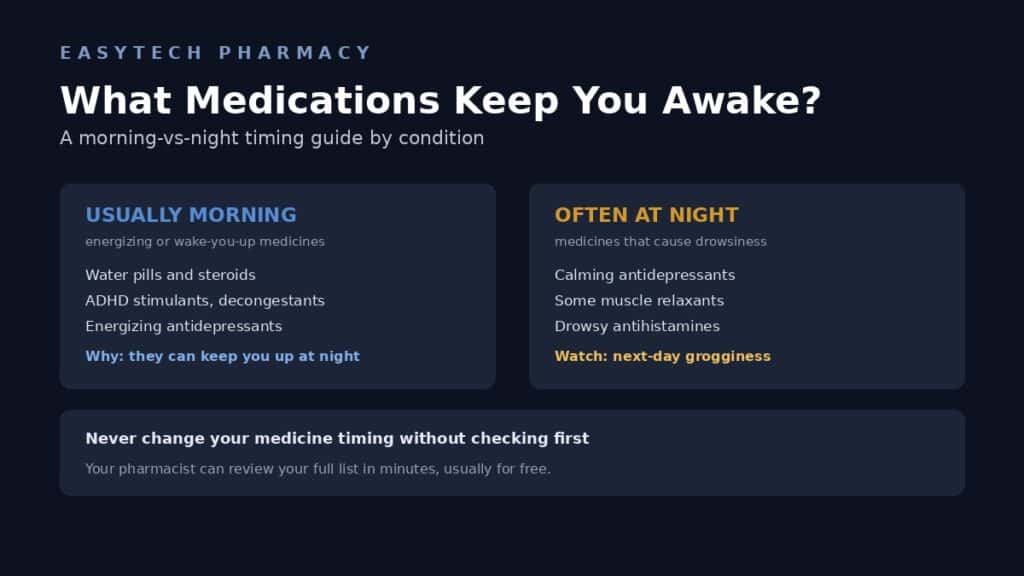
What medications keep you awake? Many people never ask, and the pharmacy counter rarely brings it up. Yet when you take a medicine can matter almost as much as what you take. A pill that keeps you up at night may cause no trouble at all with breakfast.
So which ones are the usual suspects, and when should you take them instead? This guide sorts common medicines by health condition. For each group, you’ll see which doses belong in the morning and which fit better at night.
Why Timing Matters for Medications That Keep You Awake
Some medicines rev up your brain. Others send you to the bathroom or change your blood sugar overnight. When these effects hit at bedtime, your sleep pays the price.
Moving the dose earlier often solves the problem, with no change in how well the medicine works. However, some medicines need a set time for a good reason. So always check with your pharmacist before you switch. For the full list of culprits.
Medication Timing for Sleep, by Condition
Below, you’ll find common medications that keep you awake, grouped by the health problem they treat. Use this as a starting point, not a rulebook. Your own schedule may differ for good reasons.
Blood Pressure and Heart
- Water pills (diuretics): take in the morning to avoid night-time bathroom trips
- Beta-blockers: may cause vivid dreams or lighter sleep for some people, so ask whether morning works better
- Other blood pressure medicines: some people take certain types at night, but only on their care team’s advice
Diabetes
Diabetes medicines rarely act as stimulants. Instead, the bigger risk is low blood sugar overnight. It can wake you with sweating, a racing heart, or bad dreams.
- Insulin and some pills, like glipizide: ask about night-time lows if you wake up sweaty or shaky
- Metformin: usually taken with meals to ease stomach upset
Thyroid
- Levothyroxine: most people take it in the morning on an empty stomach
- Keep it at least four hours apart from calcium and iron
- If sleep suddenly worsens, ask whether your dose needs a check
Depression and Anxiety
- Energizing types (fluoxetine, bupropion, venlafaxine): usually best in the morning
- Calming types (mirtazapine, trazodone): usually taken at night, since they cause drowsiness
Energizing antidepressants rank among the most common medicines that keep you up at night. This is especially true early on.
Allergies and Colds
- Decongestants: take the last dose by mid-afternoon
- Non-drowsy antihistamines, like loratadine: usually fine at any time
- Drowsy antihistamines, like diphenhydramine: cause sleepiness, but can leave you groggy the next day
ADHD
- Take stimulants as early in the morning as possible
- If you take a long-acting form, ask whether an earlier time would help
- Skip afternoon caffeine on top of your medicine
Asthma and Breathing
- Rescue inhalers, like albuterol: use them when you need them, even at night
- Steroid tablets: take in the morning when possible
- Night-time breathing trouble also disrupts sleep, so good daily control helps
Pain
- Avoid pain pills with caffeine in the evening
- Choose plain, caffeine-free versions at night
- Be careful mixing pain medicines with sleep aids or alcohol
Medicines That Keep You Up at Night Without Stimulating You
Not every sleep problem comes from a stimulant. Some medicines wake you for other reasons:
- Bathroom trips: water pills and some diabetes medicines
- Low blood sugar: insulin and certain diabetes pills
- Vivid dreams: beta-blockers, nicotine patches, and some quit-smoking aids
- Heartburn: some pain relievers can irritate your stomach when you lie down
- Coughing: some blood pressure medicines cause a dry cough
Best Time to Take Medications That Cause Drowsiness
On the flip side, some medicines cause drowsiness. Taking them at bedtime can turn a side effect into a benefit. Common examples include calming antidepressants, some muscle relaxants, and drowsy antihistamines.
Good medication timing for sleep works both ways. Still, be careful. Drowsy medicines can stack up and leave you foggy the next morning. Our post on next-day driving risks explains why that matters. Sleep aids also have their own timing rules.
How to Build Your Best Time to Take Medications
- Write a full list. Include supplements, vitamins, and OTC products.
- Mark each one AM or PM. Use the guide above as a starting point.
- Check it with your pharmacist. They’ll flag any medicine that needs a fixed time.
- Use a two-row pill organizer. One row for morning, one for night.
- Set phone reminders. A steady time each day helps both your medicine and your sleep.
Daytime habits matter as much as pill timing. Our guide on how to get tired enough to sleep shows how to build real sleepiness by bedtime.
Get a Free Review of Medications That Keep You Awake
Your pharmacist can review your whole list in a few minutes, usually for free. Do you have Medicare Part D and take several medicines? Your plan may also offer a free Medication Therapy Management review. Ask your plan or pharmacy about it.
The FDA’s “Use Medicines Wisely” guide also offers simple tips for keeping track of what you take.
Older Adults: Extra Care With Medication Timing for Sleep
As we age, our bodies clear medicines more slowly. As a result, effects can last longer and overlap. The National Institute on Aging offers clear advice on taking medicines safely later in life.
- Drowsy antihistamines can raise the risk of confusion and falls
- Kidney and liver changes affect how long medicines stay in your body
- A night-light helps with bathroom trips after evening medicines
FAQs: What Medications Keep You Awake?
What medications keep you awake the most?
Decongestants, steroids, ADHD stimulants, and some antidepressants top the list. Water pills can also wake you for bathroom trips.
Can I take my morning medicine at night instead?
Sometimes, but not always. Ask your pharmacist first, since some medicines need a fixed time to work well.
Why do I wake up sweaty at night on diabetes medicine?
It may signal low blood sugar overnight. Tell your care team right away, since they may need to adjust your plan.
Which blood pressure pills should I take in the morning?
Water pills usually work best in the morning. For other types, follow your care team’s advice.
Do allergy pills keep you awake?
Decongestants can. Non-drowsy antihistamines rarely do, while drowsy ones make you sleepy.
Bottom Line — Right Medicine, Right Time, Better Sleep
So, what medications keep you awake? Stimulating ones, like decongestants and steroids, plus medicines that wake you for other reasons. The fix is often simple: move energizing medicines to the morning and keep calming ones for night. Check your schedule with your pharmacist, and you may sleep better within days.
If a sleep aid becomes part of your plan, our Ambien near me guide shows how to find it at a local pharmacy and compare prices.