Ambien Abuse: How to Recognize the Pattern Before It Turns Dangerous
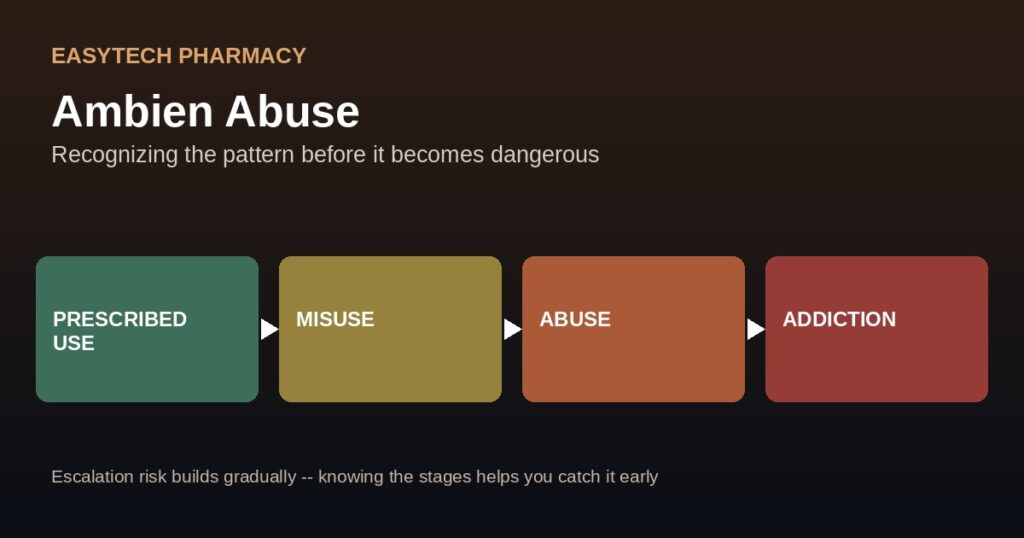
Abuse doesn’t always look dramatic. Often, it starts small. Someone takes an extra half a pill on a rough night. Then it becomes routine. Then it’s two pills, or someone else’s prescription, or a combination with alcohol that started as one bad decision and became a pattern.
This guide walks through what Ambien abuse actually looks like, how it differs from ordinary use, the real physical dangers involved, and what to do if you’re worried about yourself or someone you care about.
What Counts as Abuse, Specifically
Ambien abuse means using zolpidem in a way that goes beyond how it’s prescribed. This covers a wider range of behavior than people often assume.
- Taking more than prescribed — extra doses, or a higher amount than directed
- Using it more often than intended — nightly use when it’s meant for occasional nights, or daytime use
- Taking someone else’s prescription — a partner’s, a parent’s, a friend’s
- Combining it with alcohol or other substances — to intensify the effect
- Using it for reasons other than sleep — to relax, to cope with anxiety, or to chase its dissociative effects
- Crushing or altering it — to change how fast it acts
Any one of these crosses the line from prescribed use into abuse. It doesn’t require all of them at once.
Why Ambien Gets Abused
Zolpidem works fast. Most people feel it within 15 to 30 minutes. That speed makes it effective for insomnia. It also makes it appealing to abuse, since the effect connects closely to the act of taking it.
Some people chase its sedative effect for recreational relaxation. Others use it to blunt anxiety or stress outside of sleep. And some people specifically seek its dissociative, amnesia-like effects at higher doses. This last pattern is less common, but it’s documented and it carries real risk, since higher doses sharply increase the danger of dangerous side effects and next-day impairment.
The Physical Dangers Abuse Creates
This is where abuse becomes genuinely dangerous, not just a behavioral concern.
Overdose Risk
Taking more zolpidem than intended raises real overdose risk. Symptoms can include extreme drowsiness, slowed or difficult breathing, confusion, and loss of consciousness. This risk climbs sharply when zolpidem gets combined with alcohol, opioids, or other sedatives, since all of these depress the central nervous system together.
Dangerous Combinations
Alcohol is the most common and most dangerous combination. Even a small amount of alcohol can intensify zolpidem’s sedative effect unpredictably. Our guide on Ambien and alcohol covers exactly why this combination is so risky.
Complex Sleep Behaviors, Amplified
Even at prescribed doses, zolpidem carries a known risk of sleepwalking, sleep-driving, and sleep-eating. Abuse — especially higher doses or combination with alcohol — makes these behaviors more likely and often more severe. Someone abusing zolpidem may have no memory of dangerous actions taken while under its effect. Our guide on Ambien hallucinations covers a related perceptual risk that also increases with higher or misused doses.
Physical Health Effects Over Time
Ongoing abuse takes a toll beyond the acute risks. It can worsen memory and cognitive function, disrupt normal metabolism and appetite (our guide on does Ambien cause weight gain covers one related pathway), and increase fall risk. This last point matters especially for older adults, whose bodies process the drug differently. Our guide on Ambien side effects in elderly patients covers those age-related risks in detail.
Signs You Might Notice in a Loved One
If you’re worried about someone else, these are the practical signs worth watching for.
- Running out of a prescription earlier than expected, repeatedly
- Asking to borrow or requesting the medication from others
- Slurred speech, unusual drowsiness, or confusion during the day, not just at night
- Memory gaps around evening events, more pronounced than typical morning grogginess
- Secretive behavior around the medication, including hiding pill bottles
- Combining it with drinking, even occasionally
- Unusual sleep-related behavior reported by others — sleepwalking, unexplained messes, missing food
- Mood changes, irritability, or defensiveness when the topic comes up
Noticing one of these isn’t proof of abuse on its own. A pattern across several of them, especially combined with defensiveness or secrecy, deserves a direct, caring conversation.
How Abuse Differs From Dependence and Addiction
These terms overlap, but they aren’t identical. Dependence is a physical adaptation that can happen even with normal, prescribed use. Abuse describes the behavior itself — using the drug outside how it’s intended. Addiction describes a compulsive pattern of use despite harm, usually building on top of both dependence and repeated abuse.
Someone can abuse Ambien occasionally without being addicted. But repeated abuse is one of the clearest paths toward addiction developing. Our guide on zolpidem addiction covers that clinical distinction and what treatment looks like once addiction sets in. Our piece on Drugs That Cause Insomnia covers the dependence side specifically.
What to Do If You Recognize This in Yourself
- Be honest with your prescriber or pharmacist. This conversation is far more common than most people assume, and it’s the fastest path to real help
- Don’t stop abruptly if you’ve been using heavily. Withdrawal after heavy use can be dangerous. Our guide on zolpidem withdrawal symptoms explains why a supervised taper matters
- Remove easy access where possible. Reducing how quickly you can act on an urge creates useful friction
- Ask about non-habit-forming alternatives. Our guide on sleeping pills not habit forming covers options with a different risk profile going forward
- Get support beyond just the medication itself. If stress, anxiety, or another issue is driving the abuse pattern, that root cause needs its own attention
What to Do If You’re Worried About Someone Else
Lead with concern, not accusation. A direct but caring conversation works better than confrontation. Share specific things you’ve noticed, rather than generalizations. Offer to help them find support rather than demanding they stop on their own.
If you believe someone is in immediate danger — unresponsive, having trouble breathing, or showing signs of overdose — call hospital right away. This is not a situation to manage alone or wait out.
For general poisoning or overdose guidance, Poison Control offers free, confidential help around the clock, and can advise on next steps even in situations that don’t yet feel like a clear emergency.
Frequently Asked Questions
What is considered Ambien abuse?
Any use that goes beyond how it’s prescribed: taking more than directed, using someone else’s prescription, combining it with alcohol, using it for reasons other than sleep, or altering how it’s taken to intensify the effect.
Is Ambien abuse dangerous?
Yes. It raises real risk of overdose, especially combined with alcohol or other sedatives. It also increases the likelihood of dangerous complex sleep behaviors, like sleepwalking or sleep-driving, with no memory of the event afterward.
How is abuse different from addiction?
Abuse describes the behavior — using the drug outside its intended purpose. Addiction describes a compulsive pattern of use despite harm. Someone can abuse Ambien occasionally without meeting the criteria for addiction, though repeated abuse raises that risk substantially.
What should I do if I think a family member is abusing Ambien?
Have a direct, caring conversation and share specific things you’ve noticed. If you believe someone is in immediate danger from overdose. Otherwise, encourage them to speak honestly with a pharmacist or prescriber.
Can Ambien abuse happen even with a legitimate prescription?
Yes. Abuse describes how the medication gets used, not just whether someone has a valid prescription. Taking more than directed, or using it outside its intended purpose, counts as abuse regardless of the prescription’s legitimacy.
Bottom Line — Catch the Pattern Early
Ambien abuse rarely arrives all at once. It builds through small shifts — an extra dose here, a combination with alcohol there — until the pattern becomes the norm rather than the exception. Recognizing those shifts early, in yourself or someone you love, makes a real difference in how manageable the situation stays.
If anything in this guide sounds familiar, the most useful next step is an honest conversation with a pharmacist or prescriber. Not shame. Not silence. Just a direct conversation about what’s actually happening.
For local pharmacy access, our Ambien near me guide covers options across the world.
👉 Visit EasyTech Pharmacy — find the right sleep medication for your situation today.