Ambien Addiction Treatment Options: What’s Actually Available
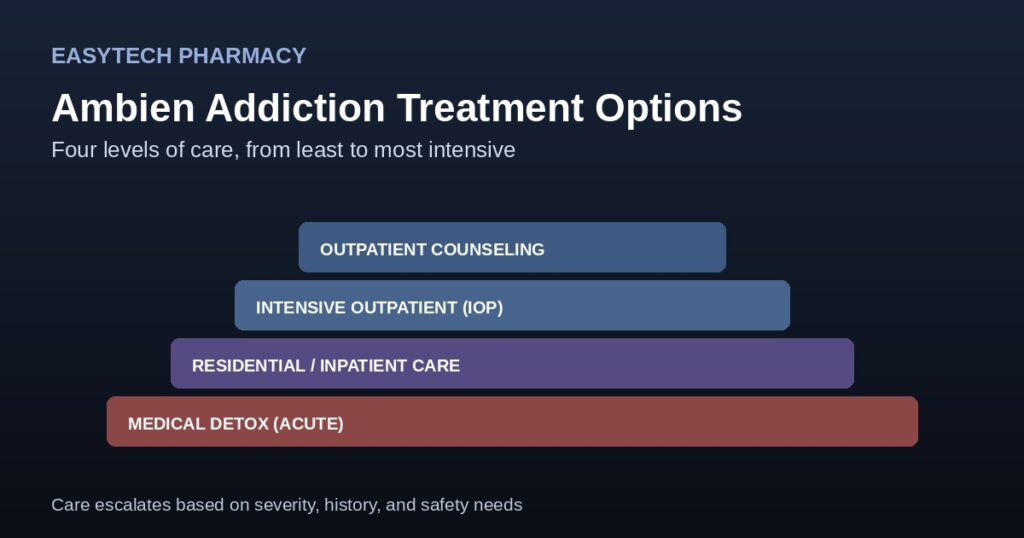
Recognizing an addiction is one step. Figuring out what treatment actually involves is another, and it’s often where people get stuck. The word “treatment” can sound vague, or intimidating, or like it automatically means checking into a facility for weeks. In reality, it covers a wide range of options, and most people don’t need the most intensive one.
This guide breaks down what’s actually available, how each option works, and how to think about choosing the right level of care.
Start With the Right Foundation: A Medical Assessment
Before any treatment plan makes sense, it starts with an honest assessment. This covers how long you’ve used zolpidem, at what dose, whether you’ve combined it with alcohol or other substances, and how it’s affecting your daily life. Our guide on zolpidem addiction covers the signs that point toward needing this kind of evaluation in the first place.
This assessment determines everything that follows. Someone with a short history of misuse needs a very different plan than someone who’s used high doses daily for years, or combined zolpidem with other substances.
Level One: Medical Detox and Supervised Taper
For most people, treatment starts here. A supervised taper reduces the dose gradually, under medical guidance, rather than stopping all at once. This matters because abrupt discontinuation after heavy use carries real withdrawal risk, including seizures in severe cases.
Our guide on how to stop Ambien safely walks through what this taper process looks like in practice, and our piece on zolpidem withdrawal symptoms covers the timeline you can expect. For many people using zolpidem alone, without other substances involved, this level of care is enough on its own, paired with the therapy approaches below.
Level Two: Outpatient Counseling
Outpatient treatment means regular appointments, while continuing to live at home and manage daily responsibilities. This works well for people with a stable home environment and a manageable severity of use.
Sessions typically focus on the behavioral side of addiction. That includes identifying what drives compulsive use, building healthier coping strategies, and addressing the underlying insomnia or anxiety that often sits behind the original prescription. Cognitive behavioral therapy for insomnia, known as CBT-I, frequently plays a central role here, since it treats the root sleep problem directly rather than just managing the medication use around it.
Level Three: Intensive Outpatient Programs (IOP)
An intensive outpatient program sits between standard outpatient counseling and full residential care. It typically involves several sessions a week, often several hours each, while the person still lives at home.
This level suits people who need more structure and support than weekly counseling provides, but don’t require 24-hour supervision. It’s a common step for people managing a more established pattern of misuse, or for those stepping down from residential care into everyday life.
Level Four: Residential or Inpatient Care
This is the most intensive option, involving 24-hour care in a dedicated facility. It’s typically reserved for more severe situations: long-term heavy use, combined use with alcohol or other substances, a history of failed outpatient attempts, or safety concerns during withdrawal that need close monitoring.
Residential programs combine medical oversight with structured therapy, removing the person from their everyday environment during the most vulnerable stretch of early recovery. Programs vary in length, commonly running anywhere from a few weeks to a couple of months, depending on individual needs.
Therapy Approaches Used Across These Levels
Regardless of which level of care fits, certain therapy approaches show up consistently across effective treatment plans.
- Cognitive behavioral therapy (CBT) — addresses the thought patterns and behaviors that drive compulsive use
- CBT-I specifically — targets the underlying insomnia directly, which matters since untreated sleep problems often drive relapse
- Individual counseling — works through personal triggers, stress, and any co-occurring anxiety or mood concerns
- Group therapy — connects people with others navigating similar recovery, reducing the isolation that often accompanies addiction
- Family involvement — helps repair relationships strained by the addiction and builds a support system for the road ahead
Support Groups and Peer Communities
Beyond formal therapy, peer support groups play a genuine role in long-term recovery for many people. These groups provide accountability, shared experience, and an ongoing community after formal treatment ends. Options range from traditional 12-step-style groups to alternatives like SMART Recovery, which uses a more cognitive-behavioral framework. Neither approach fits everyone, and it’s worth trying more than one to find what resonates.
What Comes After the Medication Stops
Treatment isn’t complete just because the taper ends. The insomnia that led to zolpidem use in the first place usually still needs an answer. Our guide on is Ambien habit forming explains why this piece matters so much, since untreated insomnia is one of the strongest predictors of returning to the medication.
It’s also worth understanding what you were actually taking. Our guide on is Ambien a benzodiazepine clears up a common mix-up that affects how people think about their own recovery and any future sleep medication decisions. And if other medications played a role in the original sleep trouble, our guide on drugs that cause insomnia is worth a look too.
How to Choose the Right Level of Care
A few honest questions help clarify which level fits best.
- Have you combined zolpidem with alcohol or other substances regularly?
- Have previous attempts to cut back or stop failed?
- Is your home environment stable and supportive right now?
- Do you have a history of severe withdrawal symptoms, including seizures?
- Would daily accountability and structure genuinely help, or would it be disruptive to responsibilities you can’t step away from?
Answering these honestly, ideally with a pharmacist or treatment professional, points toward the right starting level. It’s also completely normal to step up or down between levels as treatment progresses.
Finding a Treatment Provider
Start with a pharmacist or prescriber, since they can guide the initial taper and refer you toward appropriate treatment resources. For finding licensed treatment providers directly, SAMHSA’s FindTreatment.gov offers a searchable, confidential directory of treatment options across the US, filterable by location and type of care.
Frequently Asked Questions
What treatment options exist for Ambien addiction?
Options range from a supervised medical taper and outpatient counseling to intensive outpatient programs and residential care, depending on severity. Most people start with the least intensive option that safely fits their situation.
Do I need to go to rehab for Ambien addiction?
Not necessarily. Many people manage recovery through a supervised taper and outpatient counseling. Residential care is typically reserved for more severe cases, including combined substance use or a history of failed outpatient attempts.
How long does Ambien addiction treatment take?
It varies widely. A straightforward taper might take a few weeks. Outpatient therapy often continues for months. Residential programs commonly run several weeks to a couple of months, depending on the individual.
Does insurance cover Ambien addiction treatment?
Many insurance plans cover substance use treatment to some degree, though coverage varies by plan and provider. It’s worth confirming details directly with your insurer and the treatment provider before starting.
What’s the difference between outpatient and residential treatment?
Outpatient treatment lets you continue living at home while attending scheduled sessions. Residential treatment provides 24-hour care in a dedicated facility, typically reserved for more severe or complex situations.
Bottom Line — Treatment Isn’t One-Size-Fits-All
Ambien addiction treatment covers a real range of options, from a straightforward supervised taper to full residential care. Most people don’t need the most intensive option. The right starting point depends on your specific history, severity, and support system, and it’s a decision best made with a pharmacist or treatment professional rather than guessed at alone.
If you’re weighing your options, the first step is an honest conversation with a pharmacist or prescriber. From there, the right level of care becomes much clearer.
For local pharmacy access, our Ambien near me guide covers options across the world.
👉 Visit EasyTech Pharmacy — find the right sleep medication for your situation today.