Does Ambien Cause Memory Loss? What’s Real and What’s Still Unclear
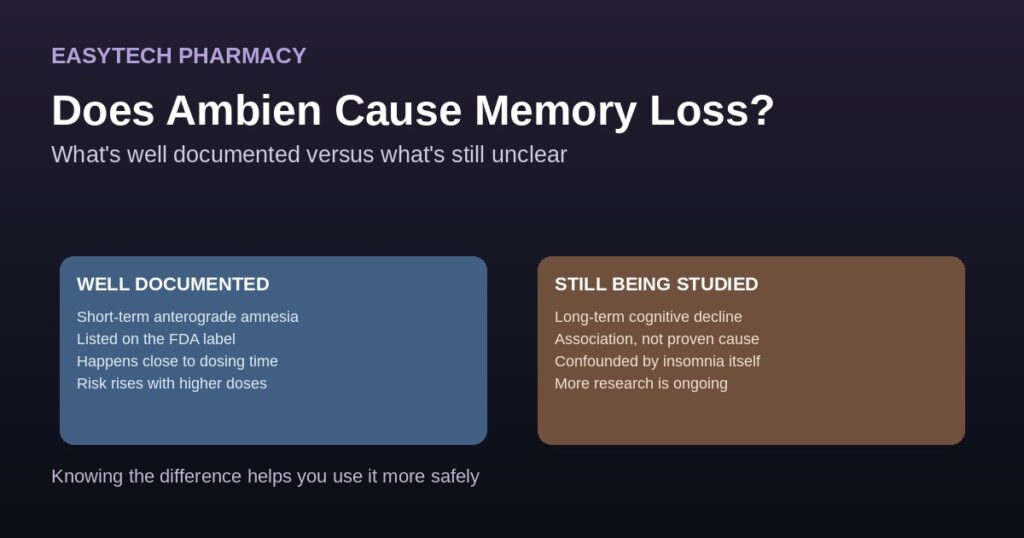
Someone wakes up and can’t remember a text they sent, a snack they made, or a conversation they had the night before. It’s unsettling, and it raises an obvious question: is Ambien actually doing this to their memory? The honest answer has two parts. One part is well established and documented. The other part is still being studied, and the research isn’t settled yet.
This guide separates the two clearly, so you know what’s actually proven and what remains an open question.
The Short-Term Answer: Yes, and It’s a Known Effect
Anterograde amnesia is a documented side effect of zolpidem. It’s listed directly in the drug’s prescribing information. This means the drug can prevent your brain from forming new memories during the window it’s active in your system, even while you remain awake and seem to function normally.
This isn’t a rare, mysterious reaction. It’s a recognized effect tied directly to how the drug works.
Why This Happens: The Actual Mechanism
Zolpidem works by boosting GABA activity in the brain, the same calming neurotransmitter system involved in sedation and sleep. GABA also plays a role in memory consolidation, the process your brain uses to convert short-term experiences into stored memories.
When zolpidem enhances GABA activity, it can interfere with this consolidation process. Something can happen to you, register in the moment, and simply never get filed away as a memory. This is the same basic mechanism behind the memory effects of benzodiazepines, which work on a related receptor system.
What This Actually Looks Like
The classic pattern involves activity that happens close to when the drug takes effect. Zolpidem typically starts working within 15 to 30 minutes, as our guide on how long Ambien takes to work explains. If someone stays awake during this window, rather than going straight to sleep, they can engage in activities they later have no memory of at all.
This overlaps with the complex sleep behaviors zolpidem is known for. Sleep-texting, sleep-eating, and unusual nighttime conversations often fall into this exact category. The person was technically awake and responsive. They simply never formed a memory of it.
This Is Different From Normal Morning Grogginess
It’s worth separating true amnesia from ordinary next-day fog. Feeling groggy or slow the morning after taking Ambien is common and expected, especially with higher doses or insufficient sleep time. That’s residual sedation, not memory loss.
True amnesia is different. It’s a genuine gap. Not “I remember it foggily,” but “I have no memory of this happening at all,” even when someone else describes it to you in detail. That distinction matters for understanding what’s actually going on.
What Raises the Risk
- Higher doses — risk increases meaningfully at higher doses, which is part of why lowest-effective-dose guidance matters. See our Ambien dosage guide for appropriate ranges
- Staying awake after taking it — this is the single biggest controllable factor. Taking it and then continuing activities, rather than going straight to bed, dramatically raises the odds of an amnesia episode
- Combining with alcohol — alcohol compounds this effect significantly, on top of its own separate risks. Our guide on Ambien and alcohol covers why this combination is particularly dangerous
- Older age — older adults process zolpidem differently, and both sedation and memory effects can be more pronounced. Our guide on Ambien side effects in elderly patients covers this in detail
- Insufficient sleep time after dosing — waking up too soon after taking it, before the drug has fully done its job, raises the odds of a groggy, memory-impaired waking period
What About Long-Term Cognitive Effects
This is the part of the picture that’s genuinely less settled. Some observational research has raised questions about whether long-term use of sedative-hypnotics, including zolpidem, is linked to cognitive decline or increased dementia risk over time.
This research comes with real limitations. Much of it is observational, meaning it shows an association rather than proving the drug causes the decline. Chronic insomnia itself is independently linked to cognitive changes, which makes it genuinely hard to separate the effect of the medication from the effect of the underlying sleep problem it’s treating. Our guide on can you take Ambien long term covers this research in more depth, including why it doesn’t provide a clear yes-or-no answer.
The honest summary: short-term amnesia is proven and mechanistic. Long-term cognitive risk is a genuine area of ongoing research, not a settled conclusion.
How to Reduce Your Risk
- Take it right before getting into bed — not thirty minutes before you plan to keep working, scrolling, or doing chores
- Plan for a full night’s sleep after taking it — waking too early increases both grogginess and memory-gap risk
- Never combine it with alcohol — this single change meaningfully reduces amnesia risk on its own
- Use the lowest effective dose — talk to your pharmacist about whether your current dose is still the right one
- Watch for a pattern, not just one incident — an occasional gap is worth noting; a repeated pattern is worth a direct conversation with your prescriber
According to the FDA’s official prescribing information for Ambien, amnesia and impaired memory are listed adverse reactions, particularly when the drug isn’t taken immediately before a full period of sleep.
Frequently Asked Questions
Does Ambien cause memory loss?
Yes, in a specific, well-documented way. It can cause short-term anterograde amnesia, preventing new memories from forming during the window the drug is active, especially if you stay awake after taking it rather than going straight to sleep.
Is Ambien memory loss permanent?
The documented short-term amnesia isn’t permanent. It affects your ability to form memories during a specific window, but it doesn’t erase existing memories or cause lasting damage on its own. Long-term cognitive effects from extended use remain an active area of research, not a settled conclusion.
How can I prevent memory loss from Ambien?
Take it right before bed, not before continuing other activities. Avoid alcohol entirely. Plan for a full night’s sleep afterward. And use the lowest effective dose for your situation.
Is forgetting things on Ambien the same as sleepwalking?
They’re related but not identical. Both involve complex behaviors during the drug’s effects with little or no memory afterward. Sleepwalking specifically involves motor activity during sleep, while amnesia can happen even while someone appears awake and responsive.
Should I stop taking Ambien if I notice memory gaps?
Don’t stop abruptly without guidance, especially after regular use. Bring the pattern to your pharmacist or prescriber directly. Our guide on how to stop Ambien safely covers what a safe transition looks like if that’s the direction you decide to go.
Bottom Line — Real Short-Term Risk, Genuine Long-Term Uncertainty
Ambien’s connection to short-term memory loss isn’t a myth or a coincidence. It’s a documented, mechanistic effect tied directly to how the drug works, and it’s most likely to show up when someone stays awake after taking it or combines it with alcohol. The long-term cognitive question is real too, but the research hasn’t settled it one way or the other, and untangling the drug’s role from the insomnia it treats remains genuinely difficult.
If you’re noticing memory gaps, timing and dose are the first things worth adjusting, and a direct conversation with your pharmacist is the right next step from there.
For local pharmacy access, our Ambien near me guide covers options across the world.
👉 Visit EasyTech Pharmacy — find the right sleep medication for your situation today.