Zolpidem Addiction: How It’s Different From Dependence, and What Actually Helps
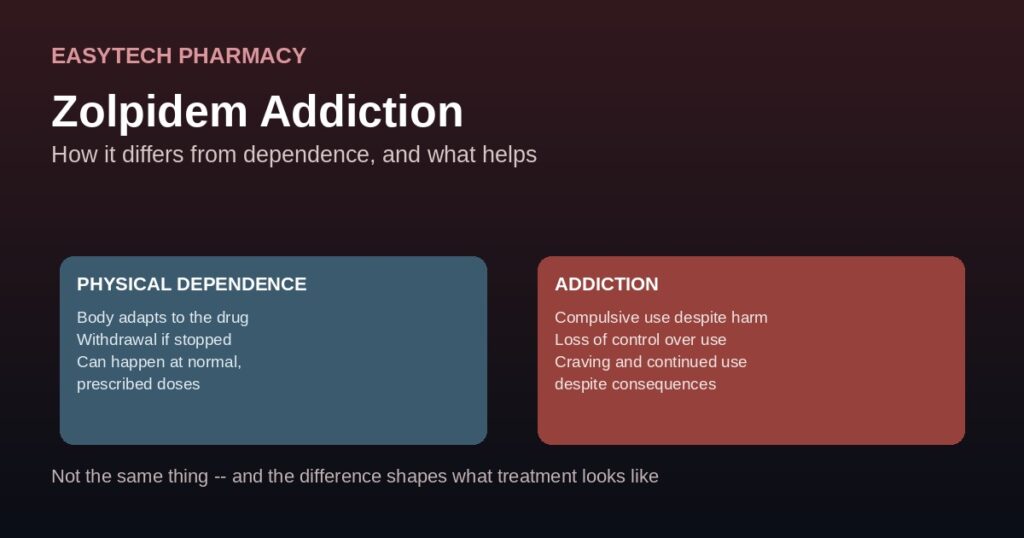
People often use “dependent” and “addicted” like they mean the same thing. With zolpidem, they don’t. You can become physically dependent on Ambien while taking it exactly as directed. Addiction is something different. It involves compulsive use, loss of control, and continued use despite real harm.
This guide draws that line clearly. You’ll learn what separates dependence from addiction, what the actual warning signs look like, and where to find help that works.
Dependence and Addiction Aren’t the Same Thing
Physical dependence happens when your body adapts to a drug. Stop taking it, and you feel withdrawal. This can happen with regular Ambien use, even at normal doses. It doesn’t require misuse. Our guide on is Ambien habit forming covers this mechanism in depth.
Addiction is different. Health professionals define it as compulsive drug-seeking and use, despite harmful consequences. It involves a loss of control. Someone with an addiction keeps using even when it damages their relationships, work, health, or finances. Not everyone who’s dependent on zolpidem is addicted to it. But addiction almost always includes some degree of dependence.
This distinction matters. It shapes how you think about your own use, and it shapes what treatment actually looks like.
How Common Is Zolpidem Addiction, Really
Genuine addiction to zolpidem is less common than physical dependence. Most people who take Ambien as directed, for a reasonable period, don’t develop an addiction. But it does happen. Zolpidem is a Schedule IV controlled substance for a reason. Regulators recognize its misuse and addiction potential, even if that risk sits lower than substances in more restrictive schedules.
Certain factors raise the risk meaningfully. A personal or family history of substance use disorder is one of the strongest predictors. So is using zolpidem outside how it’s prescribed — taking more than directed, using it more often, or combining it with alcohol or other substances. Our guide on Ambien and alcohol covers why that combination carries extra risk.
The Behavioral Signs That Point to Addiction
These signs go beyond simple tolerance or withdrawal. They point toward a loss of control over use itself.
- Using more than prescribed, or more often than intended — taking extra doses, or using it earlier in the evening than needed
- Spending significant time obtaining, using, or recovering from the drug — this goes beyond the medication’s normal role in your evening routine
- Continuing use despite clear negative consequences — relationship strain, missed work, memory problems, or risky behavior during use
- Unsuccessful attempts to cut back — trying to stop or reduce use and repeatedly failing
- Cravings — a strong urge or need to take the medication, beyond simply wanting to sleep
- Using it for reasons beyond sleep — taking it during the day, or using it to cope with stress or anxiety rather than insomnia specifically
- Doctor shopping or seeking it through multiple sources — a clear sign that use has moved outside normal medical management
One or two of these on their own don’t confirm addiction. A cluster of them, especially over time, is a real signal worth taking seriously.
Why Zolpidem’s Own Design Plays a Role
Zolpidem works fast. Most people feel its effects within 15 to 30 minutes. Our guide on how long Ambien takes to work covers this timeline. That speed is part of what makes it effective for insomnia. It’s also part of what gives it addiction potential. Fast-acting drugs tend to carry higher misuse risk than slower-acting ones, because the effect connects more directly to the act of taking the dose.
Some people also chase the drug’s dissociative or amnesia-like effects, rather than its sedative ones. This isn’t common, but it’s documented. It’s one more reason zolpidem sits in a controlled substance schedule rather than being available freely.
Complex Behaviors That Blur the Picture
Zolpidem carries a well-known risk of complex sleep behaviors: sleepwalking, sleep-eating, sleep-driving, and unusually vivid dreams. These aren’t addiction, but they can complicate the picture. Someone might take extra doses chasing a specific dream state, or lose track of how much they’ve taken because of amnesia around the event itself. Our guide on Ambien dreams and nightmares explains this mechanism in more detail.
If you notice this pattern in yourself or someone you care about, it’s worth raising directly. It doesn’t automatically mean addiction. But it’s a sign that use deserves a closer look.
Who Faces Higher Risk
- People with a history of substance use disorder — including alcohol, opioids, or other sedatives
- People using zolpidem long-term without regular reassessment — risk climbs the longer use continues unmanaged
- People with untreated anxiety or chronic stress — psychological reliance on the drug can build alongside physical dependence
- Older adults — metabolism changes with age, and side effects can look different. Our guide on Ambien side effects in elderly patients covers what changes after 65
- People combining zolpidem with alcohol or other sedatives — this compounds both physical risk and addiction potential
What Real Help Looks Like
Addiction treatment for zolpidem usually starts with a medically supervised taper. Stopping abruptly after heavy or prolonged use carries real withdrawal risk, including seizures in severe cases. Our guide on zolpidem withdrawal symptoms walks through what that process looks like and why tapering matters so much.
Beyond the physical taper, real treatment addresses the behavioral and psychological side too. This can include counseling, cognitive behavioral therapy, and support groups built around substance use recovery. Addressing the underlying sleep problem matters just as much. Our guide on how can I sleep quickly covers behavioral tools, and our overview of natural Ambien alternatives cover options with a very different risk profile going forward.
If you or someone you know is struggling with substance use, the SAMHSA National Helpline offers free, confidential support and treatment referrals, available 24/7.
How to Reduce Your Own Risk
- Use the lowest effective dose — see our Ambien dosage guide for appropriate ranges
- Never combine it with alcohol or other sedatives — this single step meaningfully lowers both physical and addiction risk
- Keep use time-limited — revisit the plan with your prescriber regularly instead of continuing indefinitely
- Watch for the behavioral signs above — catching a shift early makes it far easier to address
- Be honest with your prescriber — about cravings, dose creep, or any urge to use it outside its intended purpose
Frequently Asked Questions
Is zolpidem addiction the same as dependence?
No. Dependence means your body has adapted to the drug and produces withdrawal symptoms without it. Addiction means compulsive use and loss of control, despite real harm. You can be dependent without being addicted, though addiction usually involves dependence too.
What are the warning signs of zolpidem addiction?
Key signs include using more than prescribed, cravings, failed attempts to cut back, using it for reasons beyond sleep, and continuing use despite clear negative consequences in your life.
How is zolpidem addiction treated?
Treatment usually starts with a supervised taper to manage withdrawal safely, followed by counseling or therapy that addresses the behavioral and psychological side of use, plus a plan for treating the original sleep issue differently.
Can you get addicted to zolpidem even if you take it as prescribed?
It’s less common, but possible. Most people who use it as directed for a reasonable period don’t develop addiction. Risk climbs with longer use, higher doses, and personal or family history of substance use disorder.
Where can I get help for zolpidem addiction?
Start with your prescriber or pharmacist for a supervised taper plan. The SAMHSA National Helpline offers free, confidential referrals to treatment providers and support resources, available 24/7.
Bottom Line — Know the Difference, Watch the Signs
Zolpidem addiction is real, but it’s not the same as the physical dependence that can happen with normal, prescribed use. Addiction involves compulsive use and loss of control. It shows up in behavior, not just in withdrawal symptoms. Knowing the difference helps you recognize it early, in yourself or someone you care about, and get to real help faster.
If any of the signs in this guide feel familiar, that’s worth a direct, honest conversation with your prescriber or pharmacist. Not guesswork. Not managing it alone.
For local pharmacy access, our Ambien near me guide covers options across the world.