Best Sleep Medicine for Seniors: Match the Option to the Sleep Problem
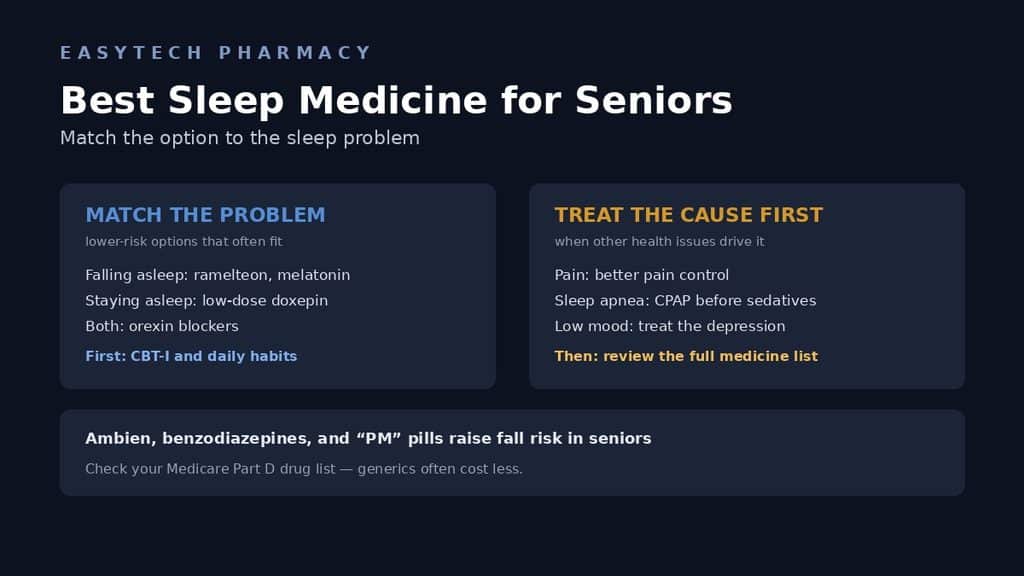
Families often ask us for the best sleep medicine for seniors, as if one pill fits everyone. In reality, the best fit depends on the sleep problem itself. Trouble falling asleep needs a different approach than waking at 2 a.m. or sleepless nights with pain.
This guide helps you match the problem to the option that usually fits best. You’ll also learn what each choice costs and how Medicare coverage works.
Before Any Sleep Medicine for Seniors: Two Ground Rules
First, try non-drug steps. CBT-I, bright morning light, daily activity, and short naps help many older adults sleep better with no side effects. Our guide to managing insomnia in the elderly lays out a full daily plan.
Second, rule out risky options. Ambien and other Z-drugs, benzodiazepines, and “PM” pills raise the risk of falls and confusion in older adults. Our guide to the safest sleep medication for elderly patients explains why. The matches below focus on lower-risk choices.
Best Sleep Medicine for Seniors by Sleep Problem
Trouble Falling Asleep
If lying awake at bedtime is the main issue, ramelteon is often the best sleep aid for seniors to ask about first. It works on the brain’s melatonin system and carries little risk of dependence. Melatonin itself may also help, especially when the body clock runs off schedule. Compare the two approaches in our ramelteon vs Ambien guide.
Waking Up in the Middle of the Night
For trouble staying asleep, low-dose doxepin is a common lower-risk choice. At very small doses, it helps people sleep through the night. It also avoids many side effects seen at higher doses. Learn more in doxepin vs Ambien.
Trouble Falling AND Staying Asleep
Orexin blockers, like Belsomra, Dayvigo, and Quviviq, help with both problems. They quiet the brain’s “stay awake” signal instead of sedating the whole brain. Next-day drowsiness can still happen, so morning plans matter. See Belsomra vs Ambien and Ambien vs Quviviq.
Waking Too Early With Low Mood
Early waking often links with depression in older adults. Treating the mood problem usually helps sleep more than any sleep aid. Some calming antidepressants taken at night may play a role, though they need care because of dizziness and fall risk.
Sleep Aids for Older Adults With Other Health Issues
Insomnia With Chronic Pain
Pain is a top reason seniors can’t sleep. In this case, better pain control usually beats a sleep aid. A heating pad, gentle stretching, and the right daytime pain plan can make nights much easier.
Insomnia With Dementia
Non-drug steps come first, such as bright days, calm evenings, and a steady routine. Many common sleep aids can worsen confusion. However, researchers have studied one orexin blocker in people with mild to moderate Alzheimer’s disease. Experts advise against antipsychotics just for sleep.
Insomnia With Sleep Apnea
Loud snoring or breathing pauses need attention first. Sedating sleep aids can make untreated apnea worse. Treating the apnea, often with CPAP, frequently improves sleep on its own.
Insomnia With Kidney or Liver Disease
These organs clear medicines from the body. When they slow down, sleep aids can build up. Some options need lower doses, and others aren’t a good fit at all. A pharmacist review is essential here.
How to Compare Senior Sleep Medicine Options
Use these five questions to weigh each choice:
- Does it match the sleep problem? Falling asleep and staying asleep need different tools.
- How long does it last? Longer-acting options raise the risk of morning grogginess.
- What’s the fall risk? Dizziness and unsteady walking matter most at this age.
- Does it clash with other medicines? Seniors often take several, so interactions add up.
- Can the person afford it? Cost affects whether someone keeps taking it.
What the Best Sleep Aid for Seniors Costs
Price varies a lot between options. Here’s a general picture:
- Melatonin: low-cost and sold over the counter
- Ramelteon and low-dose doxepin: both come in generic forms, which often cost less
- Orexin blockers: brand-name only, so they usually cost more
For ways to save, our guide on sleep medicine costs without insurance covers discount cards and generic swaps.
Medicare Part D Tips
- Check your plan’s drug list, called a formulary, before you fill
- Ask whether a generic version sits on a lower-cost tier
- Compare plans during Open Enrollment each fall
- Ask your pharmacist if a discount card beats your copay
The official Medicare.gov drug coverage guide explains plans, tiers, and costs.
Signs a Senior Sleep Medicine Isn’t Working
Give any new option a few weeks, with a sleep diary to track results. Then look for these red flags:
- Sleep hasn’t improved after two to four weeks
- Mornings bring grogginess, dizziness, or confusion
- A fall or near-fall happens at night
- The person feels they need a higher dose
- New memory lapses or unusual night-time behavior appear
If any of these show up, ask for a review. A different option, a lower dose, or a non-drug plan may work better.
Questions to Ask Your Pharmacist
- Which option best fits this type of sleep problem?
- Does it interact with any of the other medicines on this list?
- Is there a generic version, and what will it cost?
- What side effects should we watch for at this age?
Using Sleep Medicine for Seniors Safely
- Start low and review results after a few weeks
- Take it only when you can stay in bed for a full night
- Skip alcohol on nights you take a sleep aid
- Add night-lights and clear paths to prevent falls
- Plan a review every few months, not just refills
Over time, nightly use carries its own risks. Our post on long-term insomnia drugs explains what to watch for.
Want to learn more about the many types of sleep disorders? MedlinePlus offers a clear overview.
FAQs: Best Sleep Medicine for Seniors
What is the best sleep aid for a 75-year-old?
It depends on the problem. Ramelteon often fits trouble falling asleep, while low-dose doxepin often fits trouble staying asleep. CBT-I should come first.
Is melatonin good for seniors?
Melatonin is mild and may help with body clock problems. Choose a product with a USP Verified seal, since quality varies.
Why isn’t Ambien a good choice for seniors?
Ambien raises the risk of falls, confusion, and next-day drowsiness in older adults. Experts usually suggest other options.
Does Medicare cover sleep medicine?
Many Part D plans cover some sleep medicines. Coverage and cost vary, so check your plan’s drug list.
Can seniors take sleep medicine every night?
Most experts prefer short-term use with regular reviews. Long-term plans usually focus on CBT-I and healthy routines.
Bottom Line — The Best Sleep Medicine for Seniors Fits the Problem
There’s no single best sleep medicine for seniors. Instead, match the option to the sleep problem, check health conditions and other medicines, and compare costs. Start with non-drug steps, keep risky pills off the list, and review the plan often.
If a sleep aid becomes part of the plan, our Ambien near me guide shows how to find a local pharmacy and compare prices.