Ramelteon vs. Ambien: The One Prescription Option That Isn’t Controlled
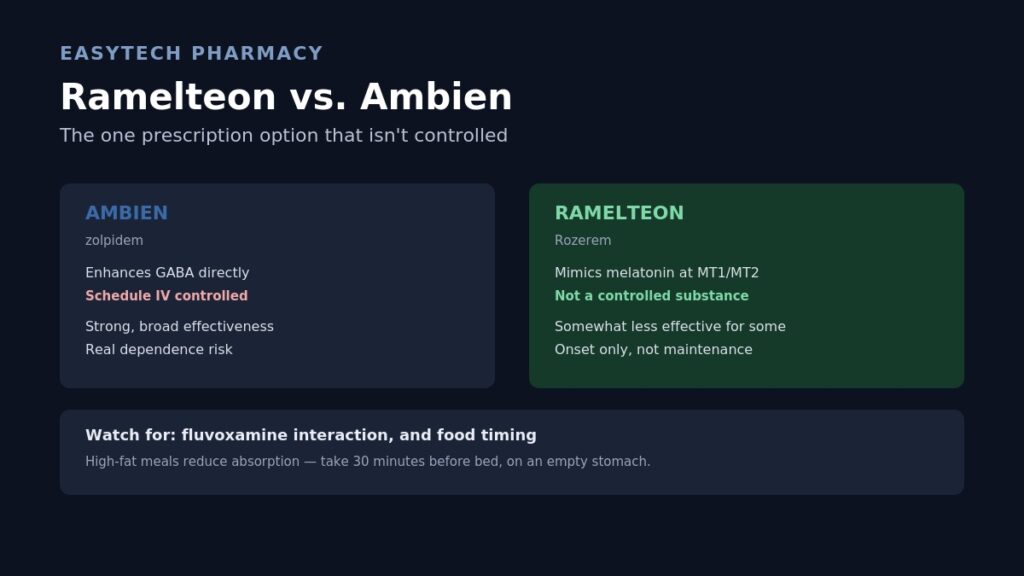
Ramelteon holds a spot no other prescription sleep medication on this entire site can claim: it isn’t a controlled substance at all. That single fact reshapes almost everything else about how it compares to Ambien, and it’s worth understanding clearly before assuming “prescription” automatically means “same risk category.”
The Mechanism Difference Explains Everything Else
Ambien enhances GABA, the brain’s primary calming chemical, directly slowing brain activity to induce sleep. Ramelteon works through a completely different pathway: it’s a highly selective agonist at melatonin receptors, specifically the MT1 and MT2 types, mimicking the natural hormone that helps regulate your sleep-wake cycle rather than sedating the brain broadly. This isn’t a minor technical distinction. It’s the reason ramelteon carries such a different risk profile from every controlled-substance option covered elsewhere on this site.
Why “Not a Controlled Substance” Actually Matters
Ramelteon doesn’t carry the abuse and dependence potential associated with sedative hypnotics like Ambien, and it isn’t classified as a controlled substance federally. This connects to broader ground we’ve covered in our guide on Ambien’s Schedule IV status: the refill limits, pharmacy verification, and prescribing oversight that come with Ambien’s classification simply don’t apply here in the same way, since ramelteon doesn’t meet the criteria that put Ambien in that category to begin with.
Effectiveness: A Real, Honest Tradeoff
This is where the comparison gets genuinely balanced rather than one-sided. Ramelteon offers a safe, effective option to shorten the time to persistent sleep in chronic insomnia. For some patients, however, it shows less potency than benzodiazepines and Z-drugs like Ambien. Ambien remains a first-line treatment because it acts rapidly and delivers strong sedation. Meanwhile, ramelteon works best for patients targeting circadian schedule disruptions or avoiding controlled-substance risks.
What Ramelteon Doesn’t Do
Ramelteon is specifically indicated for difficulty falling asleep, not for helping you get back to sleep if you wake up during the night. This mirrors the sleep-onset-versus-maintenance distinction we’ve covered in our guides on the best sleep aid for trouble falling asleep and the best sleep aid for frequent nighttime waking. Ramelteon sits firmly on the onset side of that split, and it’s not built to address the other half of the problem.
Cost: Closer Than You’d Expect at Brand Level
A one-month supply of brand-name ramelteon at 8 mg runs approximately $82, comparable to the cost of zaleplon and zolpidem at brand pricing, not the bargain some people expect from a non-controlled option. At the higher end of Ambien’s dosing range, brand-name Rozerem can actually run more expensive on a per-day basis. The real savings show up at the generic level: generic zolpidem and generic ramelteon both drop significantly in price, though zolpidem’s generic version has been available longer and tends to run especially inexpensive, a gap covered in more depth in our guide on Ambien vs. zolpidem.
A Real Interaction Worth Knowing
Fluvoxamine, an SSRI used for depression and OCD, is specifically flagged as a drug that shouldn’t be combined with ramelteon. This is a genuinely important, specific interaction that’s easy to overlook precisely because ramelteon feels like the “gentler” option on paper.
Dosing and Timing: A Practical Detail That Matters
Ramelteon is typically taken 30 minutes before bed, and its absorption is meaningfully affected by food, particularly high-fat meals. This is a genuinely practical difference from Ambien, which doesn’t carry the same specific food-timing consideration. Missing this detail can mean the medication simply doesn’t work as intended, not because it failed, but because of when and how it was taken.
Side-by-Side: What Actually Separates Them
- Mechanism: Ambien enhances GABA directly. Ramelteon mimics melatonin at specific receptors.
- Controlled substance status: Ambien is Schedule IV. Ramelteon is not controlled at all.
- Best suited for: Ambien handles a broad range of sleep-onset patterns strongly. Ramelteon fits circadian-related onset difficulty specifically.
- Sleep maintenance: Neither is built for this, but Ambien CR offers more flexibility here than ramelteon, which isn’t recommended for restarting sleep after waking.
- Dependence risk: Ambien carries real, documented potential. Ramelteon doesn’t carry the same risk profile.
Who Ramelteon Tends to Fit Best
People specifically wanting to avoid a controlled substance, those managing circadian-related sleep-onset issues, and anyone for whom Ambien’s dependence or complex sleep behavior risks, covered in our guide on Ambien’s black box warning, feel like a dealbreaker tend to be the strongest candidates for ramelteon specifically.
The Bottom Line
Ramelteon and Ambien aren’t really competing on the same axis. Ambien offers strong, fast, and broad sedation backed by decades of trial data. However, these benefits come with real risks of dependence. Ramelteon offers a non-controlled path that works alongside natural sleep signaling rather than overriding it. On the downside, its effectiveness varies across individuals, and it fails to help with sleep maintenance. The right choice depends on your situation. Specifically, you must weigh avoiding controlled substances against Ambien’s proven effectiveness.
For a detailed clinical comparison, see the American Academy of Family Physicians’ review of ramelteon for insomnia.
Frequently asked questions
Is ramelteon a controlled substance like Ambien?
No. Ramelteon isn’t classified as a controlled substance and doesn’t carry the same abuse and dependence potential as Ambien and other sedative hypnotics.
Is ramelteon as effective as Ambien?
For some people, ramelteon appears less effective than Z-drugs like Ambien, which is part of why Ambien remains a first-line option while ramelteon tends to fit more specific situations.
Can ramelteon help if I wake up in the middle of the night?
No. It’s specifically indicated for difficulty falling asleep, not for helping you fall back asleep after waking during the night.
Does food affect how well ramelteon works?
Yes. Taking it with or right after a high-fat meal can reduce how well it works, a timing consideration that doesn’t apply the same way to Ambien.
Related reading
- Short-Acting vs. Long-Acting Sleep Medications
- The Best Sleep Aid for Trouble Falling Asleep
- Best Ambien alternative for seniors: safer options explained
Wondering whether a non-controlled option might fit your situation? Talk to your pharmacist. EasyTech Pharmacy can help you think it through.
For local pharmacy access near you, our Ambien near me guide covers pharmacies across the world.
Visit EasyTech Pharmacy — sleep medication with real pharmacist guidance.