Managing Insomnia in the Elderly: A Practical Care Plan for Better Nights
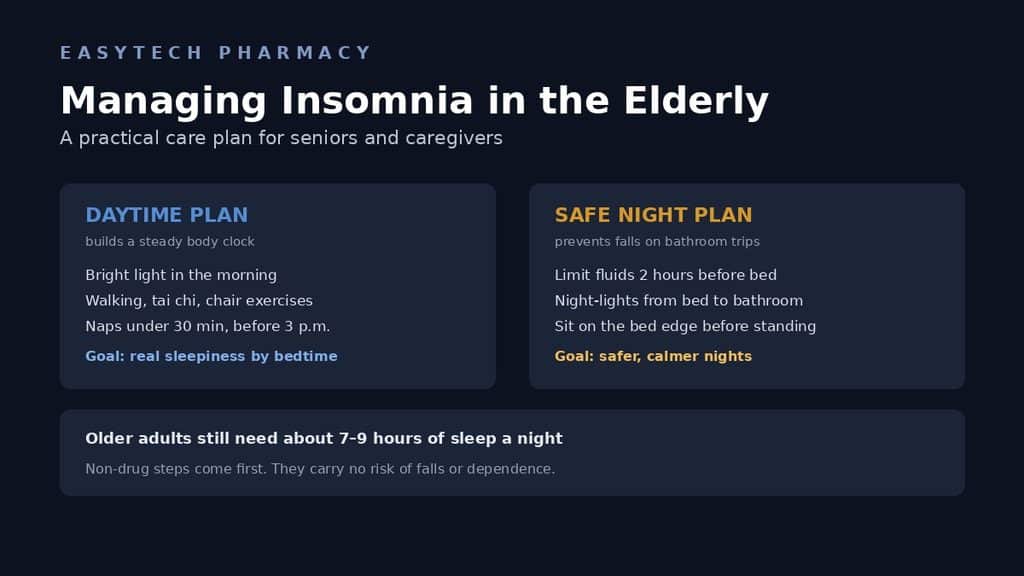
Managing insomnia in the elderly takes more than a sleeping pill. Older adults face unique sleep changes, health issues, and safety risks. The good news? Simple daily habits often bring big improvements, and many of them cost nothing.
Whether you’re a senior yourself or caring for a parent, this guide gives you a clear plan. You’ll learn what’s normal with age, what isn’t, and what to try first.
How Sleep Changes With Age
Some sleep changes come with getting older. They’re normal and don’t always mean insomnia:
- Earlier bedtimes: the body clock often shifts earlier, so people feel sleepy by 8 or 9 p.m.
- Lighter sleep: deep sleep shrinks, so small noises wake people more easily
- More night wakings: brief wake-ups become more common
- Earlier mornings: waking at 4 or 5 a.m. happens more often
Still, older adults need about the same amount of sleep as younger adults, roughly seven to nine hours. The National Institute on Aging explains these changes in more detail. Curious why deep sleep fades? Our guide to natural remedies for deep sleep covers it.
When Sleep Problems in Seniors Become Insomnia
Normal aging doesn’t leave you exhausted every day. Insomnia does. Watch for these signs:
- Trouble falling or staying asleep at least three nights a week
- The problem lasts three months or longer
- Daytime tiredness, irritability, or poor focus
- Dozing off during the day without meaning to
Common Causes of Insomnia in Older Adults
Elderly insomnia rarely has just one cause. Look for these common culprits:
- Night-time bathroom trips: very common, especially with prostate or bladder changes
- Pain: arthritis, back pain, and nerve pain make comfort hard
- Sleep apnea: loud snoring and breathing pauses break up sleep
- Restless legs: often linked to low iron
- Low mood or worry: grief, loneliness, and anxiety all play a part
- Medicines: some daytime medicines keep people awake at night
- Less structure: retirement can remove the routines that once anchored sleep
Medicines deserve a close look. Our guide on what medications keep you awake shows which ones to move to the morning. Low vitamin D and B12 also show up often in seniors, as our guide to the right vitamin that promotes sleep explains.
Managing Insomnia in the Elderly Without Pills
For most older adults, non-drug steps come first. They carry no risk of falls or dependence. Here’s a simple daily plan.
1. Get Bright Light at the Right Time
Morning light helps set a steady body clock. For people who get sleepy too early, some late-afternoon light can help push bedtime a little later. A walk outside or a seat by a bright window both work.
2. Stay Active Every Day
Gentle movement builds healthy sleep pressure. Walking, water aerobics, and chair exercises all count. Tai chi stands out, since studies suggest it may improve sleep quality in older adults.
3. Keep Naps Short and Early
A short nap is fine. Just keep it under 30 minutes and finish it before 3 p.m. Long or late naps steal sleep from the night. Our guide on how to get tired enough to sleep explains why.
4. Build a Steady Routine
Wake up at the same time every day, even on weekends. Regular mealtimes and social plans also help anchor the day.
5. Try Gentle CBT-I
CBT-I works well for insomnia in older adults. For seniors, therapists often use a softer approach called sleep compression. It trims time in bed slowly, rather than all at once. Our guide on what a sleep therapist does walks through the process.
Bedroom Tweaks That Ease Sleep Problems in Seniors
A few small changes to the bedroom can make a real difference for older sleepers:
- Keep it cool: aim for about 65°F, with light, layered blankets
- Support sore joints: a supportive mattress and extra pillows ease pain
- Raise the head of the bed: a slight lift helps with night-time heartburn
- Hide the clock: watching the time at 3 a.m. only adds worry
- Use steady sound: a fan or white noise masks sudden noises
A Safe Night-Time Plan for Elderly Insomnia
Night wakings often lead to bathroom trips in the dark. That’s when many falls happen. This simple plan helps:
- Limit fluids in the two hours before bed
- Use the bathroom right before lights out
- Add plug-in night-lights from bed to bathroom
- Clear rugs, cords, and clutter from the path
- Keep a phone or call button within reach
- Sit on the edge of the bed for a moment before standing up
Caregiver Tips for Insomnia in the Elderly
Caring for someone who can’t sleep is exhausting. These tips help you both:
- Keep a shared sleep diary. Track bedtime, wake-ups, naps, and medicines for two weeks.
- Plan a busy morning. Outings, light chores, and visits keep naps in check.
- Keep evenings calm. Dim lights, soft music, and quiet activities work well.
- Look after yourself. Ask family or respite care to cover some nights.
When Dementia Affects Sleep
People with dementia often get restless or confused in the late afternoon and evening. Experts call this “sundowning.” Bright days, calm evenings, and a steady routine help most. The Alzheimer’s Association offers practical tips for caregivers.
Where Medicine Fits for Sleep Problems in Seniors
Sometimes non-drug steps aren’t enough on their own. In that case, a sleep medicine may join the plan for a short time. Choosing carefully matters, because some common sleep aids raise the risk of falls and confusion in older adults.
Our guide to the safest sleep medication for elderly patients ranks the options by safety.
FAQs About Managing Insomnia in the Elderly
How much sleep do older adults need?
Most older adults still need about seven to nine hours a night. Their sleep just tends to come earlier and lighter.
Is it normal for seniors to wake up at 4 a.m.?
Earlier waking is common with age. However, if early waking leaves someone tired all day, it may point to insomnia.
What is the best first step for elderly insomnia?
Start with a steady wake time, morning light, daily activity, and short early naps. CBT-I is the next step for lasting insomnia.
Should seniors take naps?
Short naps under 30 minutes before 3 p.m. are usually fine. Longer or later naps can make night sleep worse.
Why does my parent get restless in the evening?
Evening restlessness, or sundowning, is common with dementia. Bright daytime light and a calm evening routine often help.
Bottom Line — A Daily Plan Beats a Quick Fix
Managing insomnia in the elderly works best with a steady daily plan. Bright light, gentle activity, short naps, and a safe night-time routine come first. Then add CBT-I and a careful medicine review if needed. Small changes, made every day, often bring the biggest results.
If a sleep aid becomes part of the plan, our Ambien near me guide shows how to find a local pharmacy and compare prices.