Natural Remedies for Deep Sleep: 10 Ways to Get More Restorative Rest
Have you ever slept a full eight hours and still woken up tired? You’re not imagining it. The amount of time you spend in bed matters less than the quality of that time. And the most restoring part of the night is deep sleep.
The good news? You can often get more of it without pills. This guide covers natural remedies for deep sleep that have real research behind them. You’ll also learn what deep sleep does and what quietly steals it.
What Is Slow-Wave Sleep, and Why Does It Matter?
Your night moves through several sleep stages in cycles of about 90 minutes. Deep sleep, also called slow-wave sleep, is the stage where your brain waves slow way down. It’s the hardest stage to wake from.
During deep sleep, your body does important repair work:
- It releases growth hormone to repair muscles and tissue
- Your immune system gets a boost
- It helps lock in memories and new skills
- It helps your brain clear out waste
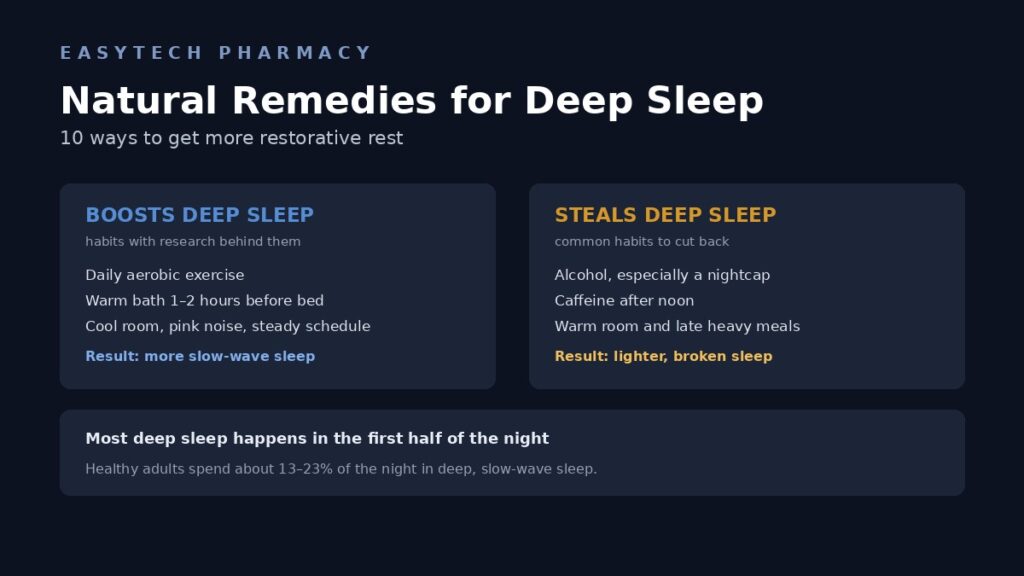
Most deep sleep happens in the first half of the night. Healthy adults usually spend about 13% to 23% of the night in this stage. The National Institute of Neurological Disorders and Stroke explains each sleep stage in more detail.
Signs You Need Deep Sleep Remedies
- You wake up groggy, even after a long night
- Your muscles feel slow to recover after exercise
- You catch colds more often
- Your memory and focus feel foggy
- You wake easily from small noises
Keep in mind that deep sleep naturally drops with age. The National Institute on Aging notes that older adults often sleep more lightly. Still, the habits below can help at any age.
What Steals Your Slow-Wave Sleep?
Before you add anything new, remove what’s working against you. These common habits cut into slow-wave sleep:
Alcohol
A nightcap may help you nod off. However, alcohol breaks up your sleep later in the night and leaves you less rested. It also mixes badly with sleep aids, as our guide on Ambien and alcohol explains.
Late Caffeine
Caffeine can reduce deep sleep, even when you still fall asleep on time. It can linger in your body for many hours.
A Warm Bedroom
Your body needs to cool down to sink into deep sleep. A stuffy room makes that harder.
An Uneven Schedule
Big swings between weekday and weekend sleep confuse your body clock and can shrink deep sleep.
Some Sleep Medicines
Not all sleep aids act the same. For example, some anxiety medicines may reduce deep sleep. Our Ambien vs Klonopin comparison covers how these drugs differ.
10 Natural Remedies for Deep Sleep
1. Exercise Most Days
Regular aerobic exercise is one of the best deep sleep remedies. Brisk walking, cycling, or swimming all count. Aim for about 30 minutes, and finish hard workouts a few hours before bed.
2. Take a Warm Bath Before Bed
A warm bath or shower one to two hours before bed helps your core temperature drop afterward. That drop nudges your body into deeper sleep.
3. Keep Your Bedroom Cool
Set your thermostat between about 60°F and 67°F. Use breathable sheets and light layers.
4. Try Pink Noise
Pink noise sounds like steady rain or rustling leaves. Small studies suggest it may boost slow-wave sleep. Many free apps and sound machines offer it.
5. Keep a Steady Sleep Schedule
Wake up at the same time every day. A steady rhythm helps your body plan its deep sleep for the early part of the night.
6. Get Morning Sunlight
Bright light in the morning sets your body clock. In turn, you’ll feel sleepy at the right time at night.
7. Cut Caffeine After Noon
Switch to decaf or herbal tea by midday. You may notice deeper, more refreshing sleep within a week or two.
8. Skip the Nightcap
Try a few alcohol-free nights and compare how you feel. Many people wake up far more rested.
9. Eat a Light Evening Meal
Heavy, late meals keep your body busy digesting. Instead, finish dinner two to three hours before bed.
10. Consider Glycine or Magnesium
Glycine may help lower your body temperature at night. Magnesium helps muscles relax. Research is still modest, so think of these as helpers, not fixes. Our guide to vitamins to take before bed shows how to time them.
How to Get More Deep Sleep: A Simple Evening Plan
- 2–3 hours before bed: finish dinner and your last drink of alcohol, if any
- 1–2 hours before bed: take a warm bath or shower
- 1 hour before bed: dim the lights and put screens away
- At bedtime: cool, dark room with pink noise or a fan
- Next morning: same wake time, then step outside for daylight
Should You Trust Your Sleep Tracker on Slow-Wave Sleep?
Smartwatches and rings estimate your sleep stages from movement and heart rate. They’re handy for spotting trends. However, they aren’t as accurate as a lab sleep study, especially for deep sleep.
So use your tracker as a rough guide. Watch the trend over weeks, not single nights. And trust how you feel in the morning just as much as the number on the screen.
Sleep Aids vs Natural Ways to Sleep Deeper
Sleep medicines affect sleep stages in different ways. Some may help you sleep longer without boosting deep sleep much.
Interestingly, a few medicines may increase slow-wave sleep. Gabapentin is one example, as our Ambien vs gabapentin guide shows. Prefer to stay drug-free? Our list of natural Ambien alternatives goes deeper.
FAQs About Natural Remedies for Deep Sleep
What are the fastest deep sleep remedies?
A warm bath one to two hours before bed and a cool bedroom often help right away. Exercise helps more over a few weeks.
How much slow-wave sleep do I need?
Most adults get about 13% to 23% of their night in deep sleep. That’s roughly one to two hours in a seven-hour night.
Does melatonin increase deep sleep?
Melatonin mainly helps with sleep timing. It doesn’t strongly boost deep sleep for most people.
Why do I get less deep sleep as I age?
Deep sleep naturally drops with age. Healthy habits can still help you make the most of it.
Can I make up for lost deep sleep?
Your body tends to catch up on deep sleep after a short night. Still, a steady schedule works much better than catching up.
Bottom Line — Small Habits, Deeper Rest
The best natural remedies for deep sleep are simple. Move your body, cool your room, take a warm bath, and keep a steady schedule. Cut late caffeine and alcohol. Give these habits two to three weeks, and you’ll likely wake up feeling truly rested.
If a sleep aid becomes part of your plan, our Ambien near me guide shows how to find it at a local pharmacy and compare prices.