Vitamins to Take Before Bed (and the Ones to Move to Morning)
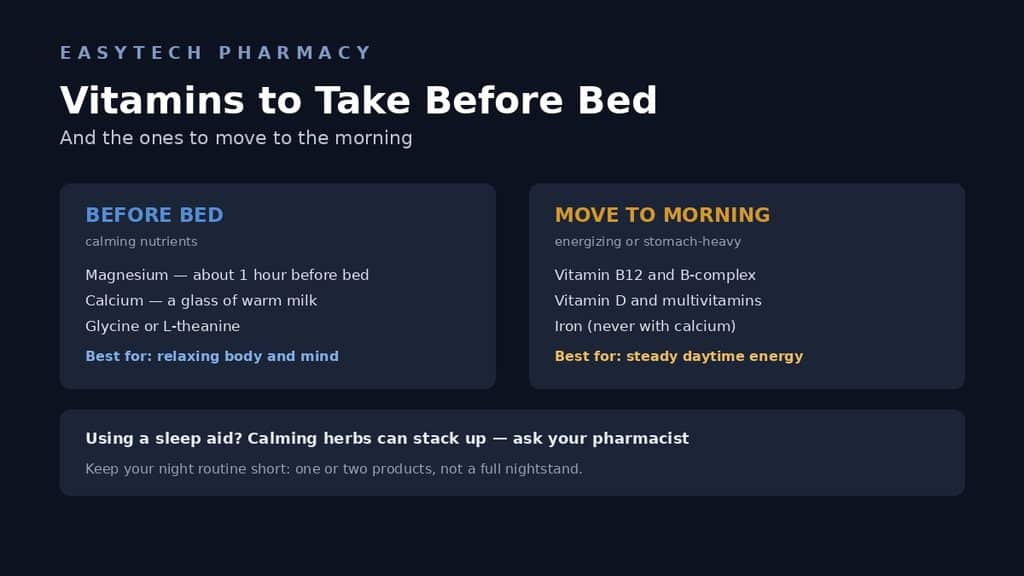
Many of us line up our pills on the nightstand and swallow them all at once. It’s easy, and it’s a habit. But some vitamins work better at night, while others can actually keep you awake. So which vitamins to take before bed, and which ones belong with breakfast?
This guide helps you build a simple, safe night routine. You’ll also learn which combos to avoid and how to keep things safe if you use a sleep aid.
Why Timing Matters for Vitamins at Night
Your body handles nutrients differently across the day. Some vitamins give you a gentle energy lift. Others relax your muscles and nerves. A few need food to absorb well, while others work best on an empty stomach.
Timing also affects comfort. Certain supplements can upset your stomach when you lie down. So the right schedule can mean better results and fewer side effects. Not sure which nutrients help sleep in the first place? Start with our guide on what vitamins are good for sleep.
The Best Vitamins to Take Before Bed
Not every bottle belongs on your nightstand. The bedtime vitamins and helpers below suit evening use best, thanks to their calming effects. Start with one, and give it two to three weeks before you judge.
Magnesium
Magnesium tops the list of bedtime supplements. It helps your muscles loosen and your mind settle. Many people take it about an hour before bed. Glycinate is gentle on the stomach.
One tip: magnesium citrate and oxide can loosen your bowels. That can help if you deal with constipation, a common issue with some sleep aids.
Calcium
Calcium works with magnesium to support calm nerves and steady muscles. A warm glass of milk at night delivers some of each. However, calcium blocks iron absorption, so don’t take the two together.
Glycine
Glycine is an amino acid, not a vitamin. Still, small studies suggest it may help you fall asleep faster and wake up fresher. It also helps lower your body temperature slightly, which signals sleep.
L-Theanine
This amino acid comes from tea leaves. Many people use it to quiet a racing mind without feeling groggy. Research is still small, but early results look promising. Like glycine, it pairs well with other supplements before bed, such as magnesium.
Vitamin B6 (With Dinner)
B6 helps your body make melatonin. Take it with dinner rather than right at bedtime. A few people report vivid dreams when they take it too late.
Vitamins You Should NOT Take Before Bed
Some vitamins at night can work against you. Move these to the morning:
- Vitamin B12: It supports energy and may keep you alert
- B-complex: The mix of B vitamins can feel energizing
- Vitamin D: Some people sleep worse when they take it late
- Multivitamins: Most contain B vitamins and absorb better with a full meal
- Iron: It can upset your stomach when you lie down and clashes with calcium
Iron needs extra care in general. The NIH Office of Dietary Supplements notes that too much iron can cause stomach pain and other problems. Take it only if a blood test shows you need it.
Bedtime Vitamin Combos to Avoid
Some supplements compete with each other. Space these pairs apart:
- Calcium + iron: Calcium blocks iron, so take iron in the morning
- High-dose zinc + magnesium: Large zinc doses can lower magnesium absorption
- Magnesium + certain antibiotics: Take them at least a few hours apart
- Calcium + thyroid medicine: Leave about four hours between them
Ready-Made Night Routines With Bedtime Vitamins
Here are simple routines based on common sleep problems. Pick the one that fits you best.
For Tense Muscles and Night Cramps
- Magnesium glycinate about one hour before bed
- A light snack with yogurt or milk for calcium
- Gentle stretching for five minutes
For a Racing Mind
- L-theanine or glycine about 30 minutes before bed
- Magnesium with your evening routine
- Screens off one hour before sleep
For Restless Legs
- Ask for an iron test first
- If iron runs low, take it in the morning, not at night
- Try magnesium in the evening
For Light Sleepers Who Wake Often
- Magnesium at night, vitamin D in the morning
- Limit fluids two hours before bed to cut bathroom trips
- Keep pill count low, since many pills mean more water
Mixing Supplements Before Bed With Sleep Aids
This is where safety really matters. Some herbs and supplements make you drowsy. When you stack them with a sleep aid, the effects can add up.
- Melatonin: Usually mild, but don’t pile it on top of other sleep aids without advice. Compare the two in our Ambien vs melatonin guide.
- Valerian root: This calming herb may add to the sedation of sleep medicine. Learn more in Ambien vs valerian root.
- OTC sleep pills: Products like Unisom contain sedating antihistamines. Read Ambien vs Unisom before you combine anything.
Your pharmacist can review your full nightly lineup in a few minutes. It’s free, and it can prevent a lot of trouble. For more on store-bought options, see our list of the best OTC sleep aids compared to Ambien.
Night Vitamins for Older Adults
Older adults often take several pills each night. That raises the risk of interactions, dizziness, and falls. A few smart steps help:
- Keep a written list of every pill and supplement
- Move energizing vitamins to the morning
- Avoid stacking several sedating products
- Turn on a night-light for bathroom trips
How to Choose Safe Supplements Before Bed
The FDA doesn’t review supplements for safety before they go on sale. The agency’s dietary supplements guide explains what that means for shoppers. To stay safe:
- Choose products with a USP Verified or NSF Certified seal
- Read the full label, including “other ingredients”
- Skip blends that hide exact amounts
- Start with one new product at a time
Want the research behind each nutrient? Our deep dive on vitamins for sleeplessness covers the studies.
FAQs About Vitamins to Take Before Bed
What is the best vitamin to take before bed?
Magnesium is the most popular choice for bedtime. It helps your muscles and nerves relax.
Is it bad to take vitamins at night?
Not always. Magnesium and calcium suit nighttime well. B12, B-complex, and vitamin D usually work better in the morning.
Can I take my multivitamin before bed?
It’s better with breakfast or lunch. Most multivitamins contain B vitamins and absorb best with a full meal.
Should I take night vitamins with food?
A small snack can ease stomach upset. Avoid heavy meals right before bed, though.
Can I take bedtime vitamins with a sleep aid?
Often, yes. Still, ask your pharmacist to check your full list first, especially for calming herbs.
Bottom Line — Build a Smart Night Routine
The best vitamins to take before bed are the calming ones: magnesium, calcium, and helpers like glycine. Move energizing vitamins, such as B12 and vitamin D, to the morning. Space out combos that compete, and keep things simple. A short, smart routine beats a nightstand full of bottles.
If a sleep aid becomes part of your plan, our Ambien near me guide shows how to find it at a local pharmacy and compare prices.