Ambien vs. Unisom: The Comparison That Actually Depends on Who’s Asking
Unisom sits in a strange spot in the sleep-aid conversation. It’s grouped with Benadryl as “just an antihistamine,” but it has its own distinct chemistry, its own tolerance profile, and, notably, a pregnancy safety story that genuinely changes the calculation for some people. Here’s how it actually stacks up against Ambien.
Different Class, Familiar Mechanism
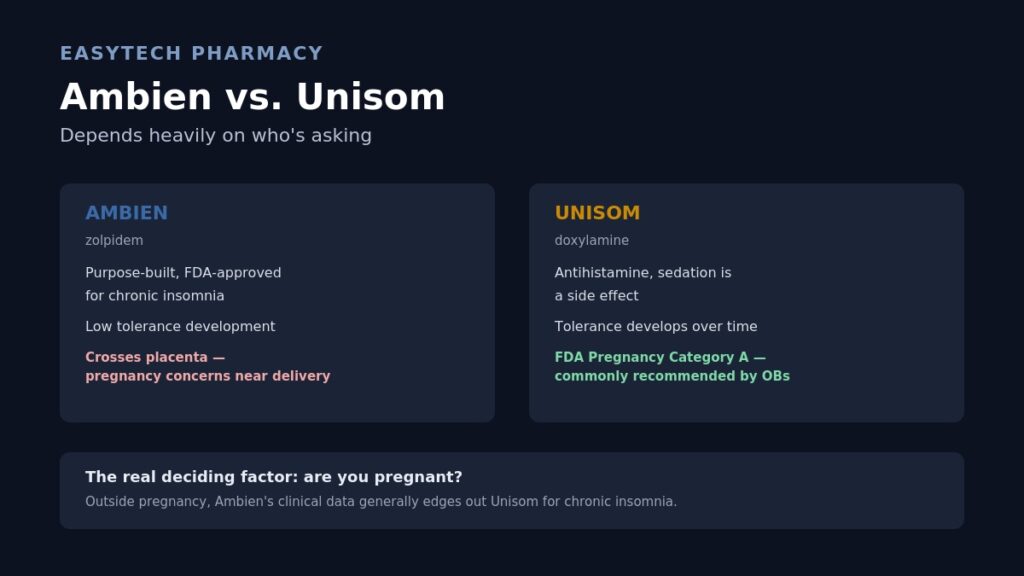
Unisom’s active ingredient, doxylamine, is a first-generation antihistamine, the same broad category as diphenhydramine (Benadryl), though a chemically distinct compound. Ambien, zolpidem, is a non-benzodiazepine sedative-hypnotic purpose-built for insomnia. Doxylamine causes drowsiness as a side effect of blocking histamine. Ambien’s entire design centers on promoting sleep directly through targeted GABA receptor activity.
The Tolerance Difference, According to the Physicians Who Prescribe Both
This distinction comes directly from clinicians who’ve compared the two: most people develop tolerance to the sedating effect of antihistamines like doxylamine over time, while most people don’t develop the same tolerance to zolpidem’s specific mechanism. That’s a meaningful practical difference if you’re thinking about nightly use versus occasional use. Our guide on Ambien tolerance covers the more nuanced reality on the Ambien side, since tolerance there isn’t zero, but the antihistamine tolerance curve tends to be faster and more pronounced.
Where Unisom Genuinely Has an Edge: Pregnancy
This is the part of the comparison that actually matters most for a real subset of people searching this topic. Doxylamine carries an FDA pregnancy Category A rating, meaning controlled studies haven’t shown risk to the fetus, and it’s commonly recommended by obstetricians specifically for pregnancy-related insomnia. It’s also the active ingredient behind Diclegis and Bonjesta, FDA-approved combination treatments for pregnancy nausea, which is why many pregnant women already have it in the house before they ever think of it as a sleep aid.
Ambien tells a very different story here. Zolpidem crosses the placental barrier, and its use during pregnancy raises documented concerns, including potential withdrawal symptoms in newborns exposed close to delivery, a topic covered in full in our guide on Ambien and pregnancy safety considerations. For anyone pregnant or trying to conceive, this isn’t a minor detail. It’s often the deciding factor.
Effectiveness for Genuine, Ongoing Insomnia
Outside of pregnancy-specific use, the effectiveness comparison favors Ambien for real, persistent insomnia. Zolpidem is FDA-approved specifically because clinical trials demonstrated it reduces time to fall asleep, reduces nighttime awakenings, and increases total sleep time. Doxylamine hasn’t been tested or approved to that same standard for chronic insomnia. It functions more as a general sedating antihistamine that happens to help some people sleep, not a purpose-built insomnia treatment.
Side Effects: Overlapping, With One Notable Addition
- Shared effects include next-day drowsiness, dry mouth, and dizziness
- Doxylamine-specific concerns include anticholinergic effects, similar to those we’ve covered in our guide on Ambien vs. Benadryl, since doxylamine shares this mechanism with diphenhydramine
- Ambien-specific concerns include complex sleep behaviors, covered in our guide on Ambien’s black box warning, a risk not associated with doxylamine
Regulatory Status: A Real Practical Difference
Unisom is available over the counter, no prescription or pharmacist consultation required. Ambien is a Schedule IV controlled substance requiring a prescription and ongoing oversight, covered in our guide on Ambien’s Schedule IV status. This isn’t purely a convenience factor. It reflects a genuine difference in how each substance’s risk profile gets managed and monitored over time.
Which One Actually Fits
- Pregnant or trying to conceive? This is the scenario where Unisom’s Category A rating genuinely changes the calculation in its favor, something worth discussing directly given your specific situation.
- Occasional, mild sleep disruption? Unisom can offer reasonable short-term relief without controlled-substance considerations.
- Persistent, chronic insomnia? Ambien’s clinical trial data and targeted mechanism generally make it the more effective option for sustained use.
- Already taking other anticholinergic medications? Doxylamine’s anticholinergic burden can compound with other similar drugs, worth reviewing with a pharmacist.
The Bottom Line
Ambien and Unisom aren’t simply “strong” and “weak” versions of the same idea. They’re built through different mechanisms, carry different tolerance patterns, and, notably, carry a meaningfully different safety profile during pregnancy, an area where Unisom genuinely has documented support that Ambien doesn’t. Outside of that specific context, Ambien’s purpose-built design generally edges out doxylamine for real, ongoing insomnia. The right choice depends heavily on which of these factors actually applies to your situation.
For a detailed side-by-side comparison, see Drugs.com’s comparison of Ambien and Unisom SleepTabs.
Frequently asked questions
Is Unisom safer than Ambien during pregnancy?
Doxylamine carries an FDA pregnancy Category A rating and is commonly recommended by obstetricians for pregnancy insomnia, while zolpidem crosses the placenta and carries documented concerns, particularly with use close to delivery.
Does Unisom stop working over time the way Benadryl does?
Most people develop tolerance to doxylamine’s sedating effect with regular use, similar to other first-generation antihistamines, while tolerance to zolpidem’s specific mechanism is less common.
Can Unisom treat chronic insomnia as effectively as Ambien?
Not as reliably. Ambien is FDA-approved specifically for insomnia based on clinical trial data, while doxylamine hasn’t been tested or approved to that same standard for ongoing insomnia treatment.
Can I take Ambien and Unisom together?
Combining two sedating medications compounds drowsiness, dizziness, and cognitive effects. This isn’t a combination to manage without pharmacist or prescriber guidance.
Related reading
- Ambien vs. Benadryl: a real comparison for sleep
- Ambien and pregnancy: what the current research shows
- Ambien tolerance: why it happens and what to do
- Zolpidem over the counter: why it isn’t, and what actually is
Not sure which option fits your situation, especially if pregnancy is part of the picture? Talk to your pharmacist or OB provider. EasyTech Pharmacy can help you think it through.
For local pharmacy access near you, our Ambien near me guide covers pharmacies across the world.
Visit EasyTech Pharmacy — sleep medication with real pharmacist guidance.