Ambien vs. Benadryl: Why “It’s Just an Antihistamine” Doesn’t Make It Safer
Reaching for Benadryl before Ambien feels like the cautious choice. It’s over the counter, it’s been around forever, and it doesn’t come with a controlled-substance label. That instinct makes sense, but the actual comparison is more complicated than “prescription strong, OTC mild.” Here’s what the real data shows.
Two Drugs Built for Completely Different Jobs
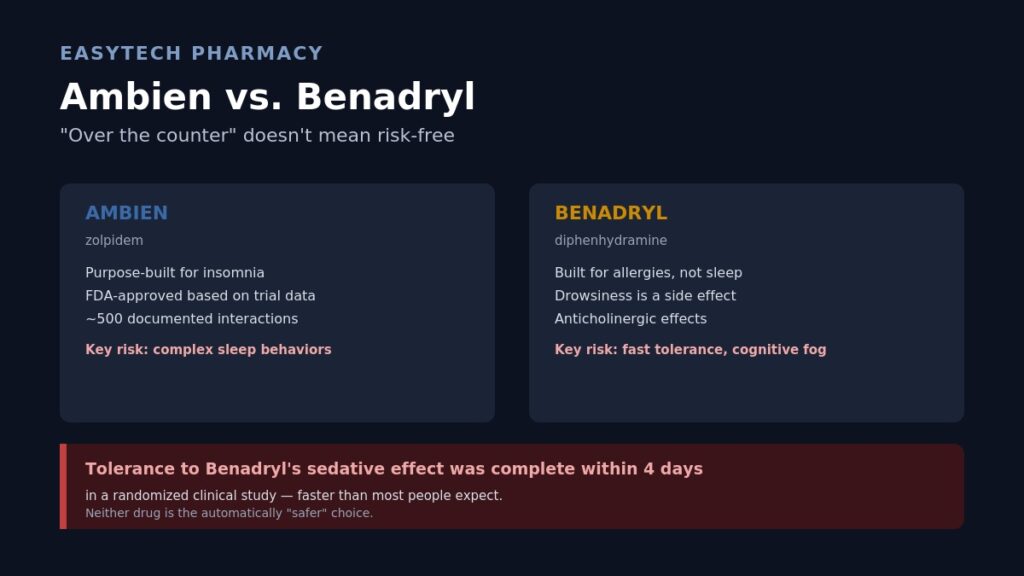
Ambien, zolpidem, exists specifically to treat insomnia. Every part of its design, dosing, and approval centers on sleep. Benadryl, diphenhydramine, is an antihistamine built to treat allergies, itching, and hives. Drowsiness is a side effect of blocking histamine, not diphenhydramine’s intended purpose. Reaching for Benadryl as a sleep aid means using a drug for something it wasn’t designed to do, even though it’s sold that way in “PM” products and sleep-aid marketing.
The Tolerance Problem Nobody Mentions
This is the single most important thing to know about Benadryl for sleep, and it’s genuinely underappreciated. A randomized, double-blind clinical study gave healthy adults 50 mg of diphenhydramine twice daily for four days. Sleepiness was significantly higher than placebo on day one. By day four, tolerance to the sedative effect was complete. The drowsiness essentially stopped working within days, not weeks.
Ambien doesn’t escape tolerance either, as we’ve covered in our guide on Ambien tolerance, but Benadryl’s tolerance curve is dramatically faster and more predictable. If you’re using it nightly for more than a few days, you’re likely getting less and less actual help from it, whether you notice or not.
The Anticholinergic Risk That Sets Benadryl Apart
Diphenhydramine belongs to a class of first-generation antihistamines with strong anticholinergic effects, meaning it blocks a neurotransmitter involved in memory, cognition, and several bodily functions. This isn’t a minor footnote. Anticholinergic medications are specifically flagged with caution for people with glaucoma or urinary retention issues, and they’re linked in research to next-day cognitive fog that can feel heavier than typical Ambien grogginess.
This risk compounds significantly with age. Anticholinergic burden is a genuine, ongoing concern in geriatric prescribing research, tied to increased fall risk and cognitive effects in older adults, similar in kind to concerns we’ve covered in our guide on Ambien and fall risk in elderly patients, though through a different mechanism entirely.
Effectiveness for Actual Insomnia: Not Close
Clinical guidance is fairly direct here: antihistamines like diphenhydramine have shown limited effectiveness for treating real insomnia, and they’re generally not recommended for chronic sleep problems. Ambien, whatever its other tradeoffs, is FDA-approved specifically because it demonstrated meaningful effectiveness for insomnia in clinical trials. Benadryl was never held to that same bar for sleep, because sleep was never what it was designed or tested for.
Interaction Risk: Also Not a Simple Win for Benadryl
People sometimes assume an OTC drug carries less interaction risk by default. That’s not really true here. Ambien has documented interactions with roughly 500 other medications, and combining it with diphenhydramine specifically increases dizziness, drowsiness, confusion, and difficulty concentrating, an effect that hits older adults particularly hard, sometimes impairing thinking, judgment, and coordination further. This combination shows up more often than you’d expect, since people don’t always think of Benadryl as a “real” medication worth mentioning to a pharmacist.
Side-by-Side: What Actually Separates Them
- Purpose-built for sleep? Ambien, yes. Benadryl, no, drowsiness is a side effect, not the design goal.
- Tolerance risk? Both develop it, but Benadryl’s tolerance curve is faster and more dramatic, often complete within days.
- Cognitive risk, especially in older adults? Benadryl’s anticholinergic profile carries a distinct, well-documented cognitive burden concern.
- Complex sleep behavior risk? This is specifically associated with Ambien and other Z-drugs, not diphenhydramine.
- Regulatory oversight? Ambien requires a prescription and pharmacist verification. Benadryl doesn’t, which also means less built-in monitoring for problematic patterns.
When Benadryl Might Make Sense Anyway
None of this means Benadryl has zero place. For truly occasional, one-off sleep disruption, a bad night before a flight, an unusually stressful evening, it can offer short-term relief without the controlled-substance considerations Ambien carries. The problem shows up specifically with regular or nightly use, where its fast-developing tolerance and anticholinergic profile stop making sense as a sustainable solution.
The Bottom Line
“Over the counter” doesn’t mean “risk-free,” and “prescription” doesn’t automatically mean “more dangerous for your specific situation.” Ambien is a purpose-built, clinically validated insomnia treatment with real controlled-substance risks. Benadryl is an allergy medication whose sedating side effect wears off within days and carries its own distinct cognitive risk, especially for older adults. Neither is simply the “safer” choice by default. The right answer depends on how often you actually need help, and what kind of tradeoff you’re more comfortable managing.
For a detailed comparison of both medications, see Drugs.com’s comparison of Ambien and Benadryl.
Frequently asked questions
Does Benadryl stop working for sleep after a while?
Yes, and faster than most people expect. Clinical research found tolerance to diphenhydramine’s sedative effect was complete within four days of regular use.
Is Benadryl safer than Ambien because it’s over the counter?
Not necessarily. Benadryl carries its own real risks, particularly anticholinergic effects linked to cognitive fog and increased concern in older adults, even though it doesn’t require a prescription.
Can I take Ambien and Benadryl together?
This combination increases dizziness, drowsiness, confusion, and coordination problems, and the effect is more pronounced in older adults. It’s not a combination to manage without medical guidance.
Is Benadryl ever a reasonable choice for sleep?
It can offer short-term relief for occasional, one-off sleep disruption, but its fast-developing tolerance and anticholinergic profile make it a poor fit for regular or nightly use.
Related reading
- Zolpidem over the counter: why it isn’t, and what actually is
- Ambien tolerance: why it happens and what to do
- Ambien and fall risk in elderly patients: what the data shows
- Ambien alternatives: a full overview of your options
Not sure whether an OTC option or a prescription fits your situation better? Talk to your pharmacist. EasyTech Pharmacy can help you think it through.
For local pharmacy access near you, our Ambien near me guide covers pharmacies across the world.
Visit EasyTech Pharmacy — sleep medication with real pharmacist guidance.