Ambien Dependence: The Physical Side, and the Quieter Psychological One
“I just can’t sleep without it anymore.” That sentence comes up constantly around Ambien, and it points to something real. Dependence on this medication isn’t only a pharmacological event happening in your brain chemistry. It’s also a belief, a habit, and sometimes a quiet source of daily anxiety that builds long before anyone names it as dependence.
This guide focuses on that second, less-discussed side. It covers how psychological dependence forms, how it shows up in ordinary daily life, and what actually helps rebuild trust in your own ability to sleep.
Two Kinds of Dependence, Working Together
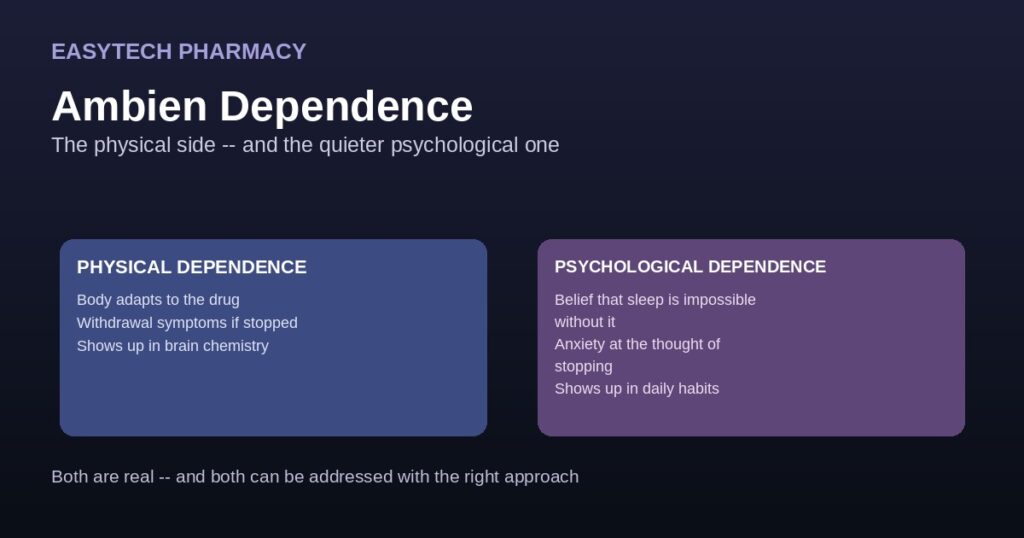
Physical dependence happens when your body adapts to the drug and produces withdrawal symptoms without it. Our guide on is Ambien habit forming covers that mechanism in detail.
Psychological dependence is different, though it often develops alongside the physical kind. It’s the belief that sleep simply isn’t possible without the medication. This belief can take hold even in people who haven’t developed significant physical dependence yet, and it often outlasts the physical symptoms once someone stops taking it.
How the Belief Quietly Takes Hold
This usually happens gradually, through a pattern that makes sense in the moment. Someone struggles with insomnia. Ambien works. Relief follows. Naturally, they keep using it.
Then comes the test: a night without it, maybe because they forgot, or ran out, or wanted to see if they still needed it. Sleep that night is often worse, thanks to rebound insomnia. That single bad night gets interpreted as proof: “See, I really can’t sleep without this.” The belief hardens, even though the bad night was a temporary, expected pharmacological rebound, not evidence of a permanent inability to sleep.
This cycle repeats a few times, and the belief becomes very difficult to question, simply because every attempt to test it seems to confirm it.
How It Shows Up in Daily Life
Psychological dependence rarely announces itself directly. It shows up in small, practical behaviors instead.
- Packing it obsessively for travel — double-checking, bringing extra, treating a missed dose like a genuine emergency
- Turning down plans that might interfere — avoiding late nights out, travel across time zones, or anything that disrupts the exact routine the medication is built into
- Anxiety building before bed if it’s not available — a racing, worried feeling that starts well before actual bedtime
- Rationing or stockpiling — an underlying fear of running out that shapes how the prescription gets used and refilled
- Avoiding the topic with a prescriber — a reluctance to bring up long-term use, out of worry the medication might get taken away
None of these are character flaws. They’re understandable responses to a belief that feels very real, especially after enough nights of confirming rebound insomnia.
Why This Isn’t a Failure of Willpower
It’s worth saying clearly: this pattern doesn’t reflect weakness. Chronic insomnia is genuinely exhausting, and a medication that finally offers relief creates a completely rational instinct to protect that relief. The brain also plays a role here, since rebound insomnia is a real pharmacological event, not just a psychological trick.
Understanding this removes a lot of the shame that often surrounds the conversation, and shame tends to make people avoid addressing the issue rather than working through it.
Rebuilding Trust in Natural Sleep
This is the part that actually helps, and it takes a different approach than simply stopping the medication outright.
Separate the Taper From the Belief
A gradual, supervised taper addresses the physical side. Our guide on how to stop Ambien safely covers that process. But the psychological belief needs its own separate attention, since tapering the dose doesn’t automatically dissolve the fear.
Build Sleep Confidence Before You Need It
Rather than testing an unmedicated night at random and risking another rebound-driven “proof,” build strong sleep habits first, while still using the medication as a safety net. Our guide on how can I sleep quickly covers habits worth establishing early.
Consider Structured Support
Cognitive behavioral therapy for insomnia, known as CBT-I, directly targets the thoughts and beliefs that drive dependence, including the exact “I can’t sleep without this” pattern described here. It’s widely regarded as one of the most effective approaches for genuinely rebuilding confidence in natural sleep, rather than simply managing symptoms night to night.
Layer in Other Support
Nutrient gaps, unaddressed anxiety, and other underlying factors sometimes play into insomnia too. Our guide on vitamins for sleeplessness and our overview of natural Ambien alternatives both cover options worth exploring alongside the psychological work.
Practical Concerns That Come Up Along the Way
A few side questions tend to surface once someone starts working through dependence, worth addressing honestly.
Some people worry that vivid or unusual dreams during this process mean something is wrong. Our guide on Ambien dreams and nightmares explains why this happens and that it’s a normal, expected part of the picture, not a red flag.
Others managing other health conditions alongside Ambien wonder how those interact during this process. Our guide on does Ambien lower blood pressure covers one relevant example worth knowing about if you’re also managing blood pressure medication.
When Dependence Might Be Something More
Psychological dependence, on its own, isn’t the same as addiction. It doesn’t necessarily involve compulsive use or escalating doses. But if you notice cravings, using it for reasons beyond sleep, or a pattern of use that’s clearly moved beyond what’s prescribed, that’s worth a closer look. Our guide on Ambien Overdose: Signs and Effects covers that distinction and what it actually involves.
If sleep trouble continues well after you’ve addressed both the physical and psychological sides of dependence, that’s a sign worth bringing to a proper evaluation rather than assuming Ambien is the only answer. Our guide on when sleeplessness needs a doctor covers those specific signs.
According to the Sleep Foundation, cognitive behavioral therapy for insomnia addresses the thoughts and behaviors that perpetuate sleep problems, often producing more durable results than medication alone.
Frequently Asked Questions
What is psychological dependence on Ambien?
It’s the belief that sleep isn’t possible without the medication, separate from any physical withdrawal symptoms. It often builds through a cycle of rebound insomnia confirming the fear, even when that rebound is a temporary, expected pharmacological event.
How is dependence different from addiction?
Dependence, whether physical or psychological, can happen with normal, prescribed use. Addiction involves compulsive use and loss of control, despite real harm. You can be dependent without being addicted.
Can you be dependent on Ambien without realizing it?
Yes. Psychological dependence often shows up in small daily habits, like anxiety about running out or avoiding plans that might interfere with the routine, long before someone consciously labels it as dependence.
How do you overcome psychological dependence on a sleep medication?
Building sleep confidence gradually, often alongside a supervised taper, tends to work better than an abrupt stop. Cognitive behavioral therapy for insomnia specifically targets the underlying beliefs and is widely considered one of the most effective approaches.
Is it normal to feel anxious about not having Ambien available?
It’s common, and it makes sense given how rebound insomnia can reinforce the fear. It’s still worth addressing directly, since that anxiety itself can perpetuate the dependence cycle.
Bottom Line — Address Both Sides, Not Just the Prescription
Ambien dependence isn’t only about what’s happening in your brain chemistry. It’s also about a belief that builds through repeated, understandable experience, and that belief deserves its own attention, separate from the taper itself. Addressing both the physical and psychological sides gives you a genuinely better shot at trusting your own sleep again.
If this pattern sounds familiar, an honest conversation with a pharmacist or prescriber is the right starting point, not something to work through entirely alone.
For local pharmacy access, our Ambien near me guide covers options across the world.
👉 Visit EasyTech Pharmacy — find the right sleep medication for your situation today.