Drugs That Cause Insomnia: The Medications Behind Sleepless Nights
Someone starts a new medication for an unrelated condition, and a few days later their sleep falls apart. It rarely occurs to them to connect the two. Their doctor prescribed the medication for blood pressure, or allergies, or depression — not sleep. But a long list of common, everyday drugs carry insomnia as a documented, sometimes well-known side effect. Recognizing that connection can be the fastest route to actually solving the problem.
This guide walks through the major categories of medications known to disrupt sleep, and why each one does what it does. You’ll also learn what to actually do if you suspect a medication you’re taking is behind your sleeplessness.
Why Medications Disrupt Sleep in the First Place
Sleep depends on a delicate balance of neurotransmitters and hormones. Melatonin rises in the evening. Cortisol drops. The nervous system shifts from an alert state to a restful one. Medications that interfere with any part of that chain can produce insomnia as a side effect. They might stimulate the nervous system directly, alter hormone levels, or disrupt neurotransmitter balance. Sometimes sleep disruption has nothing to do with what the drug was actually designed to treat.
Understanding which category a medication falls into helps explain not just that it affects sleep, but how and why. That matters when it comes to figuring out what to do about it.
Corticosteroids — One of the Most Well-Known Culprits
Oral corticosteroids like prednisone are among the most commonly recognized sleep-disrupting medications. The effect can be dramatic. Steroids mimic cortisol, the body’s natural stress hormone. Taking supplemental corticosteroids essentially floods the system with a synthetic version of a hormone that’s supposed to be low at night, not high.
This is why people on short courses of prednisone for an inflammatory flare-up or allergic reaction often report feeling “wired” and unable to sleep. Sometimes this happens after just a single dose. The effect is generally dose-dependent. Higher doses tend to produce more pronounced sleep disruption. It typically resolves once the steroid course ends.
Stimulant Medications — An Obvious but Often Overlooked Cause
Medications prescribed for ADHD, like those in the amphetamine and methylphenidate families, work by increasing alertness and focus. That’s exactly the mechanism that makes them disruptive to sleep when taken too late in the day. In some cases, even appropriately timed doses disrupt sleep in sensitive individuals.
This category also includes some medications used for narcolepsy and certain weight management drugs that work through stimulant pathways. Timing matters enormously here. A dose taken early in the day generally clears the system well before bedtime. A later dose can linger into the evening and interfere with falling asleep.
Certain Antidepressants — A More Complicated Picture
Antidepressants have a genuinely mixed relationship with sleep. Some cause drowsiness. Others cause insomnia. It depends heavily on the specific medication and how it affects different neurotransmitter systems.
SSRIs and SNRIs — common first-line antidepressants — are well known to cause insomnia in a meaningful subset of people. This happens particularly in the first several weeks of treatment, as the body adjusts. Some people also experience vivid, disruptive dreams on these medications. That further fragments sleep, even when total sleep time isn’t dramatically reduced. Bupropion, an antidepressant with a more stimulating profile, carries a particularly well-documented insomnia association compared to other classes.
This doesn’t mean you should avoid antidepressants. For many people, treating the underlying depression or anxiety ultimately improves sleep more than it disrupts it. But if insomnia appears or worsens after starting or changing an antidepressant, that timing is worth discussing directly rather than assuming it’s unrelated.
Beta-Blockers — A Documented but Less Obvious Connection
Doctors commonly prescribe beta-blockers for blood pressure and heart conditions. They have a well-documented association with sleep disruption, including difficulty falling asleep and an increase in vivid or disturbing dreams. The mechanism involves beta-blockers’ effect on melatonin production. Some research suggests certain beta-blockers suppress the body’s natural melatonin release. That disrupts the signal telling the brain it’s time to wind down.
Not all beta-blockers affect sleep equally. Some carry a stronger association than others. If this connection applies to you, it’s worth discussing whether a different medication within the same class might have less impact on sleep. Our guide on does Ambien lower blood pressure also covers the broader relationship between blood pressure medications and sleep for anyone managing both conditions together.
Decongestants — A Common Over-the-Counter Cause
Pseudoephedrine and phenylephrine, found in many over-the-counter cold and allergy medications, are stimulants by mechanism. Their insomnia-causing potential is well recognized. This is a category people frequently overlook, because it’s “just an allergy pill” rather than something that reads as a strong medication. But the stimulant effect is real. It can be quite noticeable, particularly when taken later in the day.
Statins — A Less Certain but Worth-Knowing Connection
Researchers understand the relationship between statins (cholesterol-lowering medications) and sleep less definitively than the categories above. Still, some research and patient reports have connected certain statins to sleep disturbances, including insomnia and vivid dreams. The evidence here is more mixed than for the other categories on this list. The effect appears to vary meaningfully between specific statin medications and individuals.
Other Categories Worth Knowing About
- Certain blood pressure medications beyond beta-blockers — some diuretics, if taken later in the day, can cause nighttime bathroom trips that fragment sleep even without directly affecting sleep architecture
- Some asthma medications — particularly those with stimulant components, similar to the mechanism behind decongestants
- Thyroid medications — especially if the dose runs higher than needed for an individual, which can produce a mildly overactive-thyroid-like state including insomnia
- Certain pain medications and their withdrawal — both active use and the process of stopping some pain medications can disrupt sleep through different mechanisms
What to Actually Do If You Suspect a Medication Is the Cause
- Track the timing carefully. Note exactly when your sleep trouble started relative to any new medication or dose change — this single piece of information is often the most useful clue
- Don’t stop a prescribed medication on your own — many of these medications treat serious conditions, and abruptly stopping can carry its own risks. This is a conversation to have, not a decision to make solo
- Ask about timing adjustments — for stimulant-type medications especially, simply moving the dose earlier in the day can meaningfully resolve sleep-onset issues without changing the medication itself
- Ask whether a different medication in the same class might suit you better — as with beta-blockers, some options within the same category carry less sleep disruption than others
- Review your complete medication list, including over-the-counter products — decongestants and other OTC items are easy to overlook when thinking through possible causes
Say a specific culprit medication can’t be identified or adjusted, and the sleep trouble is persistent. It’s worth working through the broader picture. Our guide on when sleeplessness needs a doctor covers the signs that mean a fuller evaluation is worth pursuing.
Supporting Sleep While Working Through the Cause
While you’re identifying and addressing the underlying medication issue, a few supportive strategies can help in the meantime. Our guide on how can I sleep quickly covers behavioral approaches. Our piece on vitamins for sleeplessness covers nutrient-based support that can complement other adjustments.
For some people, short-term sleep support becomes a reasonable part of the plan. This applies especially when the medication causing insomnia can’t be changed, or when the underlying condition it treats takes priority. Our comparison of trazodone vs Ambien and our guide on sleeping pills not habit forming both cover options worth discussing in that context. Understanding what class a medication like Ambien actually belongs to helps too — our guide on is Ambien a benzodiazepine clears up a common mix-up between Z-drugs and benzodiazepines, both of which come up often in these same conversations about sleep-disrupting medications.
According to MedlinePlus, certain medications are recognized causes of insomnia, including some used for asthma, allergies, high blood pressure, and depression. Reviewing your full medication list is a standard part of evaluating persistent sleep problems.
Frequently Asked Questions
What common medications cause insomnia?
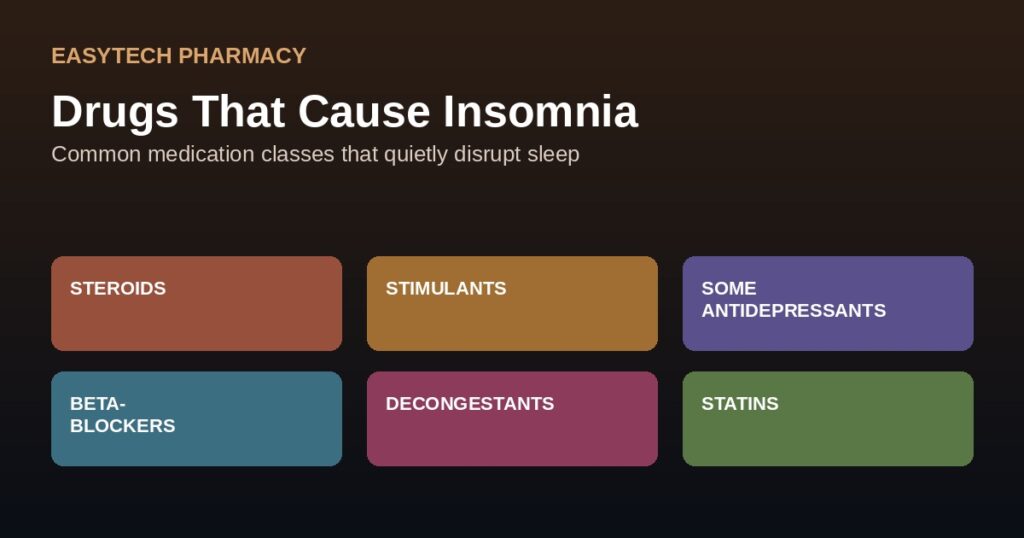
The most well-documented categories linked to insomnia as a side effect include corticosteroids, stimulant medications for ADHD, certain antidepressants (particularly SSRIs, SNRIs, and bupropion), some beta-blockers, over-the-counter decongestants, and in some cases, statins.
How do I know if my medication is causing my insomnia?
Tracking the timing of when your sleep trouble began relative to starting or changing a medication is the most useful indicator. If insomnia started or worsened noticeably around the same time as a medication change, that’s a strong clue worth discussing directly.
Should I stop taking a medication if it’s causing insomnia?
Not without guidance. Many medications on this list treat serious conditions, and abruptly stopping isn’t safe for several of them. Timing adjustments or switching to a different option within the same class are often better solutions than stopping outright.
Can over-the-counter medications cause insomnia?
Yes. Decongestants containing pseudoephedrine or phenylephrine are a common, often overlooked cause. People don’t always think of allergy or cold medication as something that could meaningfully disrupt sleep.
Does insomnia from medication go away on its own?
Often, yes — once you stop or adjust the medication, or once your body adapts over the first few weeks of treatment. This varies significantly depending on the specific medication and individual. Persistent insomnia that doesn’t improve is worth a closer look.
Bottom Line — A Common, Often Overlooked Cause Worth Ruling Out
A surprising number of everyday medications — from steroids and stimulants to certain antidepressants, beta-blockers, and even over-the-counter decongestants — carry a real, documented connection to insomnia. Recognizing this possibility, and tracking the timing between a medication and your sleep trouble, is often the fastest route to actually solving the problem. Don’t treat insomnia as a stand-alone issue, disconnected from everything else going on with your health.
If you’re managing insomnia that started around the same time as a new medication, that connection is worth raising directly rather than assuming it’s unrelated.
For local pharmacy access if short-term sleep support becomes part of your plan, our Ambien near me guide covers options across the world.