Is There a Cure for Insomnia? What You Need to Know
“Cure” is a strange word to apply to sleep. It implies a single fix, applied once, after which the problem never returns. Insomnia doesn’t quite work that way, but the honest answer is more encouraging than “no cure exists” makes it sound. It depends heavily on which kind of insomnia you actually have.
Acute Insomnia Usually Resolves on Its Own
Short-term, situational insomnia, tied to stress, travel, a specific life event, genuinely tends to resolve once the trigger passes or the nervous system adjusts. This kind of insomnia isn’t really the one people mean when they ask about a “cure,” since it was never expected to be permanent in the first place. The more meaningful question is about chronic insomnia, the kind that persists for three months or longer.
Chronic Insomnia: “Remission” Is the More Accurate Word
For chronic insomnia, “cure” isn’t really how clinicians and researchers talk about outcomes. The word that shows up in the actual research is remission, meaning insomnia symptoms drop below the threshold for a diagnosis, sustained over time. This isn’t just semantics. Remission acknowledges that the underlying tendency toward poor sleep can resurface under stress, while still representing a genuine, durable resolution of the disorder as it currently exists.
The Data Behind This Distinction
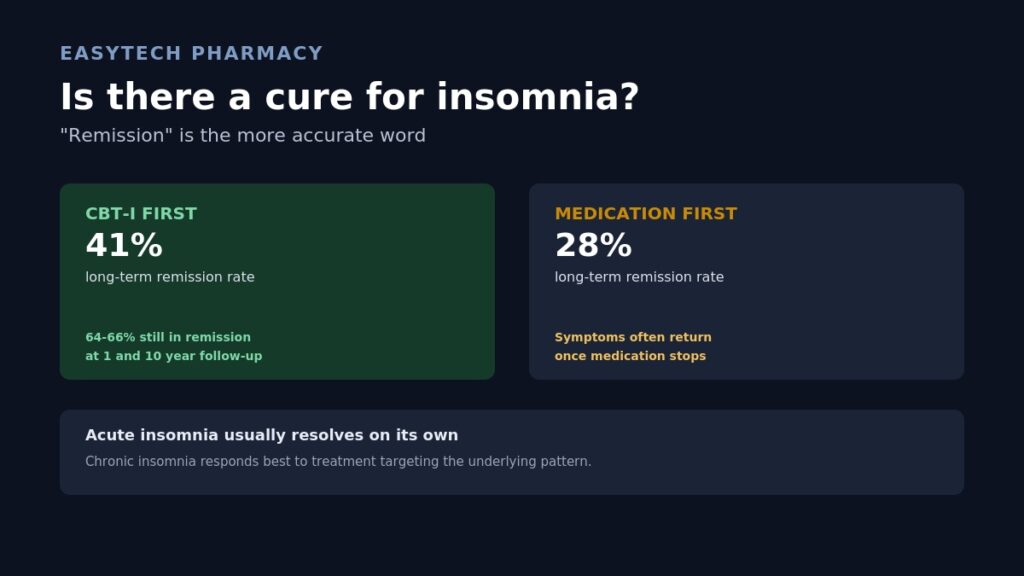
Real numbers back up why remission, not permanent cure, is the honest framing. A network meta-analysis comparing treatment approaches found that starting with cognitive behavioral therapy for insomnia produced a long-term remission rate of 41%, compared to 28% for those starting with medication, details covered in full in our comparison of CBT-I vs. Ambien. A separate long-term follow-up study found 64% and 66% of people who completed CBT-I no longer met criteria for an insomnia diagnosis at one-year and ten-year follow-ups, respectively.
These numbers tell an encouraging story, genuine, lasting remission is achievable for a majority of people who pursue the right treatment, but they also make clear that this isn’t universal or guaranteed. Some people relapse. Some never fully resolve the pattern. That’s worth being honest about rather than promising a clean, permanent fix.
Why CBT-I Comes Closest to “Curing” the Underlying Pattern
This is the real reason CBT-I keeps showing up as the answer across nearly every guide in this series. Medication manages the symptom while it’s active in the body. It doesn’t change the underlying thoughts, habits, and conditioned responses that generate insomnia in the first place. CBT-I does exactly that, addressing the actual mechanism, which is why its remission rates hold up years after treatment ends, in a way medication-only approaches generally don’t.
Why Medication Alone Rarely Produces Lasting Remission
This connects directly to a pattern covered in our guide on Ambien rebound insomnia: stopping a sleep medication often brings the original sleep trouble back, sometimes more intensely, because the medication was never addressing the underlying cause. This isn’t a flaw specific to Ambien. It’s a structural limitation of symptom management versus mechanism-level treatment, one that applies broadly across the medication landscape covered.
What Genuine, Lasting Improvement Actually Requires
- Addressing the behavioral and cognitive patterns directly, through CBT-I or a similar structured approach, rather than only managing the symptom nightly
- Identifying and treating underlying contributors, sleep apnea, anxiety, pain, or other conditions that can drive insomnia independently, a pattern covered
- Building durable sleep habits that hold up even during future stress, since remission doesn’t mean immunity from future disruption
- Using medication as a bridge, not a destination, when it’s part of the plan at all, buying time and relief while the more durable work happens
What Relapse Actually Looks Like
Even after genuine remission, a rough patch, travel, illness, a stressful season, can bring symptoms back temporarily. This isn’t a sign that treatment failed. Research following people after CBT-I found that those who returned to the behavioral techniques they’d learned during a relapse did better than those who reached back for medication instead. The tools, once learned, remain available even after the active treatment phase ends.
So, Is There a Cure?
Not in the sense of a single, one-time fix that guarantees insomnia never returns under any circumstances. But genuine, lasting remission, sustained enough that insomnia no longer defines your relationship with sleep, is real and achievable for a majority of people who pursue treatment that targets the underlying pattern rather than just the nightly symptom. That’s a meaningfully different, and more honest, answer than either “no, you’re stuck with this forever” or “yes, take this pill and it’s solved.”
The Bottom Line
Acute insomnia usually resolves on its own once its trigger passes. Chronic insomnia responds best to remission-focused treatment, particularly CBT-I, also our guide on Insomnia Treatment which has real data showing benefit sustained up to a decade later for a majority of people who complete it. Medication can help manage symptoms along the way, but it doesn’t address the underlying pattern the way behavioral treatment does, which is part of why relapse tends to follow medication-only approaches more often. The most honest answer to “is there a cure” is: not a permanent, guaranteed one, but genuine, lasting improvement is realistic and well within reach for most people.
For the full clinical data behind CBT-I’s long-term remission outcomes of American College of Physicians clinical guideline on chronic insomnia.
Frequently asked questions
Can insomnia be permanently cured?
Clinicians generally talk about remission rather than a permanent cure, since the underlying tendency toward poor sleep can resurface under stress. Genuine, lasting remission is achievable for many people, particularly through CBT-I.
What percentage of people achieve lasting remission from chronic insomnia?
Research has found CBT-I associated with a 41% long-term remission rate, compared to 28% for medication-first approaches, with separate studies showing benefit maintained up to ten years later for a majority of participants.
Why doesn’t medication alone cure chronic insomnia?
Medication manages the symptom while active in the body but doesn’t address the underlying thoughts and habits generating the insomnia, which is part of why symptoms often return once medication stops.
What happens if insomnia symptoms come back after treatment?
A temporary relapse doesn’t mean treatment failed. Research has found that people who return to CBT-I techniques during a relapse tend to do better than those who return to medication instead.
Wondering whether lasting improvement is realistic for your situation? Talk to your pharmacist. EasyTech Pharmacy can help you think through the right next step.
For local pharmacy access near you, our Ambien near me guide covers pharmacies across the world.
Visit EasyTech Pharmacy — sleep medication with real pharmacist guidance.