Insomnia Treatment Guide: Behavioral, Natural, and Medical Options
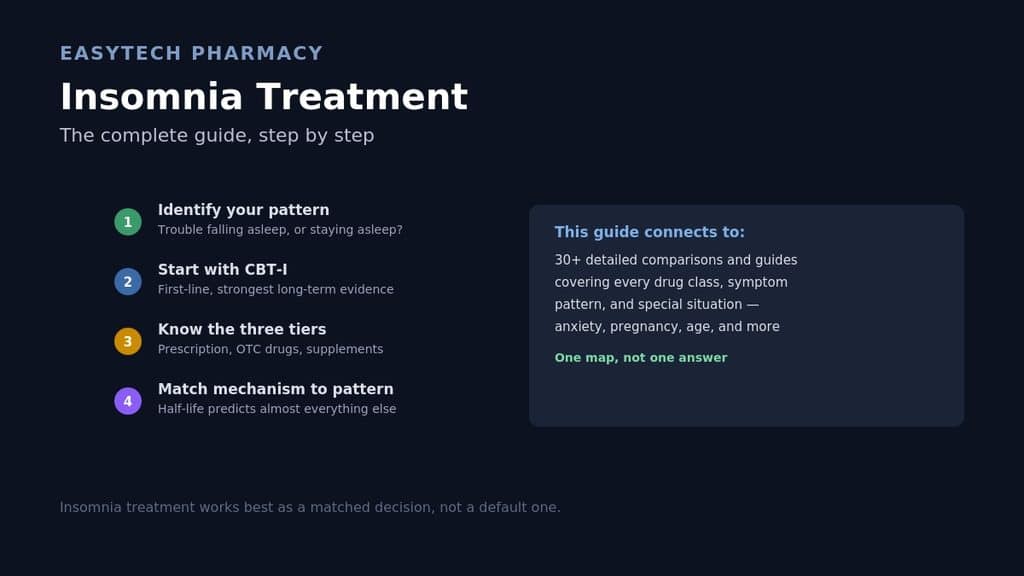
Insomnia treatment isn’t one decision. It’s a series of smaller ones: which category to start in, which specific pattern you’re dealing with, and which tradeoffs actually matter for your situation. This guide organizes everything into one map, with links to the detailed breakdown behind each piece.
Step One: Identify Your Actual Pattern
Insomnia isn’t a single symptom, and treating the wrong half of the problem is one of the most common reasons a treatment feels like it “doesn’t work.” The two core patterns are genuinely different:
- Trouble falling asleep (sleep-onset insomnia), tied to nervous system hyperarousal and racing thoughts at bedtime, covered in depth in our guide on the best sleep aid for trouble falling asleep
- Trouble staying asleep (sleep-maintenance insomnia), actually the more common complaint in primary care, covered in our guide on the best sleep aid for frequent nighttime waking
Some people deal with both. Knowing which one, or whether it’s both, is the real starting point before anything else.
Step Two: Start With Behavioral Treatment, Not Medication
This is the part most guides bury at the bottom, and it shouldn’t be. Cognitive behavioral therapy for insomnia, CBT-I, is recommended as first-line treatment by the American College of Physicians, ahead of medication, and it’s the only approach in this entire guide with research showing benefit maintained up to ten years after treatment ends. the actual trial data behind this, including a 41% versus 28% long-term remission rate favoring CBT-I over medication-first approaches.
Step Three: Understand the Three Treatment Tiers
Beyond behavioral therapy, everything else falls into three regulatory tiers, and understanding the difference matters more than picking based on brand recognition. Our guide on OTC vs. prescription sleep aids breaks this down fully, but the short version:
- Prescription: Ambien, Lunesta, Sonata, and newer orexin blockers, backed by FDA clinical trials specifically proving insomnia effectiveness
- OTC drugs: Diphenhydramine and doxylamine, FDA-regulated but not built specifically for insomnia
- Supplements: Melatonin, valerian root, magnesium, and CBD, facing lighter regulatory standards and more variable quality control
If You’re Starting With OTC or Supplement Options
Comparing over-the-counter sleep aids to Ambien reveals important distinctions. Diphenhydramine’s sedative effects can decrease significantly within just four days of regular use, melatonin’s effective dose is often much lower than what most commercial bottles contain, and magnesium’s benefits are strongest specifically for individuals who are actually deficient. If avoiding dependence entirely is the priority, non-habit-forming sleep alternatives should be evaluated based on their safety and risk profiles rather than marketing claims.
If Prescription Treatment Becomes the Right Step
This is where matching mechanism to pattern matters most. Our guide on short-acting vs. long-acting sleep medications explains why half-life is the single number that predicts almost everything else about how a medication behaves, from next-day grogginess to how well it handles sleep maintenance.
Within the prescription tier, several genuinely different mechanisms exist:
- Z-drugs (Ambien, Lunesta, Sonata), enhancing GABA directly, compared fully in our guide on Ambien vs. Lunesta vs. Sonata
- Orexin blockers (Belsomra, Quviviq, Dayvigo), blocking wakefulness rather than inducing sedation, each with real differences in half-life and coverage, covered in our guides on Belsomra, Quviviq, and Dayvigo against Ambien
- Repurposed medications like doxepin, hydroxyzine, and gabapentin, each carrying a genuinely different risk profile than traditional sleep drugs, covered in our comparisons of doxepin, hydroxyzine, and gabapentin against Ambien
- Non-controlled options like ramelteon, covered in ramelteon vs. Ambien, for anyone specifically wanting to avoid controlled-substance status
If Your Insomnia Is Tangled Up With Something Else
Insomnia rarely exists in isolation. A few specific situations warrant their own approach entirely:
- Anxiety-driven insomnia often responds better to treating the anxiety directly than to sedating through it nightly, covered in our guide on the best Ambien alternative for anxiety-related insomnia
- Pregnancy changes the risk calculation meaningfully, and doxylamine’s long track record makes it the current first-line choice, covered in our guides on Ambien alternatives for pregnant women
- Older age shifts which options are appropriate, since the Beers Criteria specifically flags Z-drugs and benzodiazepines for this population, covered in our guides on Ambien and fall risk in elderly patients.
Understanding Ambien Specifically, If It’s Part of the Conversation
Understanding Ambien specifically is crucial before starting or continuing the medication. It is a Schedule IV controlled substance that carries real tolerance and dependence potential, along with a documented risk of complex sleep behaviors highlighted by a black box warning. Additionally, certain health factors rule it out entirely for some individuals.
If You’re Already on Ambien and Considering a Change
Stopping any sleep medication abruptly carries real risks, including a temporary spike called rebound insomnia and a broader withdrawal process. Any transition to a different medication or approach is worth planning deliberately rather than switching cold.
A Quick Decision Framework
- Never tried behavioral treatment? Start there. It has the strongest long-term evidence of anything in this guide.
- Occasional, mild disruption? An OTC or supplement option, matched to your specific pattern, is a reasonable first step.
- Persistent, chronic insomnia? This is where prescription options earn real consideration, matched by mechanism to your specific pattern.
- A specific complicating factor? Anxiety, pregnancy, or age each changes which options make sense, and each has its own dedicated guide above.
The Bottom Line
Insomnia treatment works best as a matched decision, not a default one. Behavioral therapy deserves consideration before medication, given its evidence for lasting benefit. Within medication, matching mechanism and duration to your actual sleep pattern, onset versus maintenance, short-acting versus long-acting, matters more than picking whatever’s most familiar. And specific situations, anxiety, pregnancy, age, each shift the calculation in real, documented ways. This guide exists to help you find the right specific path rather than guess.
For the American College of Physicians’ full clinical guideline on managing chronic insomnia, see their official practice recommendation.
Frequently asked questions
What’s the first thing I should try for insomnia?
Cognitive behavioral therapy for insomnia (CBT-I) is recommended as first-line treatment ahead of medication, with the strongest evidence for durable, long-term improvement of any approach covered in this guide.
How do I know if I have sleep-onset or sleep-maintenance insomnia?
Sleep-onset insomnia means trouble falling asleep initially. Sleep-maintenance insomnia means waking frequently through the night. Many people experience some of both, and identifying which is more dominant helps match the right treatment.
Is it safe to try several OTC options before considering a prescription?
Generally, yes, for mild or occasional sleep trouble. If sleep problems persist despite trying behavioral and OTC approaches, that’s a reasonable point to discuss prescription options.
Does age or pregnancy change which treatments are appropriate?
Yes, meaningfully. Both shift the risk-benefit calculation for specific medications, and both have dedicated guidance covered in this series.
Not sure where to start in this whole landscape? Talk to your pharmacist. EasyTech Pharmacy can help you find the right first step.
For local pharmacy access near you, our Ambien near me guide covers pharmacies across the world.
Visit EasyTech Pharmacy — sleep medication with real pharmacist guidance.