What Does a Sleep Specialist Do? Tests, Treatments, and Follow-Up Explained
You’ve booked your first sleep appointment, or you’re thinking about it. Now you’re wondering what you’re actually signing up for. So, what does a sleep specialist do once you walk through the door?
Quite a lot, as it turns out. A sleep specialist figures out what’s wrong, runs the right tests, and manages your treatment for months or even years. This guide walks you through each part of the job, so you know what to expect.
What Does a Sleep Specialist Do in a Nutshell?
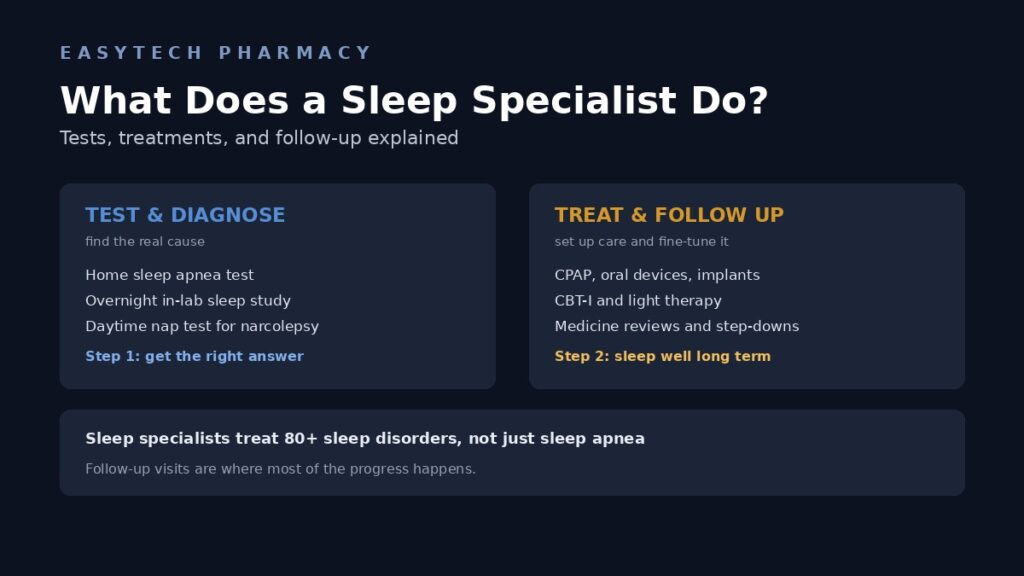
A sleep specialist diagnoses and treats problems that affect how you sleep and how alert you feel during the day. Their work usually falls into four parts:
- Diagnose: find the real cause behind your sleep trouble
- Test: measure your sleep with home or overnight studies
- Treat: set up therapy, devices, or other care
- Follow up: track progress and fine-tune the plan
Curious how this expert differs from other sleep clinicians? Our guide on sleep disorder doctor vs sleep specialist breaks down titles and training.
The Sleep Problems a Sleep Specialist Treats
Experts recognize more than 80 sleep disorders. Still, a few show up again and again. The MedlinePlus sleep disorders page gives a helpful overview. Here are the most common ones:
- Sleep apnea: breathing pauses that break up your sleep all night
- Chronic insomnia: trouble falling or staying asleep for months
- Narcolepsy: sudden, hard-to-fight sleep attacks during the day
- Restless legs syndrome: an urge to move your legs, mostly at night
- Circadian rhythm disorders: a body clock that runs too early or too late
- Parasomnias: sleepwalking, sleep talking, night terrors, and acting out dreams
Step One: How a Sleep Specialist Finds the Cause
Your first visit feels like detective work. Your sleep specialist asks about your bedtime, wake time, naps, snoring, and daytime energy. They also ask about stress, caffeine, alcohol, and your work schedule.
Next, they review your health history and every medicine you take. This step matters more than most people think. Some medicines don’t mix well with sleep problems. For example, sedatives may not suit people with untreated sleep apnea. Our guide on who should not take Ambien explains why.
Finally, they may ask you to fill out a short sleepiness quiz. It helps them see how much your sleep affects your days.
The Tests a Sleep Expert May Order
Not everyone needs a test. However, many sleep problems need hard data to confirm. Here’s what your sleep expert may suggest.
Home Sleep Apnea Test
You wear a small device in your own bed for one night. It tracks your breathing, oxygen, and heart rate. It’s simple, cheaper, and great for checking likely sleep apnea.
In-Lab Sleep Study
You spend a night at a sleep clinic. Sensors track your brain waves, breathing, heart, and movement. This study can spot problems a home test may miss.
Daytime Nap Test
This test checks how fast you fall asleep across several short daytime naps. It helps confirm narcolepsy. The National Institute of Neurological Disorders and Stroke explains narcolepsy in more detail.
Wake-Up Test
This test checks how well you stay awake in a quiet, dim room. Some jobs, like driving or flying, may ask for it.
Treatments a Sleep Specialist Sets Up and Manages
Here’s where the real work begins. Your sleep specialist builds a plan that fits your problem and your life.
Breathing Devices for Sleep Apnea
CPAP machines gently push air to keep your airway open. Your specialist sets the right pressure and picks a comfy mask. Some people use newer options, like auto-adjusting machines.
Oral Devices and Implants
Can’t stand CPAP? A sleep specialist may suggest a custom mouth guard that moves your jaw forward. For some people, they may also discuss an implant that keeps the airway open during sleep.
CBT-I for Insomnia
Many specialists treat insomnia with CBT-I or team up with a sleep therapist. Our guide to what a sleep therapist does walks through each session.
Light Therapy and Timing Plans
For body clock problems, a sleep specialist may suggest bright light at certain times of day. They may also help you time melatonin, meals, and naps.
Safety Plans for Sleepwalking
For sleepwalking and other parasomnias, your specialist helps make your home safer. That may mean locking doors, moving sharp objects, or adjusting your medicines. Some sleep aids carry warnings about these events, as our post on the Ambien black box warning explains.
Medicine Reviews
Sleep specialists also review the medicines you already take. They check for interactions and for drugs that may harm your sleep. Even common pain relievers come up, as our guide on taking Tylenol with Ambien shows.
What Follow-Up With a Sleep Clinic Looks Like
Good sleep care doesn’t stop after one visit. In fact, follow-up is where most of the progress happens.
- CPAP check-ins: Your sleep clinic reads data from your machine to see how often you use it and how well it works.
- Mask and pressure tweaks: Small changes often fix leaks, dry mouth, or discomfort.
- Insomnia progress reviews: Your expert checks your sleep diary and adjusts your plan.
- Medicine step-downs: If you want to cut back on a sleep aid, your specialist can guide a slow, safe plan. Our post on Ambien dependence vs addiction explains why a slow taper matters.
Most people see their sleep specialist every few weeks at first. Later, visits often drop to once or twice a year.
How a Sleep Specialist Helps Beyond the Bedroom
Better sleep touches every part of life. That’s why sleep specialists often work with other experts. For example, they may team up with heart, lung, mood, or weight-loss care.
Sleep specialists also help with safety at work and on the road. Daytime sleepiness raises the risk of crashes. Sleep aids can add next-day drowsiness too, as our guide on Ambien and next-day driving explains. For truck drivers and pilots, a specialist may also provide the sleep testing their jobs require.
How to Get the Most From Your Sleep Expert
- Bring a two-week sleep diary to your first visit
- Bring a full list of your medicines and supplements
- Ask your bed partner what they notice at night
- Be honest about alcohol, caffeine, and screen time
- Stick with your treatment, even when early weeks feel tough
Not sure which sleep expert fits your insomnia? Our guide on insomnia specialists and who to see helps you choose.
FAQs: What Does a Sleep Specialist Do?
What does a sleep specialist do on the first visit?
They ask about your sleep habits, symptoms, health, and medicines. Then they decide whether you need a sleep test.
Does a sleep specialist only treat sleep apnea?
No. They also treat insomnia, narcolepsy, restless legs, body clock problems, and sleepwalking.
Will I have to sleep at a clinic?
Not always. Many people now take a simple home test instead. Your specialist will suggest a lab study only if you need one.
How long will I see a sleep specialist?
It depends on your problem. Insomnia care may last a few months. Sleep apnea care often includes yearly check-ins.
Can a sleep specialist help me stop using sleep aids?
Yes. Many specialists help people slowly cut back on sleep aids while building better sleep habits.
Bottom Line — A Sleep Specialist Guides the Whole Journey
So, what does a sleep specialist do? They find the real cause of your sleep problem, test when needed, and set up the right treatment. Then they stay with you, adjusting the plan until you sleep well and feel alert again.
If a sleep aid is part of your plan, our Ambien near me guide shows how to find it at a local pharmacy and compare prices.