Ambien Dependence vs. Addiction: What’s Actually Different
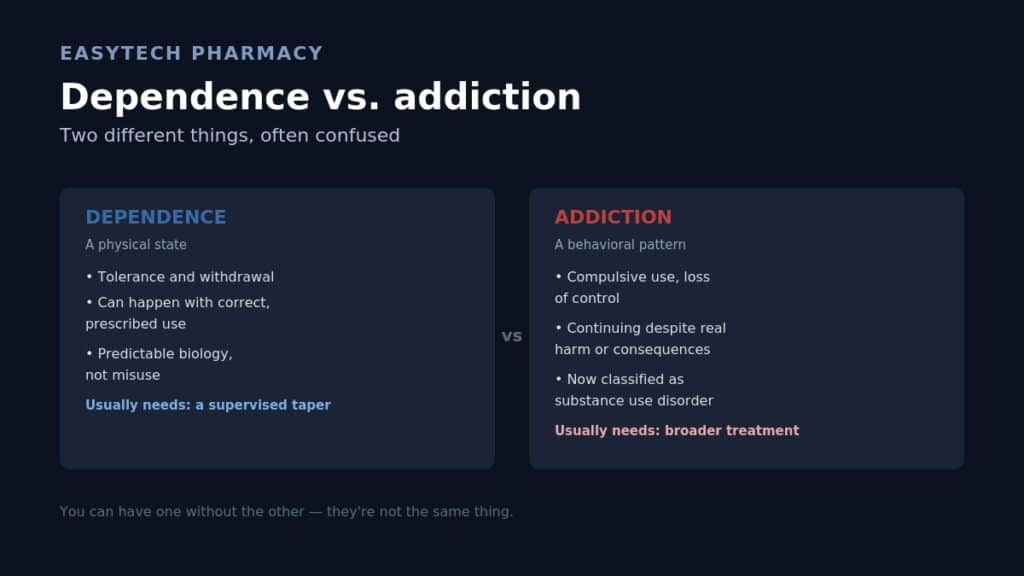
“Am I dependent, or am I addicted?” It’s a question worth asking honestly, and it’s also one that gets muddled constantly, even among people who use these words professionally. The two terms get used interchangeably in everyday conversation, but they describe genuinely different things. Understanding that difference changes how you think about your own situation, and what kind of help actually fits it.
The Short Version
Dependence is a physical state. Your body has adapted to the drug and reacts when it’s removed. Addiction is a behavioral pattern. It involves compulsive use and continuing despite real harm. You can have one without the other. Plenty of people develop physical dependence on a medication taken exactly as directed, with no addiction involved at all.
What Dependence Actually Means
Dependence describes a physiological adaptation. Take Ambien regularly, and your body adjusts to its presence. Two signs typically define this state:
- Tolerance. The same dose stops producing the same effect over time.
- Withdrawal. Stopping or reducing the dose triggers physical symptoms, since the body has come to rely on the drug to function normally.
Here’s the part that surprises people: dependence can happen even when a medication is used exactly as directed. It’s a predictable pharmacological response, not evidence of misuse. Our guide on Ambien tolerance covers this physical adaptation in more depth.
What Addiction Actually Means
Addiction, now formally classified as substance use disorder, is a different category entirely. It’s defined by behavior, not biology. The core features include compulsive use, loss of control over how much or how often the drug gets taken, and continuing to use it despite clear negative consequences, whether that’s strained relationships, trouble at work, or health problems piling up.
The American Psychiatric Association’s Diagnostic and Statistical Manual, the DSM-5, actually merged the older separate categories of “abuse” and “dependence” back in 2013 into a single spectrum called substance use disorder, rated mild to severe. That change reflected growing recognition that the old terminology caused real confusion, mixing up the predictable biology of dependence with the compulsive behavior of addiction.
Why the Distinction Got Muddled in the First Place
This confusion isn’t accidental. Decades ago, the psychiatric field debated whether to use the word “addiction” or “dependence” in official diagnostic language, and “dependence” won by a single vote on a committee. Critics have since argued this was a mistake, since it blurred a genuinely useful distinction: the normal physical adaptation someone might have to a beta-blocker or antidepressant, versus the compulsive, harm-despite-consequences pattern that defines addiction. That single vote’s ripple effects still show up in how casually people mix up the two terms today.
Side-by-Side: Where They Actually Differ
- What it is: Dependence is a physical state. Addiction is a behavioral pattern.
- Can it happen with a prescription taken correctly? Dependence, yes. Addiction, not from correct use alone.
- Core signs: Dependence shows up as tolerance and withdrawal. Addiction shows up as compulsive use and loss of control.
- Does it involve harm despite consequences? Not necessarily with dependence alone. Yes, by definition, with addiction.
- Typical response: Dependence usually calls for a supervised taper. Addiction usually calls for broader treatment addressing the underlying behavioral pattern.
Why This Matters for What Happens Next
Getting this distinction right shapes the right next step. Someone with straightforward physical dependence, tolerance building, mild withdrawal symptoms when a dose is missed, generally needs a gradual taper and a plan for sleep that doesn’t lean entirely on medication. Our guide on the zolpidem withdrawal timeline walks through what that process looks like.
Someone showing signs of addiction, taking more than prescribed, using it for reasons beyond sleep, continuing despite clear consequences, generally needs a more comprehensive approach that addresses the compulsive pattern itself, not just the physical taper. Our guide on signs of Ambien addiction covers what that pattern tends to look like in practice.
You Can Have Both, or Just One
These aren’t mutually exclusive categories, and they aren’t a strict progression either. Someone can be physically dependent without ever developing addiction. Someone else might show signs of both simultaneously. The overlap, or lack of it, is exactly why an honest conversation with a pharmacist or prescriber matters more than trying to self-diagnose which category fits.
The Bottom Line
Dependence and addiction aren’t the same thing wearing two names. Dependence is your body’s predictable adaptation to a substance. Addiction is a compulsive behavioral pattern involving loss of control and continued use despite harm. Knowing which one, if either, applies to your situation changes what kind of support actually helps, and it’s a distinction worth naming clearly rather than lumping together.our guide on Ambien and Kidney or Liver Function what ambien addiction effect on our body organ.
For the full clinical discussion of why this terminology distinction matters, see “What’s in a Word? Addiction Versus Dependence in DSM-V”, published in The American Journal of Psychiatry.
Frequently asked questions
Can I be dependent on Ambien without being addicted?
Yes. Physical dependence, tolerance and withdrawal symptoms, can develop even with a medication used exactly as prescribed, with no compulsive or harmful behavior involved.
Does the DSM-5 still use the word “dependence” for addiction?
No. The DSM-5 combined the older “abuse” and “dependence” categories into one spectrum called substance use disorder, rated mild to severe, specifically to reduce this kind of confusion.
What’s the main sign that points to addiction rather than dependence?
Compulsive use and continuing despite real harm, missed responsibilities, strained relationships, health problems, are the hallmark of addiction. Dependence alone doesn’t require any of that.
Does dependence always turn into addiction?
No. The two aren’t a strict progression. Many people develop dependence and taper off safely without ever showing signs of addiction.
For local pharmacy access near you, our Ambien near me guide covers pharmacies across the world.
Visit EasyTech Pharmacy — sleep medication with real pharmacist guidance.