Signs of Ambien Addiction: What to Watch For
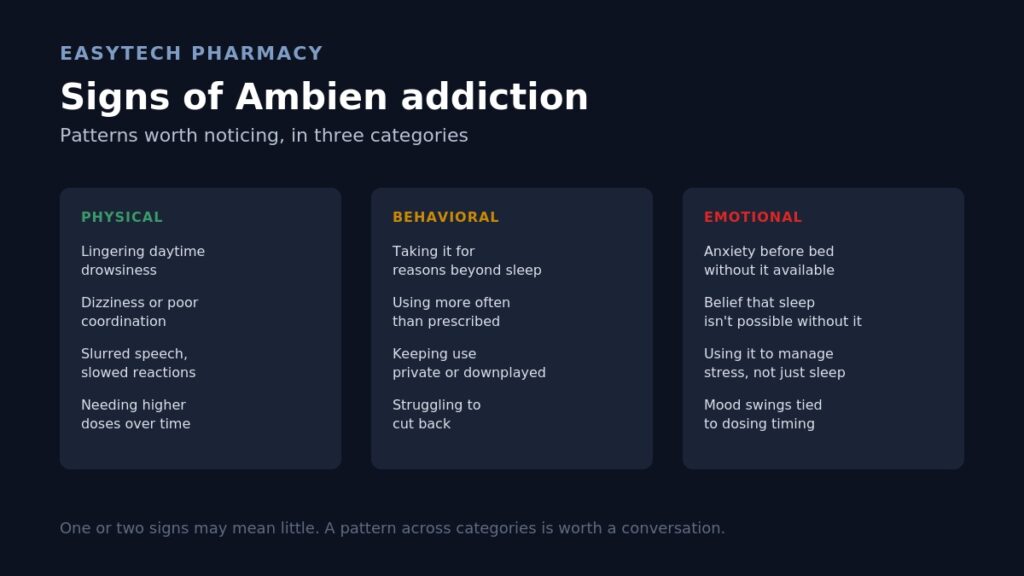
Most people don’t wake up one day and decide something’s wrong with how they’re using Ambien. It’s quieter than that. A slightly higher dose here. A little more anxiety on the nights the bottle’s empty. A story you tell yourself about why tonight is different. Signs of Ambien addiction tend to build gradually, in small moments that are easy to explain away one at a time. Here’s what those moments actually look like, laid out plainly.
Why Ambien Carries This Risk in the First Place
Ambien, known generically as zolpidem, works by boosting a calming brain chemical called GABA. That’s what makes it effective for short-term insomnia. It’s also part of why regular use can shift into dependence. The brain adapts to the extra GABA activity, and over time it can start expecting the medication to do work it used to do on its own. Addiction develops for some people within weeks of regular use, not months or years, which surprises a lot of people who assumed a “sleep pill” couldn’t work that fast.
Physical Signs Worth Noticing
These often show up first, and they’re easy to mistake for ordinary side effects:
- Daytime drowsiness that lingers well past when the medication should have worn off
- Dizziness or poor coordination, even during hours you’d normally feel alert
- Slurred speech or slowed reaction time, sometimes noticed by others before the person notices it themselves
- Needing a higher dose to get the same effect that used to come from a smaller one
On their own, one or two of these might just mean the dose needs adjusting. Together, and repeated over weeks, they start to paint a different picture.
Behavioral Signs That Are Easy to Miss
This is often where the real story shows up, since behavior changes tend to happen before someone consciously recognizes a problem.
- Taking it earlier than needed, or for reasons beyond sleep, like relaxing after a stressful day or “checking out” from anxious thoughts
- Using it more often than prescribed, or stretching a supply thin by taking extra on hard nights
- Keeping the habit private, downplaying how often it’s used when talking to family, friends, or a healthcare provider
- Trying to cut back and struggling, especially if attempts to stop lead to a rough night that gets reframed as proof the medication is necessary
None of this means someone is careless or weak-willed. Chronic sleep trouble is exhausting, and a medication that finally works creates a real, understandable pull to protect that relief.
Emotional and Psychological Signs
These can be harder to name, but they’re just as telling:
- Anxiety building well before bedtime if the medication isn’t available
- A growing belief that sleep simply isn’t possible without it
- Using it to manage stress or emotional discomfort, not just sleep onset
- Irritability or mood swings that track closely with dosing and availability
This pattern often overlaps with what we’ve covered in our guide on Ambien dependence, which digs deeper into why the belief “I can’t sleep without this” tends to take hold and stick around.
When It Crosses Into Something More Serious
A few signs tend to signal the situation has moved further than typical dependence:
- Taking Ambien with alcohol or other sedatives to intensify the effect
- Memory gaps around use, including not remembering taking a dose
- Continuing use despite clear problems at work, in relationships, or with daily responsibilities
- Seeking prescriptions from more than one source
Any of these are worth taking seriously and bringing up honestly at your next appointment, rather than something to manage quietly on your own.
Why Catching This Early Matters
Addiction to a sedative-hypnotic like Ambien doesn’t just carry emotional weight. Combining it with alcohol or other central nervous system depressants significantly raises the risk of overdose and dangerous breathing complications. Long-term use also carries its own risks, independent of overdose, including next-day cognitive fog and, in some cases, unusual sleep-related behaviors people don’t fully remember. Our guide on Is Ambien a Controlled Substance covers exactly what to watch for and when a situation needs emergency attention.
What Actually Helps
If several of these signs sound familiar, the path forward usually isn’t stopping cold. Abrupt discontinuation after regular use carries its own risks, including severe rebound insomnia and, in rare cases, seizures. A gradual, supervised taper tends to be far safer and more sustainable. Our guide on the zolpidem withdrawal timeline walks through what that process typically looks like, stage by stage.
Beyond the taper itself, building sleep habits that don’t depend entirely on medication, consistent bedtimes, less screen time before bed, addressing underlying stress, gives the nervous system other cues to lean on. Support from a pharmacist, therapist, or trusted person during this stretch tends to make a real difference too.
The Bottom Line
Signs of Ambien addiction rarely show up as one dramatic moment. They build through small, repeated patterns: a slightly higher dose, a bit more secrecy, a growing dependence on the medication for more than sleep. Recognizing the pattern early, and talking about it honestly rather than quietly managing it alone, makes the path forward considerably easier and safer.
For a broader clinical overview of sedative-hypnotic dependence and treatment approaches, the National Library of Medicine’s overview of sedative-hypnotic withdrawal and management is a useful resource.
Frequently asked questions
How quickly can Ambien addiction develop?
For some people, patterns of dependence can start forming within just a few weeks of regular use, which is faster than most people expect from a sleep medication.
Is it possible to be dependent on Ambien without realizing it?
Yes. Dependence often shows up first in small daily habits, like anxiety about running out or difficulty imagining sleep without it, well before someone consciously identifies it as a problem.
What’s the difference between dependence and addiction?
Dependence can happen even with medication taken exactly as directed, as the body adapts over time. Addiction involves compulsive use and continuing despite real consequences. You can be dependent without meeting the fuller pattern of addiction.
Is it dangerous to stop Ambien suddenly if these signs are present?
It can be. Abrupt stopping after regular use raises the risk of severe rebound insomnia and, in some cases, seizures. A gradual, supervised taper is a safer approach.
For local pharmacy access, our Ambien near me guide covers options across the world.
👉 Visit EasyTech Pharmacy — find the right sleep medication for your situation today.