Ambien and Depression Risk: What the Research Actually Shows
Sleep and mood are tangled together in ways that make cause and effect genuinely hard to untangle. Ambien is meant to fix one side of that equation, but a growing body of research suggests it can sometimes affect the other side too. Here’s an honest look at what the evidence actually shows about Ambien and depression risk.
The Short Version
Ambien isn’t classified as an antidepressant, and it isn’t meant to treat mood at all. But research has found a real, if complicated, relationship between zolpidem use and depressive symptoms, particularly in people already managing a mood disorder or taking other psychiatric medications. This doesn’t mean everyone taking Ambien will experience mood changes. It means it’s a genuine risk worth knowing about and watching for.
What the Research Shows
Clinical data has identified worsening depression as a documented adverse effect of zolpidem, particularly in people already being treated for depression or taking SSRIs. One study specifically examining zolpidem combined with SSRI treatment found the combination didn’t improve depressive symptoms and, in some individuals, appeared linked to worsening mood, based on how the medication interacts with GABA activity in ways that may counter the effects SSRIs are working to produce.
A separate study published in a peer-reviewed psychiatric journal looked specifically at zolpidem use among psychiatric outpatients with insomnia and found an association between zolpidem use and increased suicidality, including higher rates of suicidal ideation, even after adjusting for the severity of the person’s underlying depression and insomnia. The researchers were direct about the implication: this warrants real caution and closer monitoring when zolpidem is prescribed to people with mood disorders.
Who Appears Most at Risk
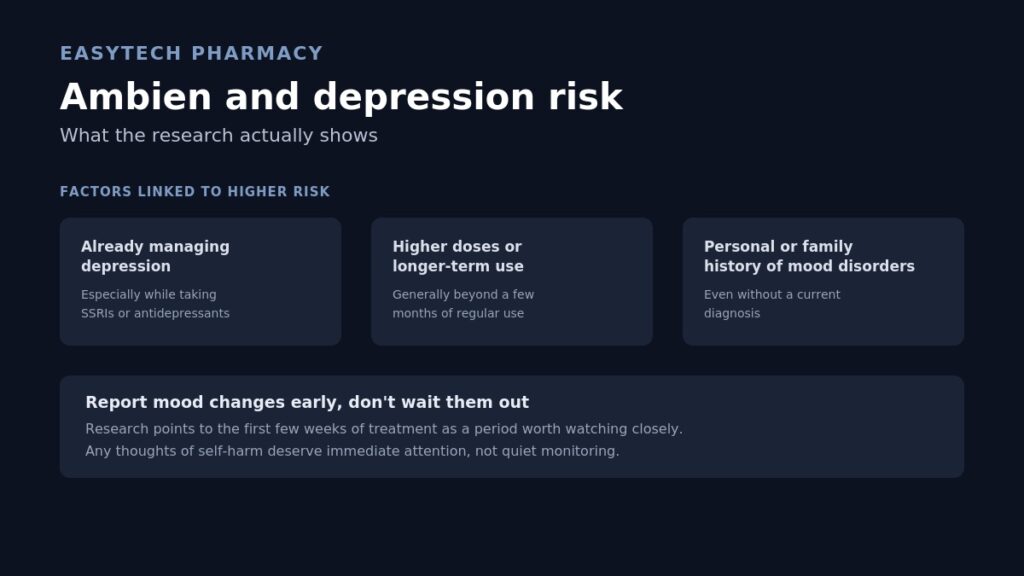
- People already managing depression, especially those currently taking SSRIs or other antidepressants
- People using higher doses or longer-term therapy, generally beyond a few months of regular use
- People with a personal or family history of mood disorders, even without a current diagnosis
This doesn’t mean people outside these groups are entirely without risk. It means these factors appear to raise the likelihood based on the available research.
Why This Relationship Is Hard to Untangle
Sleep and mood share overlapping biology. That makes this a genuinely tricky area to study cleanly. Poor sleep itself is a well-known contributor to depression. Someone using Ambien to treat insomnia caused by an underlying mood issue might see their depression evolve regardless of the medication. At the same time, some evidence points to zolpidem’s effect on brain chemistry. Specifically, its impact on GABA activity may work against the therapeutic effects of antidepressants in certain people, independent of the sleep problem itself.
Both things can be true at once. That’s part of why researchers describe this relationship as complex rather than straightforward.
What to Watch For
- Mood that feels noticeably lower than before starting the medication, especially in the first few weeks
- Increased hopelessness, emotional flatness, or loss of interest in things that normally matter to you
- New or worsening anxiety that doesn’t track with your usual patterns
- Any thoughts of self-harm or suicide, which should be taken seriously and addressed immediately, not monitored quietly
If you’re also managing sleep-related dependence alongside mood changes, our guide on Ambien Dependence and The Ambien Black Box Warning covers a related but distinct pattern worth knowing about.
What Actually Helps
Reporting mood changes promptly, rather than waiting to see if they pass, gives a provider real information to work with. This is especially important during the first few weeks of starting zolpidem, when the SSRI-interaction research suggests the risk of worsening mood appears most concentrated. For people already on an SSRI, that combination specifically deserves closer monitoring rather than being treated as routine.
Non-medication approaches to insomnia, particularly cognitive behavioral therapy for insomnia, have shown real effectiveness for mood-related sleep issues and may be worth discussing as an alternative or complement, especially for anyone with a history of depression.
After the Emergency: What Comes Next
An overdose, even a non-fatal one, is worth treating as a serious signal rather than an isolated incident. Accidental redosing tied to memory gaps is worth discussing directly with a pharmacist. When it stems from a broader pattern of misuse, our guide on Ambien abuse and our overview of zolpidem addiction cover what to look at next, and our guide on Ambien addiction treatment options covers what real support looks like going forward.
If the plan moving forward involves stopping the medication, that should happen safely and gradually rather than abruptly. Our guide on how to stop Ambien safely walks through that process.
The Bottom Line
The relationship between Ambien and depression isn’t simple, and it isn’t universal. But it’s real enough that clinical research has documented it directly, and serious enough that it deserves active attention rather than being dismissed as unrelated grogginess. Anyone starting zolpidem, especially with a history of depression or current antidepressant use, benefits from knowing what to watch for and reporting changes early rather than waiting them out.
For the peer-reviewed study on zolpidem and suicidality in psychiatric outpatients, see the full research article on PubMed Central.
Frequently asked questions
Can Ambien cause depression in someone with no history of it?
It’s less common, but documented cases exist. The clearest evidence points to higher risk in people already managing depression or taking antidepressants, though monitoring matters for anyone starting the medication.
Is it safe to take Ambien with an SSRI?
This combination is common and can be appropriate, but research suggests it deserves closer monitoring for mood changes, since the interaction between the two may work against the SSRI’s intended effect in some people.
How soon after starting Ambien would mood changes show up?
Available research points to the first few weeks of treatment as a period worth watching closely, though mood changes can potentially emerge at other points too.
What should I do if I notice worsening mood on Ambien?
Report it to your prescriber promptly rather than waiting to see if it passes. If you experience any thoughts of self-harm, treat that as urgent and reach out for support immediately.
For local pharmacy access, our Ambien near me guide covers options across the world.
👉 Visit EasyTech Pharmacy — find the right sleep medication for your situation today.