How to Get Tired Enough to Sleep: Build Your Sleep Drive From Morning to Night
It’s 11 p.m. Your body feels worn out, yet your mind won’t switch off. Or maybe you simply don’t feel sleepy at all. Either way, lying in bed feels pointless. If you’ve wondered how to get tired enough to sleep, the answer usually starts long before bedtime.
This guide explains why sleepiness builds during the day. You’ll also get a simple plan, from your morning alarm to lights out, to help real sleepiness arrive on time.
Why Your Sleep Drive Runs Low at Bedtime
Two systems decide when you feel sleepy. The first is your sleep drive. It builds steadily the longer you stay awake, a bit like a balloon slowly filling with air. The second is your body clock, which tells you when it’s day and when it’s night.
When both line up, sleep comes easily. However, long naps, late coffee, and an uneven schedule can throw them out of sync. The National Heart, Lung, and Blood Institute explains how these two systems work together.
Tired vs Sleepy: Know the Difference
Here’s a key point many people miss. Feeling tired isn’t the same as feeling sleepy.
- Tired (fatigue): you feel drained, heavy, or low on energy, but you can’t nod off
- Sleepy: your eyelids droop, you yawn, and you could fall asleep in your chair
Stress, boredom, and long screen days often cause fatigue without real sleepiness. That’s why you can feel exhausted yet still lie awake. Your goal is to build true sleepiness.
Learning how to feel sleepy, not just tired, changes everything. The plan below strengthens both your sleep drive and your body clock signal.
The “Tired but Wired” Problem
Some nights, your body feels done, but your brain stays on high alert. Experts call this hyperarousal. Stress hormones keep your mind busy, even after a long day.
Common triggers include:
- Work emails and news late in the evening
- Intense workouts close to bedtime
- Bright overhead lights after dark
- Unfinished worries with no outlet
Fixing this takes two steps. First, build your sleep drive during the day. Then, give your brain a calm landing in the evening.
How to Get Tired Enough to Sleep: Your Full-Day Plan
Morning: Set Your Clock
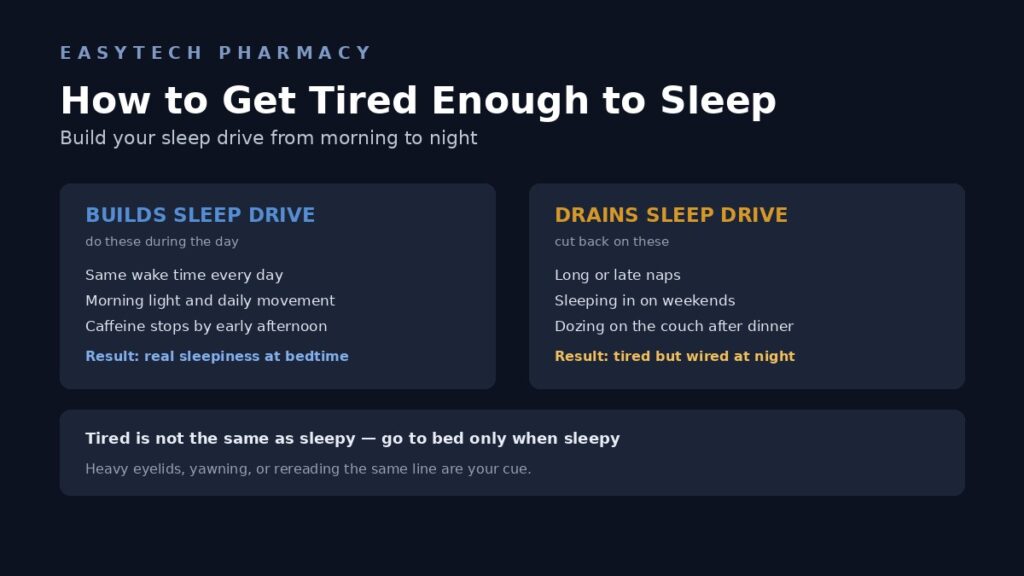
- Wake up at the same time every day. This is the single most powerful step. It anchors your body clock.
- Get outside light within an hour. Even 10 minutes on a porch helps. Light tells your brain the day has started.
- Move a little. A short walk boosts alertness now and sleepiness later.
Midday: Keep Your Sleep Drive Building
- Stay active. Aim for about 30 minutes of movement, like brisk walking or cycling.
- Stop caffeine by noon or early afternoon. Caffeine blocks the chemical that makes you feel sleepy.
- Use your brain. Mental work, new tasks, and social time also build sleep pressure.
Afternoon: Handle Naps Wisely
- Skip naps if you struggle at night. Naps release some of your sleep drive.
- If you must nap, keep it short. Limit it to 20 minutes, and finish before 3 p.m.
- Avoid couch dozing after dinner. Even 10 minutes can steal your bedtime sleepiness.
Evening: Let Sleepiness Rise
- Dim the lights two hours before bed. Low light lets your body clock signal night.
- Finish hard workouts early. Gentle stretching or yoga works better at night.
- Write down tomorrow’s tasks. It clears your head before bed.
- Take a warm shower. As your body cools afterward, sleepiness often follows.
Bedtime: Wait for the Signals
Go to bed only when you feel truly sleepy. Look for heavy eyelids, yawning, or reading the same line twice. Heading to bed too early often leads to lying awake, which weakens the bed-sleep link.
Signs Your Sleep Drive Is Working
Give your new routine a week or two. Then watch for these good signs:
- You start yawning at about the same time each evening
- You fall asleep within 10 to 20 minutes
- You wake up before your alarm more often
- You need less caffeine to get through the afternoon
Habits That Drain Your Sleep Drive
- Sleeping in on weekends: it shifts your body clock later
- Long or late naps: they use up sleep pressure you need at night
- Late caffeine: it masks your natural sleepiness for hours
- A low-activity day: little movement means less sleep pressure
- Some medicines: certain drugs can keep you alert at night
How to Feel Sleepy When Your Schedule Is Off
After a Late Night
Get up at your usual time anyway, even if you slept less. You’ll feel sleepier the next night and reset faster.
After Travel Across Time Zones
Get outside in morning light at your new location. Then stay up until a normal local bedtime.
For Night-Shift Workers
Wear sunglasses on the drive home, and sleep in a dark, cool room. Keep the same sleep hours, even on days off when you can.
What If You Still Can’t Get Tired Enough to Sleep?
Sometimes, a solid daytime plan still doesn’t bring sleepiness. In that case, a therapy called CBT-I can help. One of its tools, sleep restriction, briefly shortens your time in bed to build a stronger sleep drive. A trained expert guides it safely. Our guide on what a sleep therapist does explains how it works.
Once you feel sleepy, a few in-bed tricks can help you drift off. Try the ideas in how to fall asleep instantly.
Where Sleep Aids Fit In
Some people use a sleep aid for a short time while they rebuild healthy habits. Each type works differently and lasts a different length of time.
FAQs: How to Get Tired Enough to Sleep
Why am I tired all day but not sleepy at night?
Stress, late caffeine, and long naps can drain your energy without building real sleepiness. A steady wake time and more daytime activity usually help.
How can I make myself sleepy fast?
Dim the lights, take a warm shower, and put screens away. Then do something calm, like reading a paper book, until your eyelids feel heavy.
Does exercise help you feel sleepy at night?
Yes. Regular daytime exercise builds sleep drive and often leads to deeper sleep. Just finish hard workouts a few hours before bed.
Should I go to bed if I’m not sleepy?
No. Wait until you feel truly sleepy. Lying awake in bed can make insomnia worse over time.
How long does it take to reset my sleep drive?
Most people notice a change within one to two weeks of a steady wake time and fewer naps.
Bottom Line — Build Sleepiness All Day Long
Learning how to get tired enough to sleep comes down to daytime choices. Wake up at the same time, get morning light, move your body, and cut late caffeine and naps. Then let the evening wind down slowly. Sleepiness will start to show up right on time. For more simple tips, see the MedlinePlus healthy sleep guide.
If a sleep aid becomes part of your plan, our Ambien near me guide shows how to find it at a local pharmacy and compare prices.