Hydroxyzine vs. Ambien: A Prescription Antihistamine Built for Two Jobs
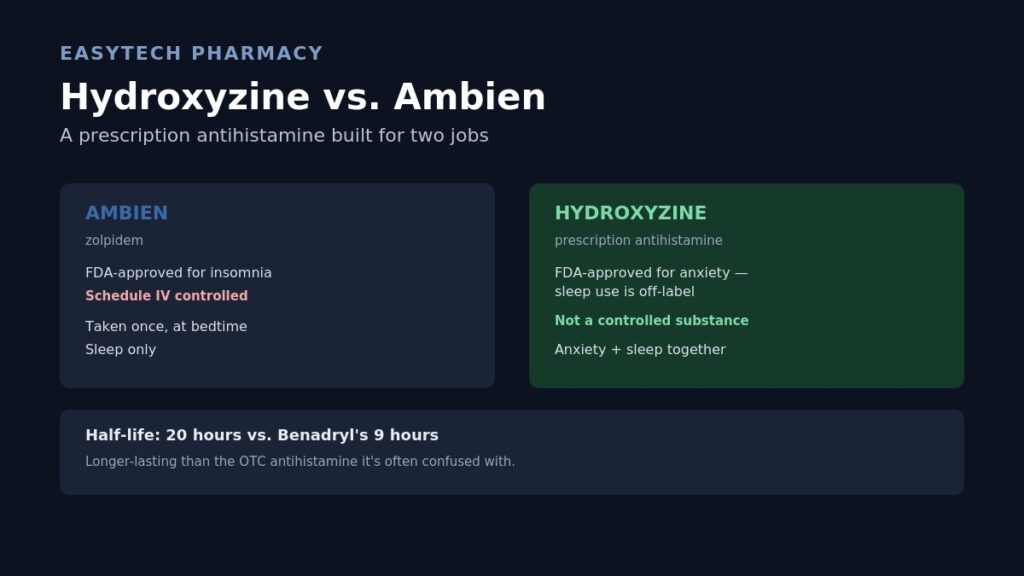
Hydroxyzine occupies an interesting middle ground in this comparison series: like Ambien, it requires a prescription, but the FDA has not approved it for insomnia.Understanding why it still shows up constantly as a sleep option, despite that gap, says a lot about how off-label prescribing actually works in practice.
What Hydroxyzine Is Actually Approved For
The FDA approves hydroxyzine for short-term anxiety linked to psychoneurosis, allergic skin itching, and pre- or post-anesthesia sedation. It does not approve the drug for sleep. When doctors prescribe hydroxyzine for insomnia—which occurs frequently—they use it off-label. Medical writers should state this distinction upfront rather than framing hydroxyzine as a purpose-built sleep medication like Ambien.
The Mechanism: Antihistamine, Not GABA-Direct
Hydroxyzine is a first-generation antihistamine with sedating and anti-anxiety properties, working through histamine blockade rather than Ambien’s direct GABA-A receptor action. This puts it in the same broad mechanism family as Benadryl and doxepin, both covered elsewhere in this comparison series, but with real differences in duration and approved use that separate it from each.
How Hydroxyzine Differs From Benadryl Specifically
This distinction matters because the two get confused constantly. Hydroxyzine’s half-life runs around 20 hours, compared to Benadryl’s roughly 9 hours, and this longer duration is part of why hydroxyzine tends to work better for sustained anxiety and sleep support, though it also means the drowsy effects last longer, raising grogginess risk. Hydroxyzine is also prescription-only, while Benadryl is available over the counter, a gap covered directly in our guide on Ambien vs. Benadryl.
Dosing: A Real Structural Difference From Ambien
Ambien is taken once at bedtime as a single tablet. Hydroxyzine’s FDA-approved anxiety dosing calls for up to four doses spread across the day, reflecting its design as an anxiety medication first and a sleep aid second. When doctors prescribe hydroxyzine off-label for sleep, adults typically take 50 mg at least 30 minutes before bedtime—a distinct schedule from daytime anxiety dosing.
Controlled Substance Status: Another Point in Hydroxyzine’s Favor
Unlike Ambien—which the DEA classifies as a Schedule IV controlled substance—hydroxyzine carries no controlled-substance status, and doctors do not view it as habit-forming. This places it alongside doxepin and ramelteon among the non-controlled options we examine in this comparison series and detail further in our guide on Ambien’s Schedule IV status. Furthermore, physicians generally restrict its use for insomnia to a short window—typically no more than four months—unlike the longer treatment plans available for other medications.
The Dual-Purpose Advantage
This is where hydroxyzine genuinely stands apart from doxepin and ramelteon: it’s the only medication in this comparison series with a real, on-label approval for anxiety itself, not just sleep.When anxiety directly fuels insomnia—a pattern we break down in our guide on the best Ambien alternative for anxiety-related insomnia—hydroxyzine targets both symptoms simultaneously. Instead of treating anxious activity and sleeplessness as separate problems, this single medication addresses both at their root.
Effectiveness for Genuine Chronic Insomnia
This is where the comparison tilts clearly toward Ambien. Medical guidelines advise against using antihistamines like hydroxyzine for chronic insomnia. Over extended periods, patients quickly develop tolerance, experience daytime drowsiness, and face increased side-effect risks—a pattern we analyze in our guide on Ambien vs. Benadryl. Unlike hydroxyzine, Ambien earned FDA approval by proving its efficacy in formal insomnia trials. The FDA has never required hydroxyzine to meet that same clinical bar for sleep.
Cost and Availability
Most insurance plans cover hydroxyzine, and pharmacies sell it as an inexpensive generic. Like trazodone, it offers one of the most accessible non-controlled options available—a cost profile we explore further in our comparison guide on generic zolpidem alternatives compared.
Side-by-Side: What Actually Separates Them
- FDA-approved use: Ambien for insomnia specifically. Hydroxyzine for anxiety, itching, and procedural sedation, with sleep as an off-label use.
- Controlled substance status: Ambien is Schedule IV. Hydroxyzine is not controlled.
- Dosing pattern: Ambien once nightly. Hydroxyzine up to four times daily for anxiety, or once at bedtime for off-label sleep use.
- Dual benefit: Hydroxyzine addresses anxiety and sleep together. Ambien addresses sleep alone.
- Chronic insomnia effectiveness: Ambien has trial-backed support. Hydroxyzine isn’t recommended for long-term use due to tolerance concerns.
The Bottom Line
Hydroxyzine isn’t a sleep medication that happens to also help anxiety. It’s an anxiety and allergy medication that happens to help sleep as a side effect of its sedating properties, used off-label for that purpose more often than its FDA label alone would suggest. Its real advantage lies specifically in situations where anxiety and sleeplessness intersect, while its non-controlled status expands patient access compared to scheduled drugs. For straightforward, persistent insomnia without a significant anxiety component, Ambien’s purpose-built design and trial data remain the stronger fit.
For a detailed clinical comparison, see Doctronic’s comparison of Ambien and hydroxyzine.
Frequently asked questions
Is hydroxyzine FDA-approved for insomnia?
No. The FDA approves hydroxyzine only for short-term anxiety, allergic itching, and procedural sedation. When doctors prescribe it for sleep—a frequent practice—they use it off-label.
Is hydroxyzine a controlled substance like Ambien?
No. The DEA does not classify hydroxyzine as a controlled substance, and doctors do not consider it habit-forming—a sharp contrast to Ambien, which carries a Schedule IV designation.
How is hydroxyzine different from Benadryl for sleep?
Hydroxyzine has a longer half-life, around 20 hours compared to Benadryl’s 9, and requires a prescription, while Benadryl is available over the counter.
Can hydroxyzine treat chronic insomnia as effectively as Ambien?
Not reliably. Antihistamines like hydroxyzine aren’t recommended for chronic insomnia due to tolerance and side effect risks with longer use, while Ambien’s approval rests on trial data specifically for insomnia.
Related reading
- Ambien vs. Benadryl: a real comparison for sleep
- Best Ambien alternative for anxiety-related insomnia
- Doxepin vs. Ambien: the non-controlled option explained
- Is Ambien a controlled substance? Schedule IV explained
Managing anxiety and sleep trouble together and not sure what fits? Talk to your pharmacist. EasyTech Pharmacy can help you think it through.
For local pharmacy access near you, our Ambien near me guide covers pharmacies across the world.
Visit EasyTech Pharmacy — sleep medication with real pharmacist guidance.