How Complex Sleep Behaviors on Ambien Get Diagnosed and Managed
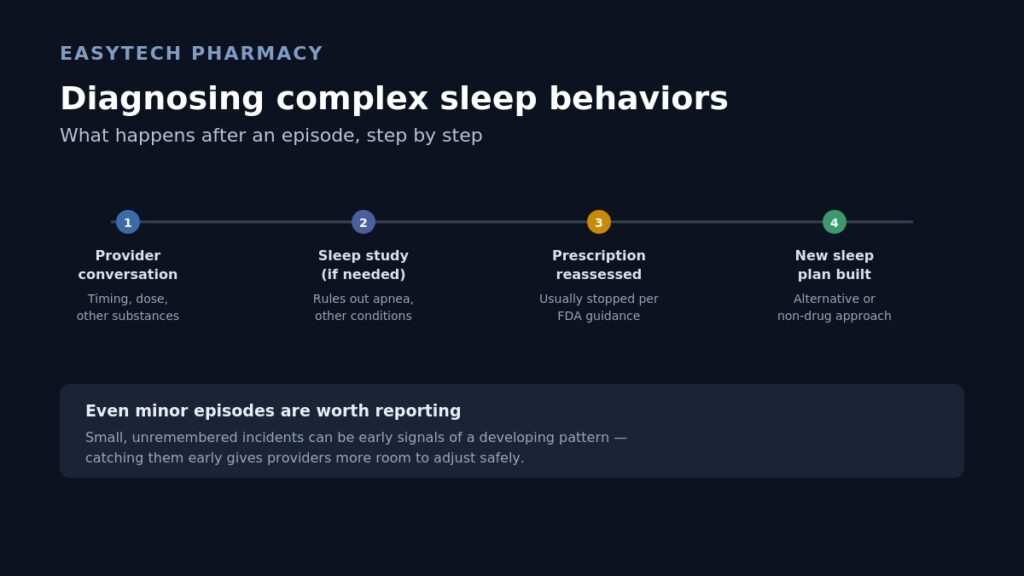
An episode happens. Maybe a partner mentions something strange from the night before. Perhaps you find evidence in the kitchen that nobody remembers leaving. Whatever triggers the concern, the next step usually looks the same: a conversation with a healthcare provider about what happened and what comes next. Here is how that process actually unfolds.
The First Conversation
A provider evaluating a possible complex sleep behavior starts with questions, not tests. They typically ask about your dose timing relative to bedtime. They will check if you consumed alcohol or other medications. They will also ask how long you have taken Ambien and whether you experienced similar events in the past. Finally, they review other health conditions. Research links specific factors—like restless legs syndrome, sleep apnea, and concurrent psychiatric medications—to a higher likelihood of these episodes.
This initial conversation carries immense weight. Providers use it to rule out other explanations, as not every unusual nighttime event stems from a drug. They also identify patterns that may have contributed to the event.
When a Sleep Study Comes Into the Picture
Not every case requires one. However, doctors sometimes order a sleep study, formally known as polysomnography, when the clinical picture remains unclear. You spend a night in a sleep lab while sensors track your brain activity, breathing, movement, and other signals. This evaluation helps determine if an underlying sleep disorder, like sleep apnea, plays a role alongside the medication. Untreated apnea correlates with a higher risk of these behaviors.
A sleep study is rarely necessary for a first episode with a clear medication link. Instead, doctors order it when episodes recur, when the cause remains obscure, or when they want to rule out a separate underlying condition.
What Providers Look For
- Timing patterns. Did the episode happen shortly after the dose, or did you stay awake and active after taking it instead of going straight to bed?
- Combined substances. Did you mix the medication with alcohol, an opioid, a benzodiazepine, or another sedating drug?
- Dose history. Did you keep the dose within the standard prescribed range, or did it creep upward over time?
- Other conditions. Do you have a history of mood disorders, restless legs syndrome, or sleep apnea that could contribute?
- Prior episodes. Has anything similar happened before, even a minor event that went unreported?
Honest, complete answers make a major difference in that first meeting. Leaving out a key detail—like an extra glass of wine or a missed dose adjustment—makes it much harder to read the situation accurately.
What Happens to the Prescription
Once a provider confirms a complex sleep behavior, they typically stop the medication. This step is not punitive. It reflects the FDA’s contraindication against continuing Ambien after a documented episode. Our guide on Ambien Sleepwalking and Sleep-Driving covers this policy in greater depth.
From there, your provider explores alternatives. They may prescribe a different class of sleep medication, address an underlying condition, or recommend non-medication options like cognitive behavioral therapy for insomnia (CBT-I). The right path depends heavily on what the initial evaluation turns up.
What Ongoing Management Looks Like
In select cases where providers judge the benefits to outweigh the risks, patients might continue a similar medication class under close supervision. Here, management requires closer monitoring, a strict rule to take the dose immediately before sleeping, and clear instructions for housemates on what safety red flags to watch for. Follow-up appointments occur much more frequently in this scenario than during routine care.
For most people, though, ongoing management means transitioning away from the drug that triggered the episode and building a new sleep plan. That transition benefits from the tapering principles covered in our guide on the zolpidem withdrawal timeline, since stopping abruptly carries its own set of health risks.
Why Reporting Matters, Even for Minor Episodes
Research on zolpidem-related complex behaviors consistently shows that risk factors—like sex, concurrent medications, and underlying health conditions—play a real role. However, doctors cannot fully predict how these factors affect each individual case. That unpredictability makes even a seemingly minor episode worth reporting. Whether you experienced a sleepwalking incident without injury or made a phone call you do not remember, report it rather than brushing it off. Small episodes often serve as early warnings, and catching the pattern early gives your provider far more room to adjust your care safely.
The Bottom Line
Diagnosing and managing a complex sleep behavior is not a single test or decision. It is an ongoing conversation, sometimes involving a sleep study, along with a careful look at dose, timing, other medications, and health conditions. The goal remains straightforward throughout: understand what happened, reduce the chance of recurrence, and find a sustainable path to real sleep—whether that includes medication or not.
For a detailed clinical review of zolpidem-associated complex sleep behaviors, read this systematic literature review published in the Journal of Neurosciences in Rural Practice.
Frequently asked questions
Do I need a sleep study after one complex sleep behavior episode?
Not always. Doctors usually order a sleep study when episodes recur, when the cause remains unclear, or when they want to rule out an underlying condition like sleep apnea.
Will my provider automatically stop my Ambien after one episode?
Typically, yes. The FDA contraindication advises against continuing the medication after a documented complex sleep behavior episode, though your provider will determine the exact next step based on a full evaluation.
What questions will my provider ask about an episode?
Expect questions about your dose timing, whether you combined alcohol or other drugs, how long you have taken Ambien, and whether you experienced similar events in the past.
Is it worth reporting a minor episode with no injury?
Yes. Minor episodes serve as early signals of a developing pattern. Reporting them gives your provider room to adjust your treatment safely before a more serious event occurs.
For local pharmacy access, our Ambien near me guide covers options across the world.
👉 Visit EasyTech Pharmacy — find the right sleep medication for your situation today.