Sleep Anxiety Medication Options: What Helps When You Dread Going to Bed
Do you feel your heart speed up as bedtime gets closer? Many people search for sleep anxiety medication because each night feels like a test they keep failing. You lie down, check the clock, and think, “If I don’t sleep soon, tomorrow will be a disaster.”
That fear is real, and it’s common. This guide explains what sleep anxiety is and which medicines can play a role. It also shows why skills often matter more than pills.
What Is Sleep Anxiety?
Sleep anxiety is worry or fear about sleep itself. It often grows after a stretch of bad nights. Over time, your brain links the bed with stress instead of rest.
Common signs include:
- Dread or tension as bedtime approaches
- Checking the clock and counting lost hours
- Feeling sleepy on the couch, then wide awake in bed
- Worrying all day about whether you’ll sleep tonight
- Feeling unable to sleep without a pill, even when you’re tired
The American Academy of Sleep Medicine describes how worry about sleep can keep insomnia going long after the original trigger fades.
Why Sleep Anxiety Medication Alone Can Backfire
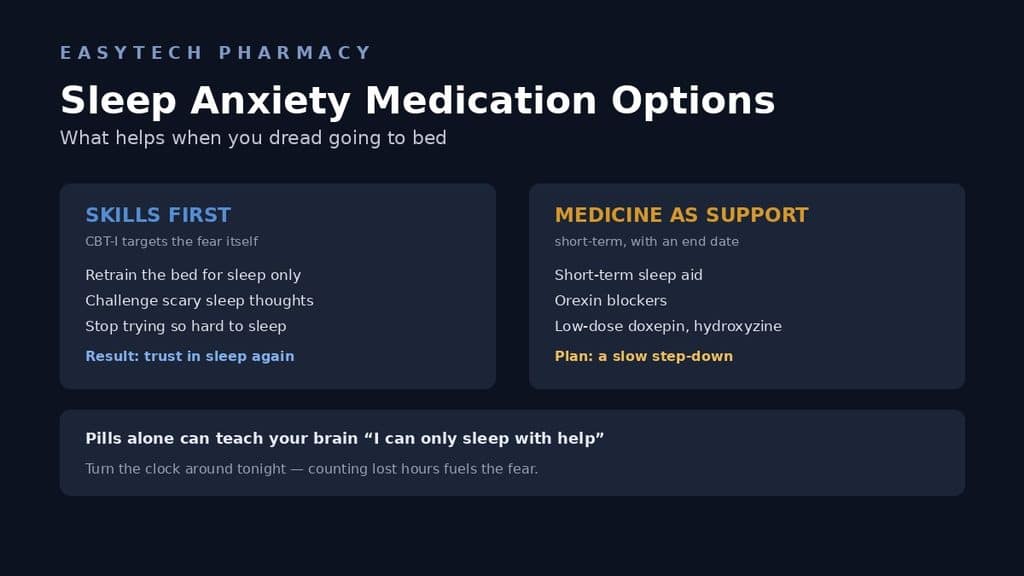
A sleeping pill can bring quick relief. However, it can also teach your brain a tricky lesson: “I can only sleep with help.” That belief can deepen the fear on nights without the pill.
On top of that, stopping some sleep aids causes rebound insomnia. Those rough nights then seem to “prove” that you can’t sleep on your own. Our post on Ambien rebound insomnia explains this cycle. Our guide to Ambien dependence covers the mental side of relying on a pill.
None of this means medicine is wrong. It simply means medicine works best as one part of a bigger plan. The right sleep anxiety medication supports new skills instead of replacing them.
First-Line Sleep Anxiety Treatment: CBT-I
CBT-I is the top recommended treatment for chronic insomnia, and it targets sleep anxiety directly. It teaches you to:
- Retrain the bed: use it only for sleep, so it stops feeling stressful
- Challenge scary thoughts: swap “tomorrow will be awful” for something more accurate
- Stop trying so hard: effort to sleep often keeps you awake
- Build a steady schedule: so sleep comes more naturally
Our guide on what a sleep therapist does walks through each session.
Sleep Anxiety Medication Options and Their Roles
Medicine can still help, especially early on or during a hard stretch. Here’s how common options fit.
Short-Term Sleep Aids
A sleep aid for a few weeks can break a cycle of exhaustion while you learn CBT-I skills. The key word is “short.” Having an end date from the start helps prevent new fears about stopping. Some care teams also suggest using it only on certain nights, so you keep practicing sleep on your own.
Orexin Blockers
Medicines like Belsomra quiet the brain’s “stay awake” signal. They tend to carry less risk of dependence than older sleep aids. Compare them in Belsomra vs Ambien.
Calming Options for Anxious Nights
Low-dose doxepin and hydroxyzine can bring on drowsiness without the dependence risk of benzodiazepines. Hydroxyzine also eases anxiety, though it may leave you groggy.
Medication for Sleep Anxiety Plus Daytime Worry
If anxiety runs all day, not just at night, an SSRI or SNRI often forms the base of treatment. Our guide to the best medication for anxiety and insomnia covers these options in depth.
Benzodiazepines: Use With Caution
These medicines calm anxiety fast, but they can lead to dependence and tough withdrawal. For sleep anxiety, they can also strengthen the belief that you need a pill to sleep. Most experts limit them to short-term use.
When Nightmares Drive the Fear
For some people, the dread isn’t about lying awake. It’s about what happens once they fall asleep. Trauma-related nightmares can make sleep feel unsafe.
Therapy designed for nightmares, such as imagery rehearsal, often helps a great deal. Some care teams also use medicines like prazosin for trauma-related nightmares, though results vary. The VA’s National Center for PTSD explains these options. Sleep aids can also change dreams, as our post on Ambien dreams and nightmares explains.
Bedtime Anxiety Tricks You Can Try Tonight
- Turn the clock around: stop counting hours
- Try paradoxical intention: gently try to stay awake, which takes the pressure off
- Use a “worry window”: write worries down in the early evening
- Get up after 20 minutes: read in dim light, then return when sleepy
- Breathe out slowly: longer exhales calm your nervous system
Sleep Anxiety Treatment Online and in Person
Help is easier to find than many people think. Here are common routes:
- In-person CBT-I: weekly sessions with a trained therapist
- Telehealth CBT-I: the same skills by video, often with shorter waits
- Digital CBT-I programs: self-guided courses, some covered by insurance
- Free apps: tools like the VA’s CBT-i Coach teach the basics at home
Many people start with an app or online course, then add a therapist if they need more support.
Building Trust in Sleep Again
The long-term goal is simple: believing you can sleep on your own. A few mindset shifts help:
- One bad night rarely ruins the next day as much as you fear
- Your body will catch up on sleep when it needs to
- Resting quietly in bed still helps, even if you don’t fully sleep
- Progress often looks like fewer bad nights, not perfect ones
If you use a sleep aid now, plan a slow step-down with your care team. Pair it with CBT-I, so new skills replace the pill over time.
FAQs: Sleep Anxiety Medication
What is the best medication for sleep anxiety?
There’s no single best choice. Short-term sleep aids, orexin blockers, or calming options may help, while CBT-I usually brings the longest-lasting results.
Can sleep anxiety go away on its own?
Sometimes, once the original stress fades. Often, though, the fear lingers until you learn new sleep skills.
Why am I sleepy on the couch but awake in bed?
Your brain has linked the bed with worry. CBT-I helps rebuild a calm link between bed and sleep.
Is it bad to rely on a sleeping pill?
Short-term use can help. Long-term reliance can deepen sleep anxiety and lead to dependence, so a step-down plan matters.
Can anxiety about sleep cause insomnia?
Yes. Worry about sleep is one of the biggest reasons insomnia continues over time.
Bottom Line — Treat the Fear, Not Just the Sleepless Night
Sleep anxiety medication can bring short-term relief, but it rarely fixes the fear on its own. CBT-I retrains the bed, calms anxious thoughts, and rebuilds trust in sleep. When medicine helps, use it for a set time, with a plan to step down.
If a sleep aid becomes part of your plan, our Ambien near me guide shows how to find a local pharmacy and compare prices.