Ambien Sleepwalking and Sleep-Driving: What the FDA Warning Means
Most side effects announce themselves. You feel groggy, or dizzy, or your mouth goes dry. This one is different, and that difference is exactly what makes it worth understanding clearly. Complex sleep behaviors, sleepwalking, sleep-driving, and similar episodes, happen while someone is not fully awake, and most people who experience them don’t remember it afterward at all.
What the FDA Actually Said
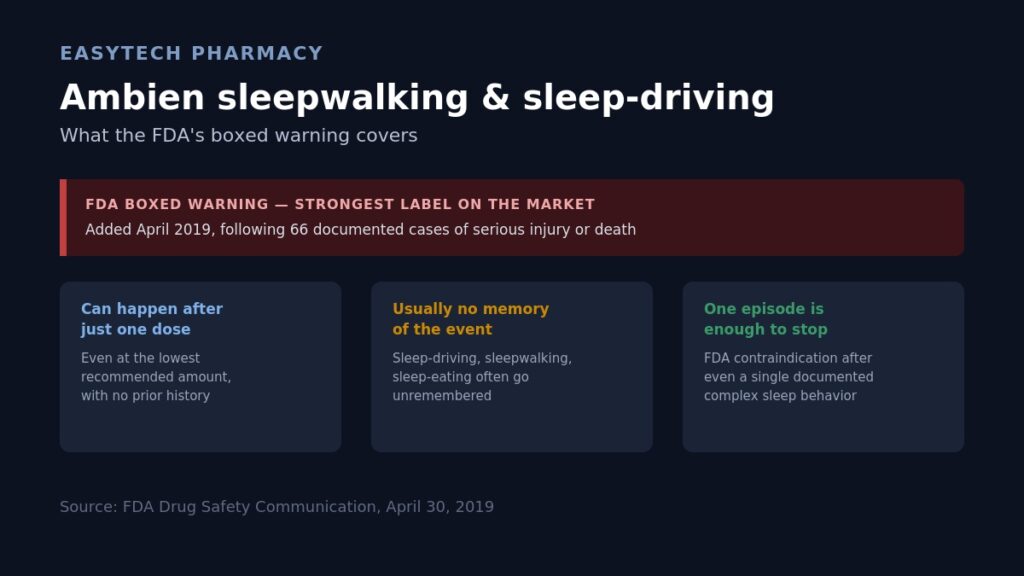
In April 2019, the FDA added a boxed warning, its most serious type of safety label, to Ambien and related sleep medications. The decision followed 66 documented cases over 26 years involving serious injuries or deaths tied to what the FDA calls “complex sleep behaviors.” These cases included burns, falls, drownings, fatal car accidents, and other injuries occurring while the person was not fully conscious.
The warning wasn’t added lightly. It’s the strongest label the FDA applies to a medication still on the market, and it came with something even more serious: a contraindication, meaning the FDA now advises against prescribing Ambien to anyone who has already experienced one of these episodes, even a single time.
What Counts as a Complex Sleep Behavior
- Sleep-driving, operating a vehicle with no memory of doing so
- Sleepwalking, moving through the house or beyond while not consciously aware
- Sleep-eating or sleep-cooking, preparing or eating food with no recollection afterward
- Making phone calls or having conversations that aren’t remembered the next day
- Other activities, including some documented cases involving sexual activity, all without conscious awareness
What ties these together isn’t the specific activity. It’s the pattern: purposeful, sometimes complex behavior happening without the person’s conscious mind actually online.
The Part That Surprises Most People
This isn’t limited to people taking high doses or using the medication for a long stretch. our guide on Ambien Rebound Insomnia.The FDA specifically noted that these events can happen after a single dose, even at the lowest recommended amount, and in people with no prior history of anything similar. That unpredictability is a big part of why the warning exists in the first place.
What Raises the Risk
- Combining Ambien with alcohol or other sedating substances, including opioids, anti-anxiety medications, or other tranquilizers
- Not going to bed immediately after taking it, since staying awake while the medication takes effect increases the chance of a partial-consciousness state
- A prior episode, even a single one, which the FDA specifically flags as reason to avoid the medication going forward
- Higher-than-recommended doses, though again, standard doses alone have been enough to trigger these events in some documented cases
Why This Overlaps With Amnesia
Most people who experience a complex sleep behavior have no memory of it happening. This connects closely to Ambien’s well-documented amnesia effect, the same mechanism that can lead to accidental redosing, as we’ve covered in our guide on Ambien overdose signs and effects. The medication can allow the body to act while the part of the brain responsible for forming new memories stays offline, which is part of why these episodes are so often discovered only through evidence left behind, rather than being reported by the person themselves.
What to Do If It Happens
The FDA’s guidance here is direct: if a complex sleep behavior occurs, stop taking the medication and contact your prescriber right away. This isn’t a wait-and-see situation. A single episode is enough for the FDA’s contraindication to apply, meaning the medication generally shouldn’t be restarted after an event like this without a serious reassessment of the full picture.
If someone close to you reports unusual nighttime behavior you don’t remember, that report is worth taking seriously even if it feels hard to believe. These events are, by definition, ones the person experiencing them usually can’t recall.
Practical Steps That Lower the Risk
- Take Ambien only right before getting into bed, not with time to spare beforehand
- Avoid alcohol and other sedating substances entirely while taking it
- Take only the prescribed dose, never more, even on a hard night
- Let a partner or housemate know what to watch for, since these episodes are often noticed by someone else first
- Report any unusual nighttime activity to your prescriber immediately, even if it seems minor
The Bottom Line
Complex sleep behaviors are rare, but they’re serious enough that the FDA applied its strongest possible warning to Ambien and similar medications. These events can happen without warning, without a history of prior episodes, and without any memory of what occurred. Understanding the risk factors, taking the medication exactly as directed, and treating any unusual nighttime activity as something to report immediately are the clearest ways to stay safe.
For the full original safety communication, the FDA’s 2019 Drug Safety Communication on complex sleep behaviors covers the case data and label changes in full detail.
Frequently asked questions
Can Ambien cause sleepwalking even at the recommended dose?
Yes. The FDA specifically noted that complex sleep behaviors have occurred at the lowest recommended doses, including after just one dose, in people with no prior history.
What should I do if I sleep-drove or sleepwalked while taking Ambien?
Stop taking the medication and contact your prescriber right away. The FDA advises against restarting it after an episode like this without a full reassessment.
Does alcohol increase the risk of these episodes?
Yes. Combining Ambien with alcohol or other sedating substances significantly raises the risk of complex sleep behaviors, though they’ve also been documented without any alcohol involved.
Will I remember a sleepwalking or sleep-driving episode?
Usually not. Most documented cases involve no memory of the event afterward, which is part of why these episodes are often only discovered through evidence or reports from other people.
For local pharmacy access, our Ambien near me guide covers options across the world.
👉 Visit EasyTech Pharmacy — find the right sleep medication for your situation today.