What Vitamins Are Good for Sleep? A Practical Guide to Foods, Timing, and Safe Doses
Walk down any pharmacy aisle and you’ll see shelves of “sleep support” bottles. Some help. Many don’t. And a few can cause trouble if you take too much. So, what vitamins are good for sleep, and how do you use them the smart way?
This guide skips the hype and sticks to the practical side. You’ll learn which nutrient fits which sleep problem and where to find it in food. We also cover timing and how much is too much.
First, a Quick Reality Check
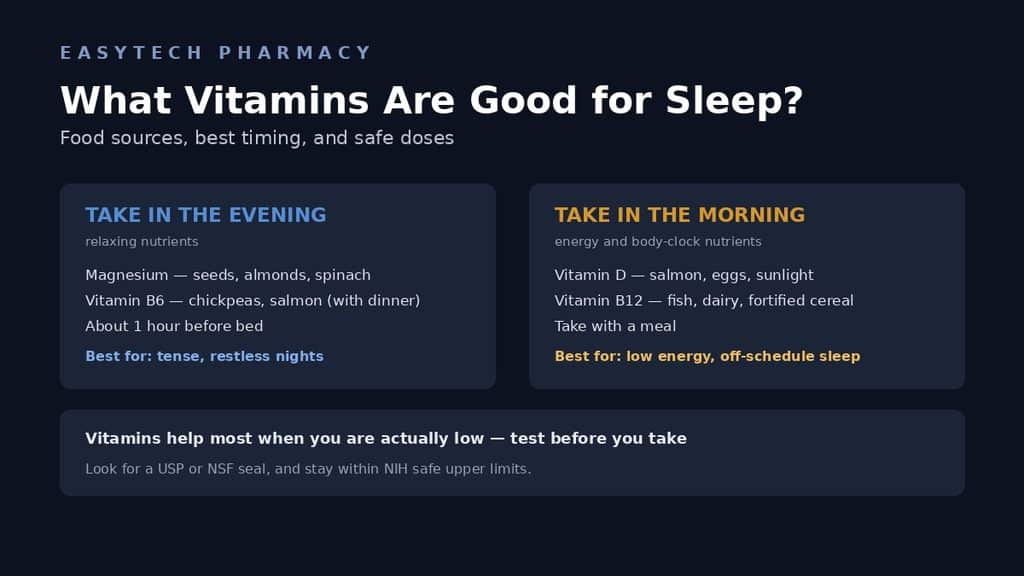
Vitamins tend to help most when your body runs low on them. If your levels already look healthy, extra pills rarely make a big difference. That’s why a simple blood test often beats guessing.
Also, keep expectations real. Even the best vitamins for sleep work slowly, often over weeks. They support good sleep habits, but they don’t replace them. Want the research behind each nutrient? Our deep dive on vitamins for sleeplessness covers the studies.
What Vitamins Are Good for Sleep? Match the Nutrient to Your Problem
Different sleep problems link to different nutrients. Start with the row that sounds most like you.
- Tense muscles, can’t relax at night: magnesium
- Low mood, little sunlight, daytime fatigue: vitamin D
- Trouble drifting off, light sleep: vitamin B6
- Off-schedule sleep, low energy, vegan diet: vitamin B12
- Restless, crawling feeling in your legs: iron
Below, we break down each one with food sources, timing, and safe limits.
The Best Vitamins for Sleep, One by One
Magnesium: The Evening Relaxer
Technically a mineral, magnesium tops most lists of sleep vitamins. It helps your muscles and nerves settle down. Many Americans eat less than they need. Glycinate and citrate forms tend to sit well on the stomach.
Top foods: pumpkin seeds, almonds, spinach, black beans, and dark chocolate.
Best time: evening, about an hour before bed.
Safe limit: 350 mg a day from supplements for adults, per the NIH Office of Dietary Supplements. Food sources don’t count toward this limit.
Curious how it compares with a sleep medicine? Read our Ambien vs magnesium for sleep breakdown.
Vitamin D: The Daytime Sleep Helper
Low vitamin D shows up often in people who sleep poorly. Your skin makes it from sunlight, so winter and indoor jobs can leave you short.
Top foods: salmon, trout, fortified milk, eggs, and mushrooms grown in UV light.
Best time: morning, with a meal that has some fat. Some people find it disrupts sleep when taken late.
Safe limit: 4,000 IU a day for adults, according to the NIH vitamin D fact sheet.
Vitamin B6: The Melatonin Builder
B6 ranks among the classic vitamins for sleep. Your body uses it to make serotonin and melatonin, two key sleep chemicals. Most people get enough from food.
Top foods: chickpeas, salmon, chicken, potatoes, and bananas.
Best time: with dinner or earlier. A few people report vivid dreams when they take it late.
Safe limit: 100 mg a day. Long-term high doses can harm your nerves.
Vitamin B12: The Body Clock Keeper
B12 supports your energy and may help keep your sleep-wake rhythm on track. Vegans, older adults, and people on certain stomach medicines often run low.
Top foods: fish, eggs, dairy, and fortified cereals.
Best time: morning, since it can feel energizing.
Safe limit: no official upper limit, but more isn’t better if your levels are normal.
Iron: The Restless Legs Fix
Low iron stores often drive restless legs syndrome, which keeps many people awake. However, too much iron can harm you, so test before you take it.
Top foods: lean red meat, lentils, beans, and spinach. Pair plant sources with vitamin C to absorb more.
Best time: on an empty stomach, or as your clinician advises.
Safe limit: 45 mg a day for adults.
What About Melatonin?
Melatonin isn’t a vitamin. It’s a hormone your brain makes when it gets dark. Still, it sits on the same shelf, so many people lump it in with sleep vitamins.
It works best for timing problems, like jet lag or a late body clock. Studies have also found that some melatonin gummies contain far more or less than their labels claim. Our Ambien vs melatonin guide compares how each one works.
Sleep Vitamins and Your Medicines: Watch These Combos
Vitamins can interact with common medicines. Keep these simple rules in mind:
- Magnesium and iron can block some antibiotics. Take them a few hours apart.
- Iron and calcium can weaken thyroid medicine. Space them out by at least four hours.
- Magnesium can build up if your kidneys don’t work well. Our post on kidney and liver function explains why this matters for sleep aids too.
- High-dose vitamin D can raise calcium levels over time.
Your pharmacist can check your full list in a few minutes. Just ask at the counter.
How to Pick a Good Bottle of Sleep Vitamins
The FDA doesn’t approve supplements before they hit the shelves. So quality can vary a lot. Use this quick checklist:
- Look for a third-party seal, such as USP Verified or NSF Certified
- Check the form, like magnesium glycinate instead of magnesium oxide
- Skip “proprietary blends” that hide exact amounts
- Compare the dose with the safe limits above
- Avoid products with big promises, such as “cures insomnia”
A Simple 4-Week Plan With Nutrients for Sleep
- Week 1: Keep a sleep diary and track what you eat. Ask about a blood test for vitamin D, B12, and iron.
- Week 2: Add more nutrient-rich foods first, such as nuts, fish, beans, and leafy greens.
- Week 3: If tests show a gap, add one supplement only. Pick the right time of day for it.
- Week 4: Review your sleep diary. Keep what helps, and drop what doesn’t.
Pair this plan with healthy habits for the best results. Our guide to home remedies for insomnia adds easy bedtime ideas.
Beyond Vitamins: Other Natural Options
Vitamins are just one piece of the natural sleep toolbox. You can also explore herbs, CBD, and other options.If months pass without better sleep, it’s time for a check-up.
FAQs: What Vitamins Are Good for Sleep?
What is the best vitamin for sleep?
Magnesium has the strongest everyday case for most adults. However, the best choice depends on what your body lacks, so a blood test helps.
Can low vitamin D cause poor sleep?
Research links low vitamin D with shorter and poorer sleep. Fixing a true shortfall may help, especially in winter.
Should I take sleep vitamins at night?
Magnesium works well in the evening. On the other hand, vitamin D and B12 usually fit better in the morning.
How long do vitamins for sleep take to work?
Most people need two to six weeks to notice a change. Fixing a real shortfall usually takes the longest.
Can I take sleep vitamins with a sleep aid?
Often, yes. Still, ask your pharmacist to check for interactions with everything you take.
Bottom Line — Food First, Test Smart, Dose Safely
So, what vitamins are good for sleep? Magnesium, vitamin D, B6, B12, and iron top the list, but only when your body needs them. Start with food, test before you supplement, and take each one at the right time. Small, steady steps beat a cabinet full of bottles.
If a sleep aid becomes part of your plan, our Ambien near me guide shows how to find it at a local pharmacy and compare prices.