Ambien vs. Magnesium for Sleep: When a Deficiency Is the Real Problem
Magnesium has a genuinely different story than most of the other alternatives we’ve covered. It’s not a sedative pretending to be gentle, and it’s not an unregulated wellness trend riding on thin evidence. It’s an essential mineral tied directly to how your nervous system functions, and the research on it is more specific, and more conditional, than most headlines suggest.
Why Magnesium Connects to Sleep at All
Magnesium is involved in over 300 enzymatic reactions in the body, and several of them touch directly on sleep regulation. It binds to and helps activate GABA receptors, the same inhibitory neurotransmitter system Ambien works on directly, though through a much gentler, indirect route. When magnesium runs low, GABA receptor activity can drop with it, leaving the nervous system in a more activated, harder-to-settle state.
The Deficiency Question Changes Everything
This is the single most important thing to understand about magnesium and sleep, yet health writers rarely state it plainly: the evidence supports its benefits specifically for people low in magnesium, not for everyone equally. Multiple studies have found lower magnesium levels associated with poor sleep quality, including one study of airline pilots that found significantly lower magnesium in poor sleepers compared to good sleepers. A separate cross-sectional study found magnesium deficiency associated with a 1.8-fold higher odds of poor sleep quality.
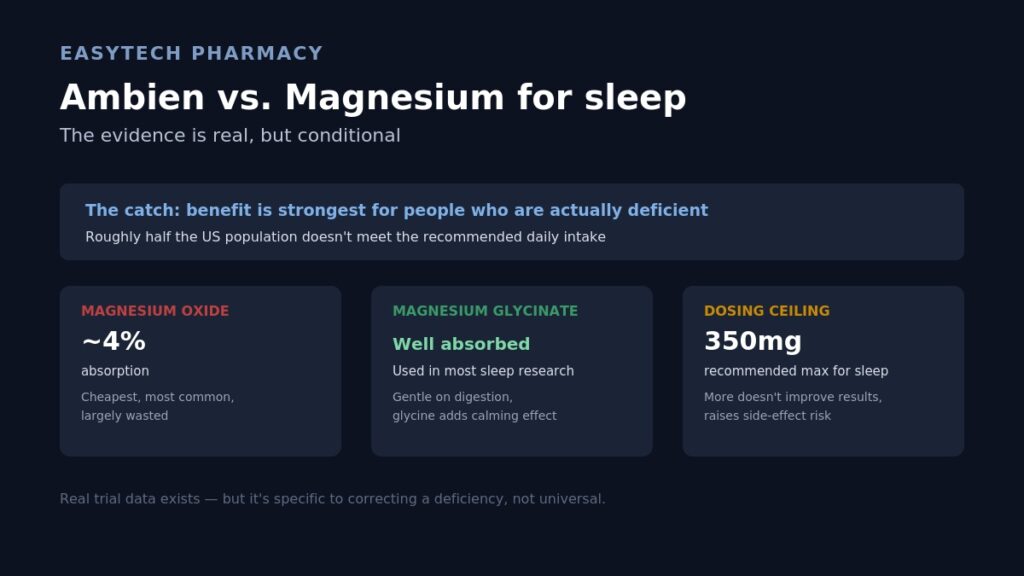
Roughly half the US population doesn’t meet the recommended daily intake for magnesium. That means a meaningful portion of people struggling with sleep may genuinely be dealing with a nutritional gap rather than a condition pharmaceuticals aim to treat. For someone already magnesium-replete, the evidence for additional benefit is considerably weaker.
What the Trial Data Actually Shows
A pooled analysis of three randomized controlled trials in older adults with insomnia found real, measurable benefit from magnesium supplementation, including improved sleep efficiency, reduced time to fall asleep, and fewer early morning awakenings. A separate trial using a specific magnesium and L-theanine combination found reduced sleep latency and increased sleep duration, with no side effects reported during or after treatment. This is a genuinely more robust evidence base than CBD’s current data, though still far short of zolpidem’s decades of trial history.
Not All Magnesium Is the Same
This is where a lot of magnesium recommendations go wrong. Magnesium oxide, the cheapest and most common form sold in stores, has notoriously poor absorption, around 4%, meaning most of it passes through largely unused. Researchers most commonly use magnesium glycinate in actual sleep studies because the body absorbs it well and tolerates it gently, while glycine itself offers independent calming properties. Magnesium threonate is newer and crosses into the brain more effectively than other forms, though its sleep-specific research is still emerging.
Dosing: A Real Ceiling Worth Knowing
Experts generally recommend no more than 350 mg of supplemental magnesium specifically for sleep. Taking more doesn’t reliably improve results and raises the risk of side effects, most commonly digestive upset and diarrhea. This mirrors a pattern we’ve seen elsewhere, including in our guide on Ambien vs. melatonin, where more isn’t automatically better once you’re past the dose research actually supports.
Who’s Most Likely to Be Low
- Women and older adults face higher deficiency risk generally
- Regular alcohol use is associated with lower magnesium levels
- Diets high in processed and convenience foods tend to run low in magnesium
- Certain medications, including proton pump inhibitors for acid reflux and some diuretics, can impair magnesium absorption or increase how much the body loses
Where Magnesium Fits Compared to Ambien
Magnesium isn’t a direct substitute for Ambien in cases of severe, persistent insomnia unrelated to deficiency. It’s genuinely worth trying first, or alongside other strategies, for mild to moderate sleep trouble, particularly for anyone in a higher-risk group for deficiency. This fits the broader pattern in our guide on Ambien alternatives, where addressing an underlying, correctable issue sometimes accomplishes more than targeting sleep symptoms directly.
The Bottom Line
Magnesium’s relationship with sleep is real and better supported than CBD’s, but it comes with an important condition attached: the clearest benefit shows up in people who are actually deficient, not universally. The right form matters too, since magnesium glycinate carries far better absorption and research support than the cheap oxide form most commonly sold. Magnesium cannot match Ambien’s trial-proven effectiveness for genuine, severe insomnia; however, it offers one of the best-supported options on the non-prescription shelf for mild sleep trouble tied to a real nutritional gap.
For a detailed evidence review, see the Sleep Foundation’s guide to magnesium and sleep.
Frequently asked questions
Does magnesium work as well as Ambien for sleep?
Not for severe or persistent insomnia unrelated to deficiency. Magnesium’s clearest benefit applies to people who are actually low in the mineral, a different scenario than the chronic insomnia Ambien is built to treat.
What’s the best form of magnesium for sleep?
Magnesium glycinate is the form most commonly used in sleep research, with good absorption and gentle digestive tolerance. Magnesium oxide, despite being the cheapest and most common option, absorbs poorly.
How much magnesium should I take for sleep?
Experts generally recommend no more than 350 mg specifically for sleep purposes. Higher doses don’t reliably improve results and raise the risk of digestive side effects.
How do I know if I’m magnesium deficient?
Standard blood tests don’t always reflect true magnesium status well, since most of the body’s magnesium is stored in bone and tissue rather than blood. Risk factors like older age, regular alcohol use, and certain medications are worth discussing directly if you suspect a deficiency.
Related reading
- Ambien vs. CBD for sleep: a clear, evidence-based look
- Ambien vs. valerian root: what the evidence actually shows
- Ambien vs. melatonin: how they actually work, compared
- Ambien alternatives: a full overview of your options
Wondering whether a nutritional gap might be part of your sleep trouble? Talk to your pharmacist. EasyTech Pharmacy can help you think it through.
For local pharmacy access near you, our Ambien near me guide covers pharmacies across the world.
Visit EasyTech Pharmacy — sleep medication with real pharmacist guidance.