Best Medication for Anxiety and Insomnia: How to Treat Both Without Trading One Problem for Another
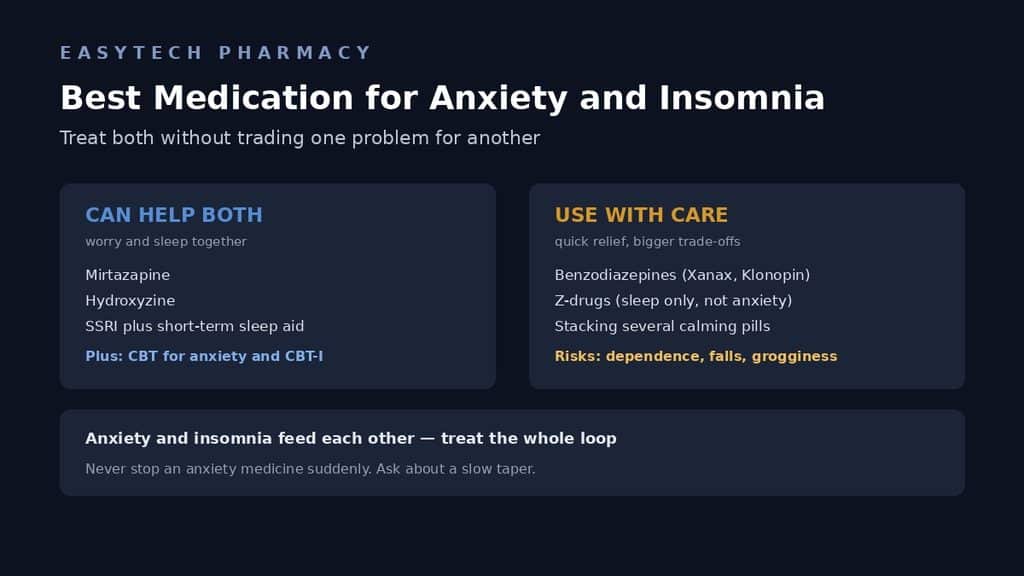
Searching for the best medication for anxiety and insomnia usually means you’re tired of two problems feeding each other. Worry keeps you awake. Then poor sleep makes the next day’s worry worse. Breaking that loop often takes a plan that treats both at once.
This guide sorts the options into three groups. Some mainly ease anxiety, some mainly help sleep, and a few help with both. You’ll also learn the trade-offs and where talk therapy fits in.
Why Anxiety and Insomnia So Often Show Up Together
Anxiety keeps your nervous system on high alert. That makes it hard to switch off at night. Meanwhile, short sleep makes your brain more reactive to stress the next day. As a result, each problem fuels the other.
The National Institute of Mental Health lists sleep trouble among the common signs of anxiety disorders. Treating only one side of the loop often leaves the other in place.
Medication for Anxiety and Insomnia: The Three Groups
Each group plays a different role. Knowing which is which helps you build a plan that treats both problems without piling on side effects.
Group 1: Medicines That Mainly Treat Anxiety
SSRIs and SNRIs, like escitalopram, sertraline, and venlafaxine, are common first choices for long-term anxiety. They take a few weeks to work. Some can disrupt sleep at first, though sleep often improves as anxiety eases. Our guide to the best SSRI for sleep compares how each one affects nights.
Buspirone eases ongoing worry without causing drowsiness. It doesn’t help sleep directly, but calmer days can lead to calmer nights.
Group 2: Medicines That Mainly Help Sleep
Z-drugs like Ambien help you fall asleep, but they don’t treat anxiety itself. Our post on whether Ambien helps with anxiety explains why.
Orexin blockers, like Belsomra and Dayvigo, quiet the brain’s wake signal. They target sleep only.
Group 3: Medicines That Can Help With Both
For many people, this group comes closest to a single medication for anxiety and insomnia. Each option still has trade-offs worth weighing.
Mirtazapine treats depression and anxiety symptoms while causing strong drowsiness at night. Weight gain is a common trade-off.
Low-dose trazodone often joins an SSRI plan to help with sleep. Learn how these calming options work in our overview of antidepressants that help with sleep.
Hydroxyzine is an antihistamine that eases anxiety and causes drowsiness. It doesn’t cause dependence, but it can leave you groggy. See hydroxyzine vs Ambien.
Are Benzodiazepines the Best Medication for Anxiety and Insomnia?
Benzodiazepines, like alprazolam (Xanax) and clonazepam (Klonopin), calm anxiety fast and bring on sleep. That’s why many people see them as the obvious answer. However, they come with serious trade-offs:
- Dependence can develop within weeks
- Stopping suddenly can cause dangerous withdrawal
- They raise the risk of falls, memory problems, and next-day drowsiness
- Mixing them with alcohol or opioids can slow breathing
The FDA added a boxed warning about misuse, dependence, and withdrawal for this group. For most people, experts reserve them for short-term use. Compare them in Ambien vs Xanax and Ambien vs Klonopin. Curious how Ambien differs? Read is Ambien a benzodiazepine.
Matching Anxiety and Sleep Medication to Your Pattern
Racing Thoughts at Bedtime
If worry peaks as soon as the lights go off, a long-term anxiety plan plus CBT-I often works best. A calming option at night may help while the anxiety treatment starts working.
Waking Up in a Panic
Night-time panic attacks need treatment for panic itself. SSRIs and CBT for panic usually lead the plan. A sleep aid alone won’t stop the attacks.
Worry All Day, Poor Sleep All Night
Here, one medicine that helps both, like mirtazapine, may simplify things. Another common approach pairs an SSRI with a short-term sleep aid.
A Short, Stressful Season
After a loss, a move, or a crisis, short-term help may make sense. Even then, the plan should include an end date. Pairing it with a few sessions of CBT helps you keep the gains once the stressful season passes.
One or Two: Choosing Anxiety and Insomnia Medication
One medicine means fewer pills, fewer interactions, and a simpler routine. However, it may not treat both problems equally well.
Two medicines let you target each problem directly. The catch? More side effects can stack up, especially drowsiness. Always ask your pharmacist to check how the two work together.
Don’t Skip Therapy When Treating Anxiety and Insomnia
Medicine is only half the story. CBT for anxiety and CBT for insomnia (CBT-I) both have strong research behind them. They teach skills that last after any medicine stops. Some therapists even blend the two.
Our guide on what a sleep therapist does walks through each session.
Everyday Habits for Treating Anxiety and Insomnia
- Set a 15-minute “worry time” in the early evening
- Cut caffeine after noon, since it fuels both anxiety and insomnia
- Limit alcohol, which worsens anxiety the next day
- Move your body daily, ideally outdoors
- Keep screens out of the bedroom
- Try slow breathing with longer exhales at bedtime
Questions to Ask Your Pharmacist
- Does this medicine treat my anxiety, my sleep, or both?
- How long until I notice a difference?
- Will it make me drowsy during the day?
- Can it cause dependence, and how would I stop it later?
- Does it interact with anything else I take?
Safety Tips for Anxiety and Sleep Medication
- Never stop an anxiety medicine suddenly
- Avoid mixing calming medicines with alcohol
- Don’t drive until you know how a new medicine affects you
- Report any worsening mood or thoughts of self-harm right away
- Bring your full medicine list to every pharmacy visit
FAQs: Best Medication for Anxiety and Insomnia
What medication helps with both anxiety and sleep?
Mirtazapine and hydroxyzine can help with both. Many people also pair an SSRI with a short-term sleep aid.
Is Xanax good for anxiety and insomnia?
It works fast, but it carries real risks of dependence and withdrawal. Experts usually limit it to short-term use.
Does Ambien help with anxiety?
No. Ambien helps you fall asleep, but it doesn’t treat the anxiety behind sleepless nights.
Can SSRIs make insomnia worse?
Some can at first. Taking them in the morning often helps, and sleep usually improves as anxiety eases.
Is there a non-addictive option for anxiety and sleep?
Yes. SSRIs, buspirone, hydroxyzine, and CBT carry little or no risk of dependence.
Bottom Line — Treat the Loop, Not Just One Side
The best medication for anxiety and insomnia depends on your pattern. Long-term anxiety treatment, often an SSRI, forms the base for many people. Calming options or a short-term sleep aid can fill the gap, while CBT builds skills that last. Avoid quick fixes that trade one problem for another.
If a sleep aid becomes part of your plan, our Ambien near me guide shows how to find a local pharmacy and compare prices.