Sleep Therapist: What They Do and How They Help You Sleep Again
Most people have never heard of a sleep therapist. Yet for long-term insomnia, this kind of expert often helps more than anything in your medicine cabinet. So what does a sleep therapist actually do? And what happens when you walk into the first session?
This guide walks you through it all. You’ll learn who these experts are and what each week looks like. We also cover cost and how to find one in the US.
What Is a Sleep Therapist?
A sleep therapist is a trained expert who treats sleep problems through talk, habits, and simple daily changes. Most hold a background in psychology, counseling, nursing, or social work. Many add special training in behavioral sleep medicine.
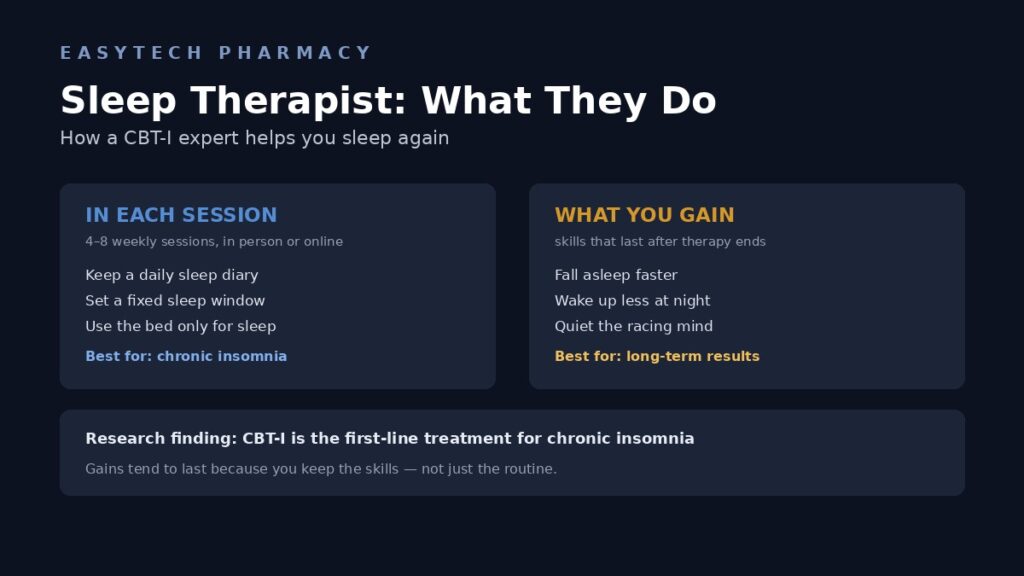
Their main tool is Cognitive Behavioral Therapy for Insomnia, often called CBT-I. Sleep experts at the American Academy of Sleep Medicine recommend CBT-I as the first step for chronic insomnia.
You may also hear other names for the same role. For example, people say insomnia therapist, CBT-I therapist, or behavioral sleep specialist.
What Does a Sleep Therapist Do Week by Week?
A typical program runs four to eight sessions. Each one builds on the last. Here’s what that journey usually looks like.
Week 1: Your Sleep Story
The first visit feels like a long, friendly chat. Your therapist asks when you go to bed, when you wake, and what keeps you up. They also ask about caffeine, stress, naps, and screens. Then they hand you a sleep diary to fill in every morning.
Weeks 2–3: Setting Your Sleep Window
Next, your therapist reviews your diary. Together, you set a fixed “sleep window,” a short block of time for sleep each night. At first, this window may feel too short. That’s on purpose. It builds up your natural sleep drive, so you fall asleep faster and wake less often.
Weeks 3–5: Retraining the Bed
Many poor sleepers link their bed with worry and tossing. Your therapist helps you break that link. You’ll use the bed only for sleep, and you’ll get up if you can’t sleep after about 20 minutes. Over time, your brain starts to connect the bed with rest again.
Weeks 4–6: Calming the Racing Mind
Thoughts like “I’ll never sleep tonight” keep many people awake. A good sleep therapist helps you spot and question these thoughts. You’ll also practice relaxation skills, such as slow breathing or body scans.
Final Weeks: Widening the Window
As your sleep improves, your therapist slowly stretches your sleep window. You’ll also plan for bad nights, so one rough week doesn’t undo your progress.
Key Tools Every Insomnia Therapist Uses
- Sleep diary: A simple daily log that shows patterns you can’t see on your own
- Sleep restriction: A short, steady sleep window that builds deeper sleep
- Stimulus control: Clear rules that rebuild the bed–sleep link
- Cognitive work: Tools to quiet worry and unhelpful sleep beliefs
- Sleep hygiene: Daily habits around light, caffeine, and routine
- Relaxation training: Breathing, muscle release, and wind-down routines
Some of these overlap with self-help tips. For instance, our guides on home remedies for insomnia share easy first steps. A therapist, however, tailors each tool to you and keeps you on track.
Who Should See a Sleep Therapist?
You don’t need a crisis to book a session. A sleep therapist can help if you:
- Struggle to fall or stay asleep three or more nights a week
- Have dealt with poor sleep for three months or longer
- Feel tired, foggy, or moody during the day
- Rely on sleep aids and want a longer-term plan
- Lie awake worrying about sleep itself
Can a CBT-I Therapist Help If You Take Sleep Medicine?
Yes, and this is one of their biggest strengths. Many people start therapy while they still take a sleep aid like Ambien. Over time, better sleep habits often make the medicine less needed.
Some people also notice their pills work less well after a few weeks. Our post on why Ambien stops working explains why. A therapist can support you through that change. If you plan to cut back, read our guide on how to stop Ambien safely first.
Want the full head-to-head? Our CBT-I vs Ambien comparison covers results, speed, and long-term outcomes.
How Much Does a Sleep Therapist Cost?
Costs vary by state, provider, and insurance. In general, expect a range like this:
- Private pay: Often $100–$250 per session
- With insurance: Many plans cover CBT-I as behavioral health care, so you may pay only a copay
- Group programs: Usually cheaper per session, with the same core tools
- Digital CBT-I apps: Lower cost, and some plans now cover them
Call your insurer before your first visit. Ask whether they cover “CBT-I” or “behavioral sleep medicine,” and whether you need a referral.
How to Find a Sleep Therapist Near You
Finding the right fit takes a little digging. Fortunately, a few trusted tools make it easier.
- Use a directory: The Society of Behavioral Sleep Medicine lists trained providers across the US
- Ask a local sleep center: Many sleep clinics have a behavioral sleep specialist on staff
- Search for telehealth: Online sessions work well for CBT-I and widen your choices
- Check your insurer’s list: Search for “CBT-I” or “insomnia” in its provider tool
Can’t find anyone nearby? Try the free CBT-i Coach app from the VA. It guides you through the same core steps at home.
Questions to Ask Before You Book a Sleep Counselor
- Do you have special training in CBT-I or behavioral sleep medicine?
- How many sessions do your clients usually need?
- Do you offer telehealth visits?
- Do you work with my insurance?
- Have you helped people who take sleep medicine?
A good fit matters. You’ll share your nightly habits, so pick someone you feel at ease with.
What Results Can a Sleep Therapist Deliver?
Many people see real change within a few weeks. Research shows CBT-I often helps people fall asleep faster and wake less during the night. Better still, the gains tend to last long after therapy ends, because you keep the skills.
That said, therapy takes effort. The sleep window can feel tough at first, and you may feel more tired for a week or two. Stick with it, though. The payoff usually comes soon after. For a realistic view of long-term outcomes, read is there a cure for insomnia.
FAQs About Sleep Therapists
What does a sleep therapist do?
A sleep therapist helps you change the habits and thoughts that keep you awake. Most use CBT-I, which includes a sleep diary, a set sleep window, and tools to calm a busy mind.
How many sessions with an insomnia therapist will I need?
Most programs last four to eight sessions. Some people improve sooner, while others need a few extra visits.
Is a sleep therapist the same as a sleep specialist?
Not quite. A sleep specialist often runs sleep tests and checks for problems like sleep apnea. A sleep therapist focuses on behavior and thoughts, mainly through CBT-I.
Can I do sleep therapy online?
Yes. Many US therapists offer CBT-I by video, and studies show online sessions can work very well.
Does insurance cover sleep therapy?
Many plans do, often as behavioral health care. Call your insurer and ask about CBT-I coverage before you book.
Bottom Line — A Sleep Therapist Teaches Skills That Last
A sleep therapist doesn’t just help you through one bad month. Instead, they teach you skills you can use for life. Over a few weeks, you’ll track your sleep, reset your schedule, and quiet the thoughts that keep you up. For many people with long-term insomnia, that’s the change that finally sticks.
Taking a sleep aid in the meantime? Our Ambien near me guide shows how to find it at a local pharmacy and compare prices.