Long-Term Insomnia Drugs: Hidden Risks for Older Adults and Safer Next Steps
Many older adults take long-term insomnia drugs without ever planning to. A sleep aid starts as a short fix after surgery, a loss, or a stressful season. Then months turn into years. Meanwhile, the body keeps changing, and so do the risks.
This guide explains what happens when seniors use sleep medicine night after night. You’ll learn the risks that build over time, the warning signs to watch for, and how people step down safely.
Why Long-Term Sleep Medication Hits Older Adults Harder
Age changes how the body handles medicine. The liver and kidneys clear drugs more slowly. As a result, a bedtime pill may still work the next morning. The brain also grows more sensitive to calming medicines.
At the same time, many seniors add new medicines over the years. Each one can interact with a sleep aid. So a pill that felt fine at 60 may cause problems at 75, even at the same dose.
There’s another twist. Many people never get a check-in about their sleep aid after the first few months. The refills simply continue. That’s why a yearly review matters so much for anyone on long-term sleep medication.
Long-Term Insomnia Drugs: The Risks That Build Over Time
Falls and Broken Bones
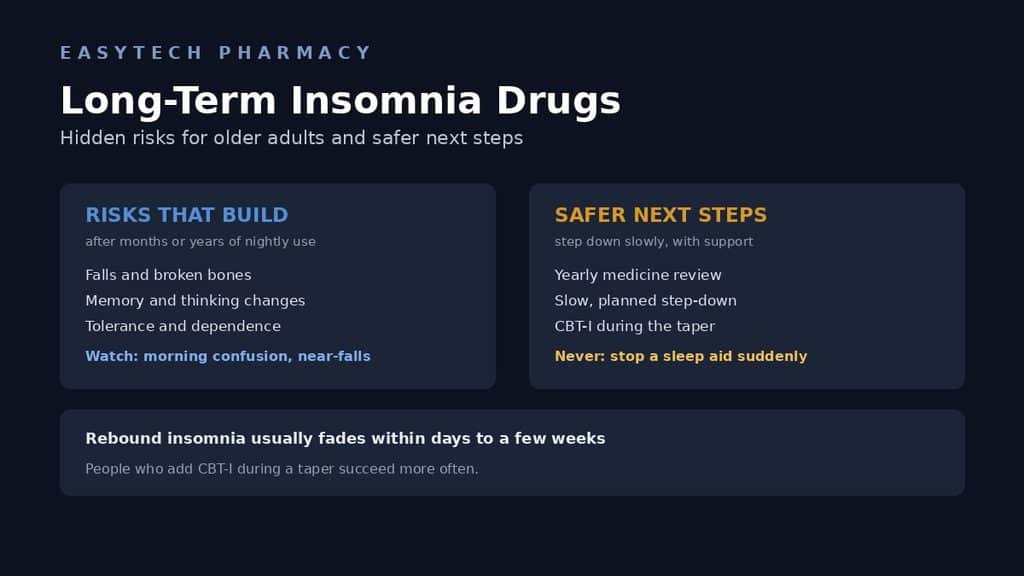
This is the biggest concern with long-term insomnia drugs. Drowsiness, dizziness, and slower reactions add up, especially on night-time bathroom trips. For older adults, one fall can lead to a hip fracture and a long recovery.
Memory and Thinking Changes
Many people notice fogginess, slower thinking, or memory gaps. Some studies have linked long-term use of certain sleep aids with memory decline. These studies show a link, not proof of cause. Still, it’s a good reason to review long-term use. Our guide on whether Ambien causes memory loss covers the research.
Tolerance
Over time, the same dose often works less well. Some people then take more, which raises every other risk. Our post on Ambien tolerance explains why this happens.
Dependence
After months of nightly use, the body adapts. Stopping suddenly can then cause rebound insomnia, anxiety, or other withdrawal symptoms. That doesn’t mean someone did anything wrong. It’s simply how the body responds.
Next-Day Drowsiness and Driving
Leftover drowsiness can slow reaction times the next morning, even when someone feels alert. Our guide on next-day driving risks explains the details.
Complex Sleep Behaviors
Some sleep aids can trigger sleepwalking, sleep eating, or even sleep driving. These events can happen at any point, including after years of safe use.
Hidden Health Problems
A nightly pill can mask the real cause of poor sleep. Sleep apnea, depression, pain, and bladder problems often go untreated as a result.
Which Sleep Aids Carry the Most Long-Term Risk for Seniors?
Not all sleep medicines carry the same risk. Experts flag these groups most often for older adults:
- Z-drugs: zolpidem (Ambien), eszopiclone, and zaleplon
- Benzodiazepines: such as temazepam and lorazepam
- “PM” pills: products with diphenhydramine or doxylamine
Other options carry fewer risks for many seniors. Our guide to the safest sleep medication for elderly patients ranks them. For zolpidem specifically, MedlinePlus lists the main side effects and warnings.
Warning Signs of Long-Term Sleeping Pill Use Problems
Families often spot these signs first. Talk with the care team if you notice:
- A fall, near-fall, or new bruises with no clear cause
- New confusion, especially in the morning
- Forgotten conversations or repeated questions
- Needing more pills to get the same effect
- Strange night-time behavior, like cooking or wandering
- Panic or poor sleep on nights without the pill
Keep a simple note of what you see, with dates. It helps the care team spot patterns quickly. It also makes the next medicine review much more useful.
Why Stopping Long-Term Insomnia Drugs Feels So Hard
Many seniors fear they’ll never sleep again without their pill. That fear makes sense. After all, the first few nights without it often go badly, thanks to rebound insomnia.
Here’s the encouraging part. Rebound sleeplessness usually fades within days to a few weeks. A slow, planned step-down makes it much milder.
Stepping Down From Long-Term Sleep Medication
Stepping down means slowly reducing or stopping a medicine that may now cause more harm than good. For sleep aids, it usually follows these steps:
- Talk it through. Review the reasons for stopping with the care team.
- Make a slow plan. The dose comes down in small steps over several weeks.
- Add CBT-I. Research shows people succeed more often when they learn new sleep skills during a taper.
- Track sleep. A simple diary shows progress, even on rough nights.
- Allow pauses. If a step feels too hard, holding the dose for a while is fine.
Never stop suddenly. These free step-down guides explain how care teams plan a safe taper.
What to Use Instead of Long-Term Insomnia Drugs
The goal isn’t just to stop a pill. It’s to sleep better without it. These steps help most:
- A steady wake time every day
- Bright morning light and gentle daily activity
- Short naps, finished before 3 p.m.
- Treatment for pain, apnea, or bladder problems
- CBT-I, in person, online, or through a free app
Our guide to managing insomnia in the elderly lays out a full daily plan.
Questions for a Yearly Medicine Review
Bring every pill bottle to the pharmacy once a year, including OTC products. Then ask:
- Is this sleep aid still needed?
- Could it cause falls or memory problems at my age?
- Does it interact with my other medicines?
- Is a lower-risk option available?
- What would a slow step-down plan look like?
FAQs: Long-Term Insomnia Drugs for Older Adults
Is it safe for seniors to take sleeping pills every night?
Most experts prefer short-term use for older adults. Nightly use over months or years raises the risk of falls, confusion, and dependence.
Can long-term sleep medication cause dementia?
Some studies have found a link between certain sleep aids and memory decline. However, they don’t prove the medicine causes dementia.
How long does it take to stop a sleep aid?
A planned step-down often takes several weeks to a few months. Going slowly makes withdrawal much easier.
Will my sleep get worse when I stop?
It may for a short time. Rebound insomnia usually fades within days to a few weeks, especially with CBT-I support.
Can you take Ambien long term?
Ambien is meant for short-term use. Our guide on whether you can take Ambien long term explains why.
Bottom Line — Review Long-Term Insomnia Drugs Every Year
Long-term insomnia drugs can quietly raise risks as the years go by. Falls, memory changes, and dependence top the list for older adults. Fortunately, a slow step-down plan, paired with CBT-I, helps many seniors sleep well without nightly pills. Start with a simple medicine review at your pharmacy.
If a sleep aid remains part of the plan, our Ambien near me guide shows how to find a local pharmacy and compare prices.