Antidepressants That Help With Sleep: What Works, What Doesn’t, and Why
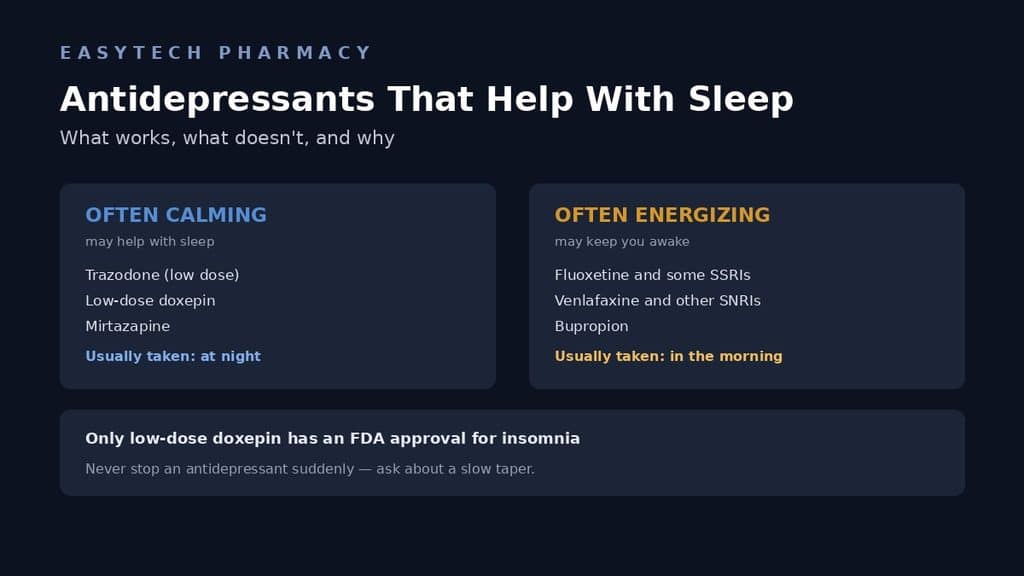
Antidepressants that help with sleep rank among the most common sleep aids in America. Yet most weren’t designed for sleep at all. Some calm the brain and bring on drowsiness. Others do the opposite and can keep you up at night.
So which ones help, and when do they make sense? This guide sorts the calming types from the energizing ones. You’ll also learn the trade-offs, side effects, and safety tips that matter most.
Why Sleep and Mood Are So Closely Linked
Poor sleep and low mood feed each other. Insomnia raises the risk of depression, and depression often wrecks sleep. In fact, trouble sleeping is one of the most common signs of depression.
That’s why treating mood often improves sleep, and better sleep often lifts mood. The National Institute of Mental Health lists sleep changes among the key signs of depression. Our post on Ambien and depression risk explores this link further.
The Main Antidepressants That Help With Sleep
Trazodone
Of all the sedating antidepressants, trazodone gets the most use for sleep. People mostly take it off-label for that purpose. At low doses, it causes drowsiness without strong mood effects. It usually doesn’t lead to dependence.
Watch for: morning grogginess, dizziness when standing up, and headaches. Sleep experts note that research on trazodone for insomnia alone is still limited. Compare it in our trazodone vs Ambien guide.
Low-Dose Doxepin
At very small doses, doxepin is FDA-approved to help people stay asleep. That makes it the only antidepressant with an official insomnia approval. It works best for waking in the middle of the night.
Watch for: mild next-day drowsiness. Higher doses act very differently and carry more side effects. Learn more in doxepin vs Ambien.
Mirtazapine
Mirtazapine is another of the classic antidepressants for sleep. It treats depression and often causes strong drowsiness. Interestingly, lower doses tend to feel more sedating than higher ones. It can help people who struggle with depression, poor sleep, and low appetite together.
Watch for: increased appetite, weight gain, and morning grogginess.
Amitriptyline and Older Tricyclics
These older antidepressants cause drowsiness and sometimes help with nerve pain too. However, they can cause dry mouth, constipation, dizziness, and heart rhythm changes. Experts advise most older adults to avoid them.
Antidepressants That Can Hurt Sleep
Not all antidepressants calm you down. Some feel energizing, especially in the first few weeks:
- Fluoxetine and some other SSRIs: can cause restlessness or lighter sleep
- Venlafaxine and other SNRIs: may disrupt sleep for some people
- Bupropion: often feels stimulating and can cause insomnia
Some SSRIs can also cause vivid dreams or restless legs. Often, simply taking these medicines in the morning helps. Our guide on what medications keep you awake explains the timing tricks.
When Antidepressants for Sleep Make the Most Sense
Insomnia With Depression or Anxiety
Here, a calming antidepressant can treat both problems at once. For example, someone with low mood and poor sleep might benefit from one medicine instead of two. Our guide to the best options for anxiety-related insomnia covers this situation.
Insomnia on Its Own
For insomnia without depression, the picture changes. CBT-I usually comes first, since it works well and carries no side effects. Among antidepressants, only low-dose doxepin has an official approval for this use. Our guide on what a sleep therapist does explains CBT-I.
How to Choose Among Antidepressants for Sleep
The right fit depends on your situation. These questions help narrow it down:
- Is low mood part of the picture? If so, a calming antidepressant may treat both problems.
- Do you struggle to fall asleep or stay asleep? Low-dose doxepin mainly helps with staying asleep.
- Is weight a concern? Mirtazapine often raises appetite, so another option may suit you better.
- How old are you? Older adults usually do better with options that cause less dizziness.
- What else do you take? Interactions can change which choice is safest.
Bring these answers to your pharmacist. Together, you can weigh the options against your health history.
Side Effects of Sedating Antidepressants
- Next-day grogginess: especially in the first week or two
- Dizziness: mainly when standing up quickly
- Weight changes: most common with mirtazapine
- Dry mouth and constipation: common with older tricyclics
- Mood changes: any new or worsening low mood needs prompt attention
Antidepressants carry an FDA boxed warning about suicidal thoughts in children, teens, and young adults under 25. Families should watch closely, especially in the first few weeks. If you or someone you love has thoughts of self-harm, call or text 988, the Suicide & Crisis Lifeline, any time.
Combining an Antidepressant for Insomnia With Sleep Aids
Some people take a calming antidepressant and a sleep aid together. This combination can stack drowsiness and raise the risk of falls and next-day impairment. Certain antidepressant combinations can also raise the risk of a rare but serious reaction called serotonin syndrome.
So never mix them on your own. Ask your pharmacist to check every medicine, supplement, and herb you take, including St. John’s wort and melatonin.
Antidepressants for Sleep in Older Adults
Age changes the picture. Older adults feel dizziness and drowsiness more strongly, which raises fall risk. Low-dose doxepin often fits better than older tricyclics, which experts usually advise seniors to avoid. Our guide to the Best Sleep Medicine for Seniors ranks the options.
Stopping Sleep Antidepressants Safely
Many antidepressants need a slow taper. Stopping suddenly can cause dizziness, flu-like feelings, irritability, and poor sleep. These “discontinuation” symptoms usually fade, but a gradual plan makes them much milder.
- Never stop on your own
- Ask about a step-down schedule
- Track mood and sleep during the taper
- Report any return of low mood right away
Many people also find that sleep stays steadier during a taper when they add CBT-I. Healthy routines, like a fixed wake time and morning light, help too.
FAQs: Antidepressants That Help With Sleep
What antidepressant is best for sleep?
It depends on the person. Low-dose doxepin has an official approval for staying asleep. Trazodone and mirtazapine are also common, especially when depression is part of the picture.
Is trazodone a sleeping pill?
Not officially. Trazodone is an antidepressant, but many people use it at low doses for sleep.
Can SSRIs cause insomnia?
Yes, some can. Taking them in the morning often helps.
Do sedating antidepressants cause weight gain?
Some do. Mirtazapine in particular can increase appetite and weight.
Can I take an antidepressant with Ambien?
Some people do, but the drowsiness can add up. Always ask your pharmacist before combining them.
Bottom Line — Choose Antidepressants for Sleep With Care
Antidepressants that help with sleep can work well, especially when low mood and poor sleep show up together. Trazodone, low-dose doxepin, and mirtazapine lead the list, while some others may keep you awake. Match the option to the problem, watch for side effects, and never stop suddenly.
If a sleep aid becomes part of your plan, our Ambien near me guide shows how to find a local pharmacy and compare prices.