Sleep Medications Overview: The 5 Types Explained by How They Work
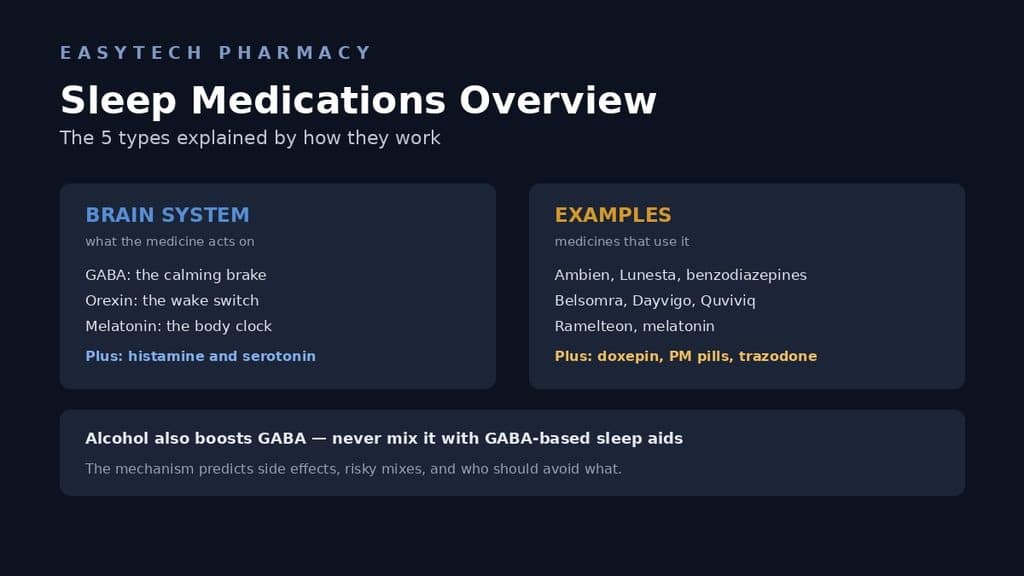
Most sleep medications overview guides just list names. That’s useful, but it leaves out the most helpful part: how each type actually works. Once you know which brain system a medicine targets, its side effects and risks start to make sense.
This guide explains the five main brain systems that sleep medicines act on. For each one, you’ll see which medicines use it, what it feels like, and what to watch for.
Before the Sleep Medications Overview: How Sleep Works
Your brain balances two forces all day long. One pushes you to stay awake. The other pulls you toward sleep. Several chemical messengers control that balance, including GABA, orexin, melatonin, histamine, and serotonin.
Each type of sleep medicine tips the balance by working on one or more of these messengers. The National Institute of Neurological Disorders and Stroke explains these systems in more detail.
Types of Sleep Medications by Brain System
1. The Calming Brake: GABA
Of all the types of sleep medications, this group is the oldest and most familiar. GABA is the brain’s main “slow down” signal. Medicines that boost GABA quiet brain activity broadly, a bit like pressing the brake on a car.
Who uses it: Z-drugs like zolpidem (Ambien) and eszopiclone, plus benzodiazepines like temazepam.
What it means: These medicines act fast and work well. However, broad calming can cause morning grogginess, unsteady walking, memory gaps, and complex sleep behaviors. Dependence can also develop over time.
Z-drugs target GABA more narrowly than benzodiazepines, which is why they’re a separate group. Our post on whether Ambien is a benzodiazepine explains the difference.
2. The Wake Switch: Orexin
Orexin blockers are the newest of the sleep medicine types. Orexin works like a light switch that keeps you awake. Instead of pressing the brake, orexin blockers simply turn off the “stay awake” switch.
Who uses it: Belsomra, Dayvigo, and Quviviq.
What it means: They tend to feel more like natural sleepiness. Still, next-day drowsiness can happen, and people with narcolepsy shouldn’t take them. Compare one in Dayvigo vs Ambien.
3. The Body Clock: Melatonin
Melatonin tells your body when night has arrived. Medicines that act on this system work more like a timing signal than a sedative.
Who uses it: ramelteon, melatonin supplements, and tasimelteon for a rare body clock disorder.
What it means: These options feel gentle and carry little risk of misuse. They work best for trouble falling asleep or a body clock that runs late. The NCCIH melatonin guide covers supplement safety, and our Ambien vs melatonin post compares the two approaches.
4. The Alertness Signal: Histamine
This group includes some of the most common sleep aid types in America, since many sit on store shelves. Histamine helps keep your brain awake. Blocking it causes drowsiness, which is why some allergy pills make you sleepy.
Who uses it: OTC “PM” pills with diphenhydramine or doxylamine, low-dose doxepin, hydroxyzine, and mirtazapine.
What it means: OTC antihistamines often lose their effect within days. They can also cause dry mouth, constipation, and confusion, especially in older adults. Low-dose doxepin targets histamine more precisely, with fewer side effects. See our list of the best OTC sleep aids compared to Ambien.
5. Serotonin Pathways
Some antidepressants block certain serotonin signals that affect deep sleep and wakefulness.
Who uses it: trazodone and mirtazapine.
What it means: These options often help people with low mood and poor sleep. However, they can cause dizziness on standing and morning grogginess. Our guide to sedating antidepressants explained goes deeper.
Other Sleep Aid Types Worth Knowing
Gabapentin calms overactive nerves through a different route. Some people use it when nerve pain and poor sleep go together. Learn more in Ambien vs gabapentin.
Herbal supplements, like valerian and chamomile, may work on several systems at once. However, research remains limited, and product quality varies widely. Some herbs can also interact with sleep medicines, so mention them at the pharmacy counter.
Why How Sleep Medications Work Matters
It Predicts Side Effects
Broad calming medicines tend to cause more grogginess and falls. Timing-based medicines tend to cause fewer side effects but act more gently. So if mornings matter most to you, mention that first.
It Explains Dangerous Mixes
Alcohol also boosts GABA. So mixing it with GABA-based sleep aids stacks the effect and can slow breathing. Our guide on Ambien and alcohol explains the risks. Likewise, two histamine blockers together can double the side effects.
It Shows Who Should Avoid What
- Older adults often do better avoiding broad GABA medicines and OTC antihistamines
- People with narcolepsy shouldn’t use orexin blockers
- People with untreated sleep apnea need extra care with any sedating medicine
How Sleep Medications Work: Quick Summary
- GABA (calming brake): fast and strong; more grogginess and dependence risk
- Orexin (wake switch): more natural feel; brand-only for now
- Melatonin (body clock): gentle; best for falling asleep and timing
- Histamine (alertness signal): OTC versions fade fast; low-dose doxepin is more precise
- Serotonin: helpful when mood is part of the picture
Want brand names, generics, and controlled status for each? See our full list of sleep medications by type.
Choosing Among Sleep Medicine Types
The right type depends on your sleep problem. Here’s a simple starting point to discuss with your pharmacist:
- Can’t fall asleep: melatonin-type options or short-acting medicines
- Can’t stay asleep: low-dose doxepin or orexin blockers
- Low mood plus poor sleep: a calming antidepressant
- Body clock runs late: timed melatonin and morning light
Remember that CBT-I and healthy habits work alongside any of these, and often matter most. A short course of medicine can ease a rough stretch. Lasting change, however, usually comes from steady routines and new sleep skills.
FAQs: Sleep Medications Overview
What are the main types of sleep medications?
The main types act on GABA, orexin, melatonin, histamine, or serotonin. Each one tips the sleep-wake balance in a different way.
Which type of sleep medicine is least habit-forming?
Melatonin-type options and low-dose doxepin carry the lowest risk of misuse.
Why do OTC sleep aids stop working?
Your body builds tolerance to antihistamines quickly, often within a few days.
How are orexin blockers different from Ambien?
Ambien boosts the brain’s calming brake. Orexin blockers turn off the wake switch instead.
Can I combine two types of sleep medicine?
Only with expert advice. Combining types can stack side effects, especially drowsiness and falls.
Bottom Line — Know the System, Know the Medicine
This sleep medications overview boils down to one idea. Every sleep aid works by nudging a brain system. It might press the calming brake, flip the wake switch, or reset the body clock. Others block the alertness signal or adjust serotonin. Knowing which one helps you predict side effects, avoid risky mixes, and ask better questions at the pharmacy.
Ready to fill a sleep medicine? Our Ambien near me guide shows how to find a local pharmacy and compare prices.