Sleep Aid Drug List: A Full Reference to Store-Shelf, Supplement, and Pharmacy Sleep Aids
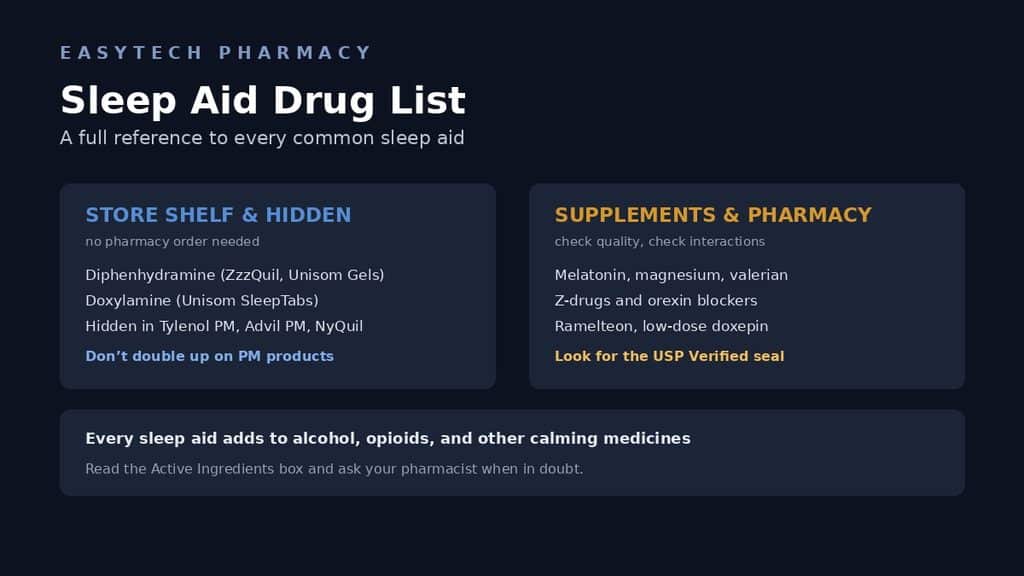
Walk down any pharmacy aisle and you’ll find dozens of sleep products. That’s why we built this sleep aid drug list. It brings store-shelf pills, supplements, and pharmacy sleep aids together in one place. Use it as a quick reference before you buy or take anything new.
Many people don’t realize how many products contain sleep aid ingredients. A pain reliever, a cold medicine, and a sleep pill can all share the same drug. Knowing what’s inside each bottle helps you avoid taking a double dose by mistake.
How to Use This Sleep Aid Drug List
We sorted every product into four groups:
- Store-shelf sleep aids: you can buy these without a pharmacy order
- Hidden sleep aids: “PM” and nighttime products with a sleep ingredient inside
- Supplements: melatonin, magnesium, and herbal products
- Pharmacy sleep aids: medicines your pharmacy fills after a care team review
Each group lists the active ingredient first. Brand names come second, since stores carry many store-brand versions. Always check the “Active Ingredients” box on the label.
Store-Shelf Sleep Aid Drugs
Only two drugs make up nearly every store-shelf sleep pill in the US. Both are older antihistamines that cause drowsiness.
Diphenhydramine
- Common brands: ZzzQuil, Unisom SleepGels, Benadryl, Sominex
- Best for: an occasional sleepless night
- Watch for: dry mouth, constipation, next-day fog, and trouble urinating
MedlinePlus offers a clear diphenhydramine drug guide with side effects and warnings.
Doxylamine
- Common brands: Unisom SleepTabs and many store brands
- Best for: short-term use, much like diphenhydramine
- Watch for: a longer effect, so morning grogginess happens more often
Your body adapts to these antihistamines within a few nights. For that reason, labels warn against use for more than two weeks. Older adults should avoid them, since they raise the risk of confusion and falls.
Hidden Sleep Aid Drugs in “PM” Products
This part of our list of sleep aids surprises most readers. Many nighttime pain and cold products contain the same drugs as sleep pills.
| Product type | Sleep ingredient | Other ingredient |
|---|---|---|
| Tylenol PM and store brands | Diphenhydramine | Acetaminophen |
| Advil PM and store brands | Diphenhydramine | Ibuprofen |
| Aleve PM | Diphenhydramine | Naproxen |
| NyQuil and nighttime cold liquids | Doxylamine | Acetaminophen and a cough suppressant |
The risk: people often take a PM pain reliever and a sleep pill on the same night. That doubles the antihistamine dose. Taking NyQuil with Tylenol PM can also push acetaminophen past safe daily limits.
Not in pain? Then skip the PM pain combo and choose a single-ingredient product instead.
Sleep Supplements on the Sleep Aid List
Supplements don’t go through FDA approval the way medicines do. So quality and strength can vary from brand to brand.
- Melatonin: helps reset your body clock, such as after jet lag or shift work
- Magnesium: may help some people relax at night
- Valerian root: an herb with mixed research results
- L-theanine: an amino acid from tea that may ease a busy mind
- Chamomile: a gentle tea many people enjoy at bedtime
Studies have found that some melatonin gummies contain far more melatonin than the label says. The NIH’s melatonin safety guide explains the facts. Look for a “USP Verified” seal for better quality.
Pharmacy Sleep Aid Drugs at a Glance
This part of our sleep aid drug list covers medicines that need a care team review first. Here’s a short summary of each group:
- Z-drugs: zolpidem (Ambien), eszopiclone (Lunesta), zaleplon (Sonata)
- Orexin blockers: Belsomra, Dayvigo, Quviviq
- Melatonin-type: ramelteon (Rozerem)
- Low-dose doxepin: Silenor
- Benzodiazepines: temazepam, triazolam, and others
- Off-label options: trazodone and a few others
Our full directory of sleep medications covers brand names, generics, and controlled status in detail. To learn which brain system each group targets, see our sleep medications overview.
Master Table: Sleep Aid Drug List Reference
This table pulls the key safety facts together. “Hours in bed” means how long you should plan to stay in bed after a dose.
| Sleep aid | Where you get it | Controlled? | Hours in bed | Key caution |
|---|---|---|---|---|
| Diphenhydramine | Store shelf | No | 7–8 | Avoid if over 65 |
| Doxylamine | Store shelf | No | 7–8+ | Morning grogginess |
| Melatonin | Supplement aisle | No | Varies | Label strength can vary |
| Zolpidem (Ambien) | Pharmacy | Yes (IV) | 7–8 | Complex sleep behaviors |
| Eszopiclone (Lunesta) | Pharmacy | Yes (IV) | 7–8 | Bitter taste, next-day effects |
| Zaleplon (Sonata) | Pharmacy | Yes (IV) | 4+ | Short acting |
| Orexin blockers | Pharmacy | Yes (IV) | 7+ | Avoid with narcolepsy |
| Ramelteon | Pharmacy | No | Full night | Skip with a high-fat meal |
| Low-dose doxepin | Pharmacy | No | Full night | Don’t take within 3 hours of a meal |
| Benzodiazepines | Pharmacy | Yes (IV) | 7–8 | Dependence risk |
Want to know why some sleep aids linger longer than others? Our guide on how sleeping pills work explains half-life in plain words.
Sleep Aid Drugs and Dangerous Combinations
Every sleep aid on this list adds to the effects of other calming substances. Avoid mixing them with:
- Alcohol, even one or two drinks
- Opioid pain medicines
- Anxiety medicines like benzodiazepines
- Other sleep aids, including hidden PM ingredients
Opioids pose the biggest danger. Our post on narcotic sleeping pills explains why that mix can slow breathing.
Who Should Take Extra Care With Common Sleep Aids
- Adults over 65: antihistamine sleep aids raise the risk of falls and confusion. See our guide to safe sleeping pills for elderly patients.
- People with heart conditions: some sleep aids affect heart rhythm or blood pressure. Read about safe sleeping pills for heart patients.
- Pregnant or nursing women: ask your pharmacist before using any sleep product.
- Children: keep melatonin gummies out of reach. Kids often mistake them for candy.
How to Choose From This List of Sleep Aids
Start simple. Better sleep habits often help more than any pill. For an occasional bad night, a single-ingredient store-shelf product may be enough.
If sleep trouble lasts longer than a few weeks, talk with a care team. Our guide on getting sleeping pills safely walks you through each step.
Finally, bring this list to the pharmacy counter. Your pharmacist can check your other medicines in a few minutes, for free.
FAQs: Sleep Aid Drug List
Diphenhydramine. It appears in ZzzQuil, Unisom SleepGels, and most PM pain relievers.
In the US, melatonin sells as a dietary supplement. The FDA doesn’t review it like a medicine.
Usually not. Both often contain diphenhydramine, so you’d double the dose.
Z-drugs, orexin blockers, and benzodiazepines are Schedule IV. Store-shelf sleep aids and melatonin aren’t controlled.
Labels advise no more than two weeks. Your body builds tolerance quickly.
Bottom Line — Know What’s in Every Bottle
A good sleep aid drug list helps you see what you’re really taking. Store-shelf pills rely on two antihistamines. Many PM products hide those same drugs. Supplements vary in quality, and pharmacy sleep aids need a care team review. Check labels, avoid doubling up, and ask your pharmacist when in doubt.
Looking for a pharmacy to fill a sleep medicine? Our Ambien near me guide shows how to find one nearby and compare prices.
Table of contents
- How to Use This Sleep Aid Drug List
- Store-Shelf Sleep Aid Drugs
- Hidden Sleep Aid Drugs in “PM” Products
- Sleep Supplements on the Sleep Aid List
- Pharmacy Sleep Aid Drugs at a Glance
- Master Table: Sleep Aid Drug List Reference
- Sleep Aid Drugs and Dangerous Combinations
- Who Should Take Extra Care With Common Sleep Aids
- How to Choose From This List of Sleep Aids
- FAQs: Sleep Aid Drug List
- Bottom Line — Know What’s in Every Bottle