Narcotic Sleeping Pills: What to Know About the Label, the Law, and the Risks
Estimated reading time: 6 minutes
Many people search for “narcotic sleeping pills” after hearing the term at a pharmacy counter or from a friend. Others see it on the news. Some worry their sleep aid is a narcotic. Others assume all strong medicines fall into that group. The truth is a little more nuanced, and it matters for your safety.
This guide explains what “narcotic” really means and which sleep aids carry legal controls. It also shows why mixing true narcotics with sleep medicine is so dangerous.
What Does “Narcotic” Actually Mean?
People use the word in two different ways:
- The medical meaning: opioids, such as oxycodone, hydrocodone, and morphine. These medicines treat pain.
- The everyday or legal meaning: people, news stories, and some laws use “narcotic” loosely for any controlled drug.
The DEA’s narcotics fact sheet describes narcotics mainly as opioids. So in the medical sense, most sleeping pills aren’t narcotics at all.
Are Sleeping Pills Narcotics?
In most cases, no. The common sleep aids belong to a different group, called sedative-hypnotics. They calm the brain or block wake signals. They don’t act on the opioid system the way narcotic painkillers do.
However, many sleep aids are still controlled substances. That’s a legal label, and it often causes the confusion. Our post on whether Ambien is a narcotic explains this for one common medicine. Our guide on whether Ambien is an opiate clears up a related mix-up.
Controlled Sleeping Pills vs Non-Controlled Options
The DEA sorts medicines into five schedules based on their risk of misuse. Many sleep aids fall under Schedule IV, which means a lower but real risk. The DEA’s drug scheduling page explains each level.
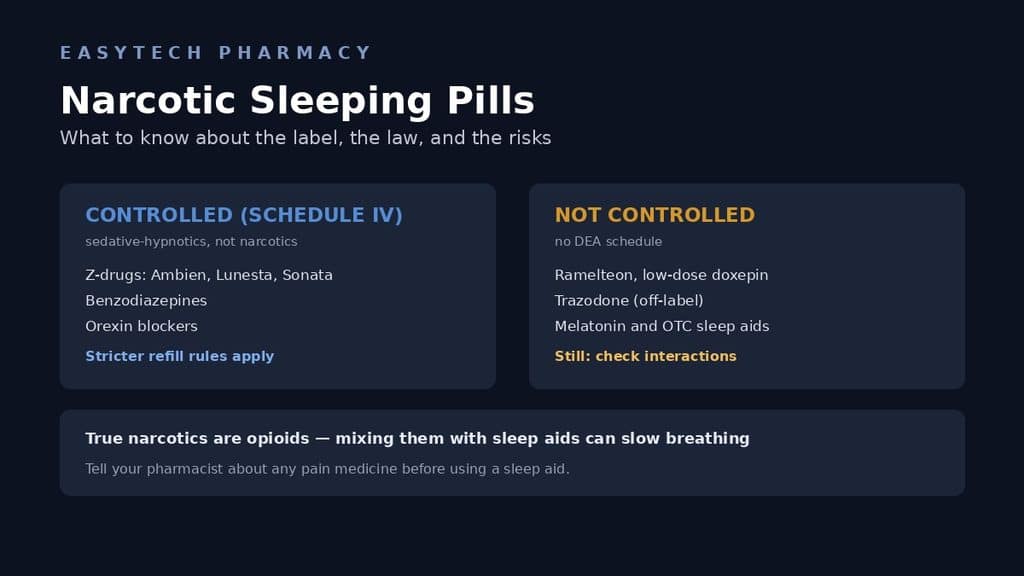
Controlled (Schedule IV)
- Z-drugs: zolpidem (Ambien), eszopiclone (Lunesta), zaleplon (Sonata)
- Benzodiazepines: such as temazepam and triazolam
- Orexin blockers: Belsomra, Dayvigo, and Quviviq
Not Controlled
- Ramelteon
- Low-dose doxepin
- Trazodone, often used off-label for sleep
- Over-the-counter sleep aids and melatonin
For details on each medicine, see our full list of sleep medications. To learn what Schedule IV means for one popular sleep aid, read is Ambien a controlled substance.
A Quick History: When Sleeping Pills Were More Like Narcotics
Decades ago, the most common sleeping pills were barbiturates. These older medicines carried a high risk of overdose and dependence. Over time, pharmacists and care teams largely moved to safer options, first benzodiazepines and later Z-drugs.
That history explains why “sleeping pills” still sound scary to many people. Today’s options are generally safer, though none are risk-free. Curious how benzodiazepines differ from Z-drugs? Read is Ambien a benzodiazepine.
Sleeping Pills and Narcotics: A Dangerous Mix
This is the most important part of this guide. True narcotics, meaning opioids, and sleep aids both slow the brain. Together, they can slow breathing to a dangerous level.
- Opioids plus benzodiazepines: the FDA warns this combination can cause severe breathing problems and death
- Opioids plus Z-drugs: also raises the risk of heavy sedation and slowed breathing
- Adding alcohol: makes any of these combinations even more dangerous
If you take an opioid for pain, tell your pharmacist before using any sleep aid, even an OTC one. Compare common anxiety and sleep medicines in our Ambien vs Xanax guide.
Why Narcotic Painkillers Aren’t Sleep Aids
Some people think a pain pill will help them sleep. In reality, opioids often make sleep worse:
- Opioids break up deep sleep and dreaming sleep
- Breathing pauses during sleep become more likely
- Rebound wakefulness can hit as each dose wears off
Our guide on drugs that cause insomnia explains how opioids disrupt sleep.
What the Label Means for Controlled Sleeping Pills
Refills
Schedule IV medicines follow stricter refill rules. Pharmacies can’t refill them early, and refills have limits. Our post on whether Ambien can be refilled online explains the process.
Travel
Keep controlled medicines in their original labeled bottles. Some countries have strict rules about bringing them in, so check before international trips.
Safe Storage
Store controlled sleep aids out of reach, ideally in a locked box. This protects children, visitors, and teens in the home.
Narcotic Sleep Aids and Drug Tests
Readers often ask whether a sleep aid will show up on a work drug test. Many standard panels check for opioids and benzodiazepines. Z-drugs like zolpidem usually need a specific test, so basic panels often miss them. Still, testing methods vary from lab to lab.
If you take a controlled sleep aid, tell the lab or your employer’s medical review officer. Keep your pharmacy label or receipt handy. A legitimate pharmacy record usually settles the question quickly.
Safe Disposal of Controlled Sleeping Pills
Leftover controlled sleeping pills can end up in the wrong hands. Teens and visitors often find old bottles in medicine cabinets. Getting rid of unused pills protects your household.
- Pharmacy drop-off kiosks: many CVS and Walgreens stores have free disposal bins
- DEA Take Back Days: local events run twice a year in most US communities
- Mail-back envelopes: some pharmacies hand these out for free
- At-home option: mix pills with coffee grounds or cat litter, seal the bag, and throw it out
Remove or black out your name on the label before you toss the bottle.
Questions to Ask Your Pharmacist About Narcotic Sleeping Pills
Your pharmacist can check your full medicine list in a few minutes. Bring these questions to the counter:
- Is my sleep aid a controlled substance?
- Does it interact with my pain medicine or anxiety medicine?
- How many refills can I get, and how soon?
- Can I drink alcohol at all while I use it?
- What should I do if I miss a dose or feel groggy in the morning?
Asking these questions takes little time. The answers can prevent a dangerous mix.
Risks of Narcotic Sleep Aids and Strong Sedatives
People call some sleep aids “narcotic” in everyday talk, but not others. Either way, strong sedatives share several risks: dependence, withdrawal, falls, and next-day impairment. Our guide to the most potent sleeping pills explains these risks and the overdose warning signs.
If someone can’t stay awake, breathes very slowly, or has bluish lips after taking these medicines, call 911 right away.
FAQs: Narcotic Sleeping Pills
Most aren’t narcotics in the medical sense. However, many common sleep aids are Schedule IV controlled substances.
No. Ambien is a sedative-hypnotic, not an opioid. It is a Schedule IV controlled substance.
Ramelteon, low-dose doxepin, trazodone, melatonin, and most OTC sleep aids aren’t controlled.
Only with expert guidance. The combination can slow breathing dangerously.
People often use “narcotic” loosely for any controlled or strong medicine. Medically, the term mainly refers to opioids.
Bottom Line — Know the Label, Respect the Risks
Most narcotic sleeping pills aren’t really narcotics in the medical sense. Instead, many sleep aids are controlled substances with stricter refill rules. The biggest danger comes from mixing sleep aids with true narcotics, meaning opioids. Always share your full medicine list with your pharmacist.
Ready to fill a sleep medicine? Our Ambien near me guide shows how to find a local pharmacy and compare prices.
Table of contents
- What Does “Narcotic” Actually Mean?
- Are Sleeping Pills Narcotics?
- Controlled Sleeping Pills vs Non-Controlled Options
- A Quick History: When Sleeping Pills Were More Like Narcotics
- Sleeping Pills and Narcotics: A Dangerous Mix
- Why Narcotic Painkillers Aren’t Sleep Aids
- What the Label Means for Controlled Sleeping Pills
- Narcotic Sleep Aids and Drug Tests
- Safe Disposal of Controlled Sleeping Pills
- Questions to Ask Your Pharmacist About Narcotic Sleeping Pills
- Risks of Narcotic Sleep Aids and Strong Sedatives
- FAQs: Narcotic Sleeping Pills
- Bottom Line — Know the Label, Respect the Risks