Safe Sleeping Pills for Elderly Patients: A Daily Safety Guide for Seniors and Caregivers
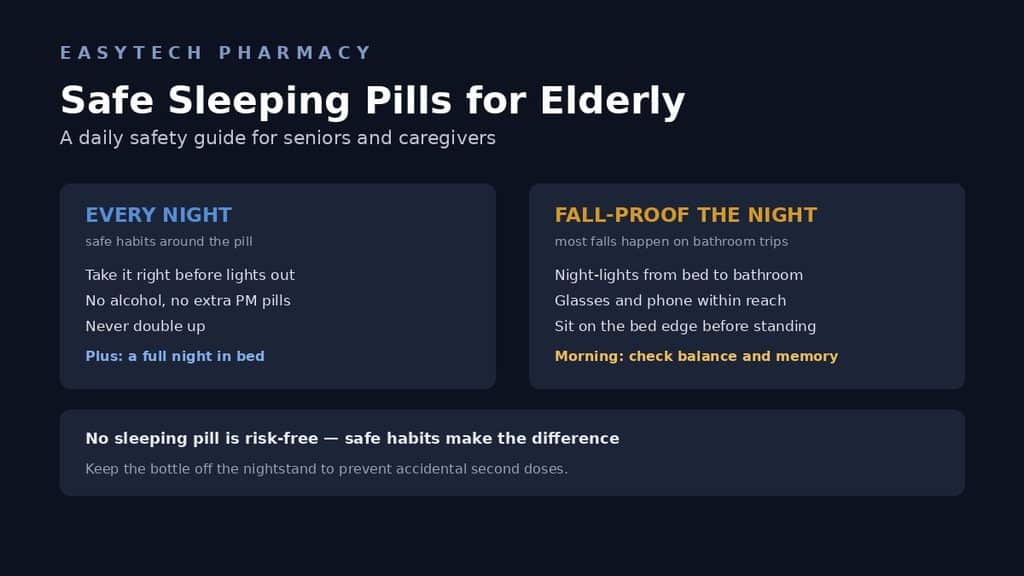
Families often ask which safe sleeping pills for elderly patients exist. Here’s the honest answer: no sleeping pill is completely risk-free for seniors. Safety comes from two things working together. The first is picking a lower-risk option. The second, which many people overlook, is using it the right way every single night.
This guide focuses on that second part. It walks seniors and caregivers through simple checks before the first dose, each night, and the morning after.
What “Safe” Really Means for Sleeping Pills for Older Adults
For seniors, safety mainly means avoiding three problems:
- Falls: especially on night-time bathroom trips
- Confusion: including memory gaps and next-morning fog
- Risky mixes: with alcohol, other medicines, or “PM” pills
Some medicines carry much more risk than others.To match an option to a specific sleep problem, see the best sleep medicine for seniors.
Before the First Dose: A Safety Checklist
- Review every medicine. Bring all bottles, including vitamins and OTC products, to the pharmacy.
- Check kidney and liver health. Slower clearance means the pill lasts longer.
- Screen for sleep apnea. Loud snoring or breathing pauses need attention first.
- Ask about fall history. A recent fall changes which options make sense.
- Talk about alcohol. Even one drink can stack with a sleep aid.
- Agree on an end date. Plan a review in a few weeks.
Using Sleeping Pills Safely Every Night
- Take it at the right time. Most sleep aids work best right before lights out.
- Allow a full night in bed. Taking a pill late can leave you groggy the next morning.
- Never double up. If it doesn’t work one night, don’t take more.
- Skip alcohol completely. Our guide on sleep aids and alcohol explains why.
- Avoid extra sleep products. “PM” pills and sleepy cold medicines add to the effect.
- Go straight to bed. Don’t take the pill and then keep moving around the house.
Routine matters as much as the medicine. The safest sleeping pills for elderly adults still cause trouble when the timing, the dose, or the setting goes wrong. A steady nightly ritual, done the same way each time, keeps those slip-ups rare.
Fall-Proofing the Night for Seniors on Sleeping Pills
Most falls happen on the way to the bathroom. A few simple changes cut the risk a lot. The CDC’s fall prevention resources offer more ideas.
- Add plug-in night-lights from bed to bathroom
- Remove loose rugs, cords, and clutter
- Keep glasses and a phone within reach of the bed
- Use a bed at a height where feet touch the floor easily
- Install grab bars near the toilet
- Sit on the edge of the bed for a moment before standing
Our post on fall risk in older adults explains why sleep aids raise this risk.
The Morning After Sleeping Pills for Older Adults
Caregivers can do a quick check each morning, especially in the first two weeks:
- Is the person clear-headed and steady on their feet?
- Do they remember the evening and night?
- Any bruises, spills, or signs of night-time wandering?
- Any unusual drowsiness by mid-morning?
Also, wait before driving. Leftover drowsiness can slow reactions even when someone feels fine. Our guide on next-day driving risks covers this. For a full list of warning signs, see sleep aid side effects in older adults.
Storage and Mix-Ups With Sleeping Pills for Elderly Adults
Medicine mix-ups happen more often than people think. A few habits keep everyone safe:
- Use a pill organizer with separate morning and night rows
- Keep sleep aids apart from look-alike bottles
- Lock up controlled medicines, especially when grandkids or visitors stay over
- Don’t keep the bottle on the nightstand, since a groggy person may take a second dose by mistake
- Check expiration dates and dispose of old pills safely
Clear storage rules protect more than the person taking the medicine. Visitors, children, and pets can all get into a bottle left within reach. A simple lockbox costs little and removes that worry.
The FDA explains how to dispose of unused medicines. Our post on whether Ambien expires adds storage tips.
Special Situations That Change Sleeping Pill Safety for Seniors
Hospital Stays and Surgery
Tell the care team about every sleep aid, even supplements. Anesthesia and pain medicines can stack with them. Hospital routines also disrupt sleep, so ask what the team suggests for nights on the ward.
Travel and Time Zones
Pack pills in original bottles. Don’t take a sleep aid on a plane unless you can sleep a full night.
A New Medicine Gets Added
Any new medicine or OTC product needs a quick interaction check at the pharmacy.
Illness, Fever, or Dehydration
Being sick can make sleep aids hit harder. Fever, vomiting, or poor fluid intake can all change how the body handles medicine. Ask whether to pause the dose during the illness, and restart only after a quick check.
A Caregiver Log for Using Sleeping Pills Safely
Track these details each day for the first few weeks:
- Time the person took the pill
- Time of lights out and wake-up
- Number of night-time bathroom trips
- Morning alertness, rated from 1 to 5
- Any falls, confusion, or unusual behavior
Bring the log to every pharmacy or care visit. It turns vague worries into clear facts. Patterns, like more falls after late doses, become easy to spot.
When to Review Sleeping Pills for Elderly Loved Ones
Ask for a review if sleep hasn’t improved after a few weeks, or if any warning signs appear. Over months or years, the risks of nightly use tend to grow.Meanwhile, our guide to managing insomnia in the elderly shares a full non-drug plan.
FAQs: Safe Sleeping Pills for Elderly Patients
Are there any truly safe sleeping pills for seniors?
No sleeping pill is completely risk-free. Lower-risk options exist, and safe daily habits make a big difference.
What time should a senior take a sleeping pill?
Usually right before lights out, with enough time left for a full night in bed.
Can seniors take sleeping pills with other medicines?
Sometimes, but interactions are common. A pharmacist should check every medicine on the list.
Should a senior on a sleep aid avoid alcohol?
Yes. Alcohol stacks with sleep aids and raises the risk of falls and slowed breathing.
How can caregivers tell if a sleep aid is causing problems?
Watch for morning confusion, unsteady walking, falls, memory gaps, or strange night-time behavior.
Bottom Line — Safe Habits Make Safer Sleeping Pills
Safe sleeping pills for elderly patients depend on more than the medicine itself. A careful first review, a steady nightly routine, a fall-proof path, and morning check-ins all lower the risk. Keep a simple log, store pills wisely, and ask for a review whenever something changes.
If a sleep aid is part of the plan, our Ambien near me guide shows how to find a local pharmacy and compare prices.