Ambien vs. Valerian Root: A Regulated Drug Against an Unregulated Herb
Valerian root gets recommended constantly as the “natural” step before reaching for something stronger, and there’s real research behind that reputation. But “natural” and “well-studied” aren’t the same thing, and the comparison between valerian and Ambien reveals a genuinely important gap that most casual recommendations skip over entirely.
Different Categories, Not Just Different Strengths
Ambien is a regulated prescription medication. Zolpidem went through FDA clinical trials, standardized manufacturing, and ongoing safety monitoring before and after approval. Valerian root is an herbal supplement, regulated under a completely different framework that doesn’t require the same premarket proof of effectiveness or the same manufacturing consistency. This distinction matters more than most comparisons acknowledge, because it shapes everything else: what you actually know is in the bottle, and how confident you can be in a given dose doing what the label suggests.
The Evidence for Valerian Is Real, Just Different in Kind
Several clinical studies have shown valerian is effective for insomnia, most often by reducing the amount of time it takes to fall asleep. This isn’t nothing, and it’s worth taking seriously rather than dismissing as folk medicine. But the research base for valerian is considerably thinner and less consistent than the trial data behind zolpidem’s FDA approval, and valerian’s long-term safety data is limited compared to a medication that’s been tracked through decades of postmarketing surveillance.
Mechanism: Broadly Similar Target, Much Less Precision
Valerian is believed to work partly through GABA activity, similar in general direction to how Ambien works, though through multiple compounds acting with far less specificity than zolpidem’s targeted alpha-1 receptor binding. Valerian also carries some evidence for reducing anxiety alongside its sleep effects, a broader action pattern that doesn’t map cleanly onto Ambien’s narrow, sleep-specific design.
Onset and Regulation of Dose: Ambien Wins on Predictability
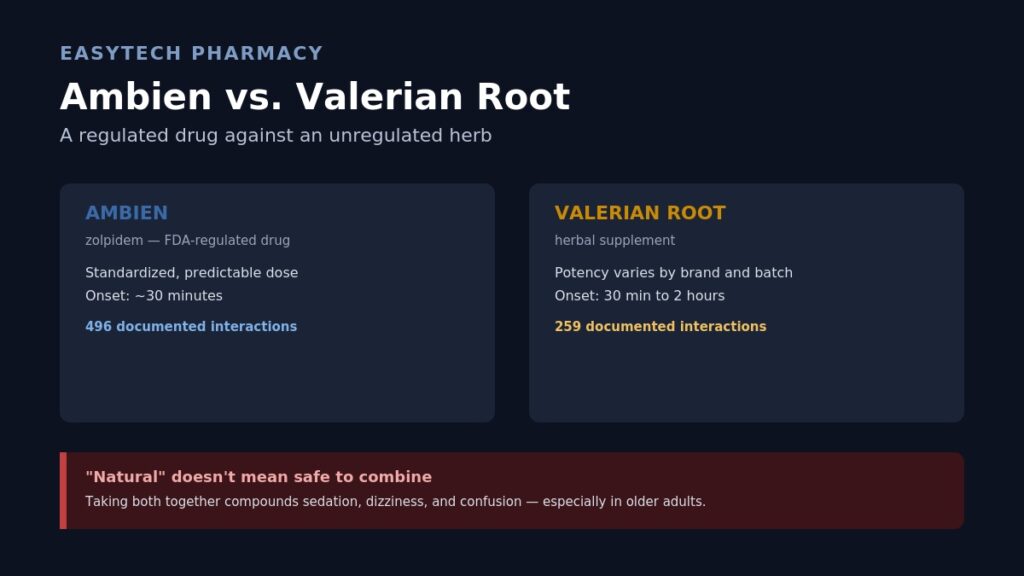
Zolpidem typically works within 30 minutes with a well-characterized, standardized dose. Valerian generally takes 30 minutes to 2 hours to show an effect, and because it’s a supplement rather than a regulated drug, dose and potency can vary meaningfully between brands and even between batches from the same manufacturer. If predictability matters to your situation, this gap is worth weighing seriously.
Combining the Two Isn’t a Free Safety Net
Here’s a detail that surprises people who assume “natural” means “harmless alongside anything”: using zolpidem together with valerian can increase dizziness, drowsiness, confusion, and difficulty concentrating, with older adults facing a higher risk of impaired thinking, judgment, and coordination. Ambien has documented interactions with roughly 496 other substances. Valerian root has documented interactions with around 259. Neither number is small, and combining the two specifically compounds sedation rather than simply adding a gentle boost.
Side-by-Side: What Actually Separates Them
- Regulatory oversight? Ambien requires FDA approval and ongoing monitoring. Valerian, as a supplement, doesn’t face the same premarket effectiveness requirements.
- Dose consistency? Ambien’s dose is standardized and predictable. Valerian’s potency can vary by brand and batch.
- Speed? Ambien generally acts faster and more predictably than valerian.
- Dependence risk? Ambien is a Schedule IV controlled substance with documented dependence potential, covered in our guide on Ambien’s Schedule IV status. Valerian doesn’t carry the same controlled-substance classification.
- Long-term safety data? Ambien has decades of postmarketing data. Valerian’s long-term safety picture remains comparatively limited.
Where Valerian Might Genuinely Make Sense
For mild, occasional sleep trouble, particularly when anxiety plays a role alongside difficulty falling asleep, valerian’s broader calming action and lower regulatory burden can make it a reasonable first step, especially for someone who wants to avoid controlled-substance considerations entirely. It fits into the same general category we cover in our guide on Ambien alternatives, alongside melatonin and other non-prescription options.
Where Ambien’s Precision Actually Matters More
For persistent, more severe insomnia, or situations where predictable, well-characterized dosing genuinely matters, Ambien’s regulatory rigor and standardized manufacturing offer something valerian structurally can’t: confidence that the dose you take today matches the dose you took last week, tested against the same clinical trial data that earned its approval in the first place.
The Bottom Line
Valerian root and Ambien aren’t simply a gentle option and a strong option on the same scale. One is a regulated pharmaceutical with standardized dosing and FDA oversight. The other is an herbal supplement with real but thinner evidence, variable potency, and a regulatory framework that doesn’t require the same proof before reaching the shelf. Combining them doesn’t create a safer middle ground, it compounds sedation. The right choice depends on how much predictability and clinical backing actually matter for your specific situation.
For more on valerian’s evidence base, see SingleCare’s overview of zolpidem alternatives.
Frequently asked questions
Is valerian root as effective as Ambien for insomnia?
Clinical studies have shown valerian can reduce time to fall asleep, but the evidence base is thinner and less consistent than the trial data supporting Ambien’s FDA approval.
Can I take Ambien and valerian root together?
This combination can increase dizziness, drowsiness, confusion, and coordination problems, with older adults at higher risk. It’s not a combination to treat as a safe stacking strategy.
Why isn’t valerian root regulated the same way as Ambien?
Valerian is classified as a dietary supplement, which faces a different, less stringent regulatory framework than prescription medications, meaning it doesn’t require the same premarket proof of effectiveness.
Does valerian root potency vary between brands?
Yes. Because it’s a supplement rather than a standardized drug, dose and potency can vary meaningfully between manufacturers and even between batches.
Related reading
- Ambien vs. Unisom: The Comparison That Actually Depends
- Ambien alternatives: a full overview of your options
- Ambien vs. melatonin: how they actually work, compared
- Ambien vs. Restoril: Two True Sleep Drugs
- Ambien vs. Benadryl: a real comparison for sleep
Not sure whether a supplement or a prescription fits your situation better? Talk to your pharmacist. EasyTech Pharmacy can help you think it through.
For local pharmacy access near you, our Ambien near me guide covers pharmacies across the world.
Visit EasyTech Pharmacy — sleep medication with real pharmacist guidance.