Vitamin That Promotes Sleep: How to Find the One Your Body Is Missing
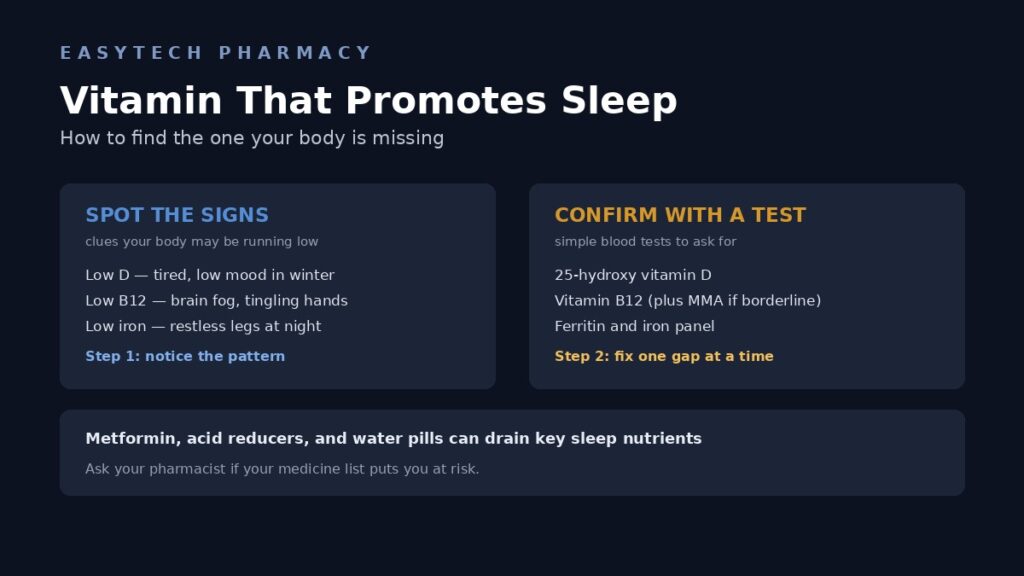
People often ask for the single best vitamin that promotes sleep. The honest answer? It depends on you. A nutrient helps most when your body runs low on it. If your levels look fine, extra pills rarely change much.
So instead of guessing, let’s play detective. This guide shows you the warning signs of each shortfall and the tests to ask for. You’ll also see which everyday medicines quietly drain key nutrients.
Why the Right Vitamin for Better Sleep Differs for Everyone
Your neighbor may swear by magnesium. Your sister may love vitamin D. Both may be right, for their own bodies. Diet, sun exposure, age, health conditions, and medicines all shape what you lack.
That’s why a one-size-fits-all bottle often disappoints. Fixing a real gap, however, can make a clear difference. For a quick overview of each nutrient, see our guide on what vitamins are good for sleep.
Signs You May Be Missing a Sleep-Promoting Vitamin
Low Vitamin D
- Constant tiredness, even after a full night in bed
- Low mood, especially in winter
- Achy bones or muscle weakness
- Little time outdoors, or darker skin, which makes less vitamin D from sunlight
Low Vitamin B12
- Fatigue and brain fog
- Tingling or numbness in your hands or feet
- Memory lapses
- A pale look or shortness of breath
Memory trouble has many causes, including some sleep aids. Our post on whether Ambien causes memory loss explains the difference.
Low Magnesium
- Muscle cramps or twitches, often at night
- Feeling tense or wired at bedtime
- Headaches
Low Iron
- An urge to move your legs when you lie down
- Tiredness and cold hands and feet
- Thinning hair or brittle nails
Hair changes can have other triggers too. Our guide on whether Ambien causes hair loss covers them.
The Blood Tests That Reveal Your Sleep Vitamin Needs
A few simple blood tests can end the guessing. Ask your clinician about these at your next check-up:
- 25-hydroxy vitamin D: the standard vitamin D test
- Vitamin B12: sometimes with a follow-up test called MMA for borderline results
- Ferritin and iron panel: shows how much iron your body has stored
- Magnesium: useful, though blood levels can look normal even when your body runs low
Many insurance plans cover these tests when you have symptoms. Some pharmacies and labs also offer low-cost, self-pay options.
How to Read Your Sleep Vitamin Results
Lab ranges vary a little, so always check the range printed on your report. Still, here’s a general guide.
Vitamin D
Levels below 12 ng/mL usually count as low. Most people do well at 20 ng/mL or higher, according to NIH guidance.
Vitamin B12
Results below about 200 pg/mL often point to a shortfall. The NIH vitamin B12 fact sheet lists who faces the highest risk.
Ferritin
For restless legs, sleep experts often aim for a ferritin level above 75 ng/mL. That’s higher than the usual “normal” cutoff. The National Institute of Neurological Disorders and Stroke explains the iron link in more detail.
Medicines That Drain a Vitamin for Better Sleep
Here’s a part most guides skip. Some of the most common medicines in America can lower your levels of key sleep nutrients over time.
- Metformin (for diabetes): can lower vitamin B12 over months or years
- Acid reducers, like omeprazole: long-term use can lower B12, magnesium, and iron
- Water pills (diuretics): many types flush out magnesium
- Steroids, like prednisone: can affect vitamin D and calcium
- Some seizure medicines: can lower vitamin D
Don’t stop any medicine on your own. Instead, ask your pharmacist whether your list puts you at risk. A simple test can then confirm it. Some medicines also affect sleep directly, as our guide on drugs that cause insomnia explains.
Who Faces the Highest Risk of Vitamin Deficiency and Sleep Problems?
Some groups run low far more often than others. If you fit one of these, a sleep vitamin check makes extra sense.
- Adults over 60: absorb less B12 and make less vitamin D
- Vegans and vegetarians: often run low on B12 and iron
- People with darker skin: make less vitamin D from sunlight
- Women with heavy periods: lose more iron each month
- People after weight-loss surgery: absorb fewer nutrients overall
- Night-shift workers: get little daytime sun
Food First: Easy Swaps for a Vitamin for Better Sleep
Before you reach for a bottle, look at your plate. Small swaps can raise your levels without any pills. They also bring fiber, protein, and other nutrients that pills can’t match.
- For vitamin D: swap one meat meal a week for salmon or trout
- For vitamin B12: add eggs, Greek yogurt, or a fortified cereal to breakfast
- For magnesium: snack on pumpkin seeds or almonds instead of chips
- For iron: pair beans or lentils with peppers or citrus to absorb more
Food alone may not fix a big gap. Still, it builds a strong base, and it keeps your levels steady once you’ve caught up.
Fixing a Gap: Your Sleep-Promoting Vitamin Plan
- Test first. Don’t treat a shortfall you don’t have.
- Fix one thing at a time. That way, you’ll know what actually helped.
- Use food plus supplements. Fish, eggs, beans, nuts, and leafy greens all help.
- Time it right. Take vitamin D and B12 in the morning and magnesium at night. Our guide to vitamins to take before bed lays out a full routine.
- Retest in about three months. Then adjust your dose with your clinician.
When a Sleep-Promoting Vitamin Isn’t the Answer
Sometimes your levels come back normal, yet sleep stays poor. That’s useful news, because it rules out one cause. Next, look at habits, stress, and other health issues.
FAQs: Vitamin That Promotes Sleep
What vitamin deficiency causes poor sleep?
Low vitamin D, B12, magnesium, and iron all link to poor sleep. Low iron often causes restless legs, which keeps people awake.
Which single vitamin promotes sleep best?
There’s no single winner. The best one fixes the gap you actually have, so testing comes first.
How long does it take to fix a shortfall?
Most people need two to three months to rebuild their levels. Sleep often improves along the way.
Can my medicine cause a vitamin shortfall?
Yes. Metformin, long-term acid reducers, and some water pills can lower key nutrients over time.
Can I just take a multivitamin for sleep?
A multivitamin can fill small gaps. However, it often won’t fix a real shortfall, which may need a targeted dose.
Bottom Line — Find Your Gap, Then Fill It
The best vitamin that promotes sleep is the one your body is missing. Watch for the warning signs, ask for a few simple blood tests, and review your medicines with your pharmacist. Then fix one gap at a time. Smart, targeted steps beat a shelf full of guesses.
If a sleep aid becomes part of your plan, our Ambien near me guide shows how to find it at a local pharmacy and compare prices.