Safe Sleeping Pills for Heart Patients: What to Know Before You Take Anything
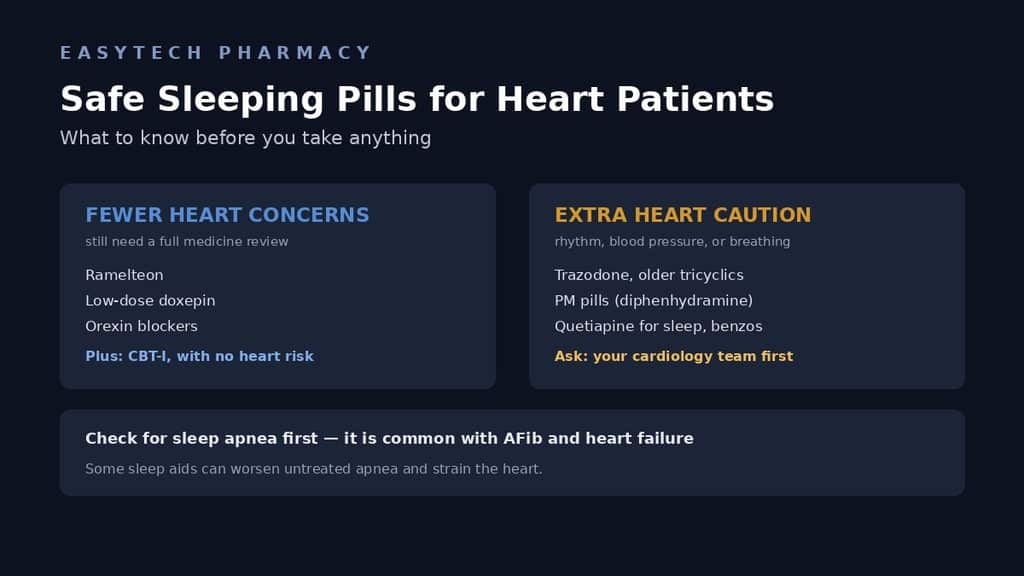
If you live with heart disease, you may wonder whether any safe sleeping pills for heart patients exist. It’s a smart question. Poor sleep strains the heart, yet some sleep aids can affect heart rhythm, blood pressure, or heart medicines. The goal is better sleep without new heart risks.
This guide explains which sleep aids need extra caution and which carry fewer heart concerns. It also covers what to check first.
Why Sleep Matters So Much for Your Heart
During healthy sleep, your heart rate and blood pressure dip. That nightly rest gives your heart a break. Poor sleep cuts that break short. Over time, it’s linked with high blood pressure, heart disease, and stroke.
In fact, the American Heart Association now lists sleep as one of its key measures of heart health. So treating insomnia isn’t just about comfort. It’s part of caring for your heart.
Before Any Sleeping Pills for Heart Patients: Check for Sleep Apnea
This step matters most. Sleep apnea causes breathing pauses during sleep. It’s very common in people with high blood pressure, atrial fibrillation (AFib), and heart failure.
Here’s the danger. Some sleep aids relax the throat muscles and dull the brain’s breathing response. With untreated apnea, that can make breathing pauses worse. The National Heart, Lung, and Blood Institute explains how apnea strains the heart.
Watch for loud snoring, gasping, morning headaches, and heavy daytime sleepiness. If these sound familiar, ask about a sleep test before any sleep aid. Our guide on Best Medication for Anxiety and Insomnia explains the next steps.
Sleep Aids for Heart Disease That Need Extra Caution
Trazodone
Trazodone is popular for sleep. However, it can lower blood pressure when you stand up, which raises fall risk. Its label also warns about changes in heart rhythm. People recovering from a recent heart attack usually need a different option. Compare it in trazodone vs Ambien.
Older Tricyclic Antidepressants
Medicines like amitriptyline, at regular doses, can speed the heart rate and affect heart rhythm. Experts usually advise heart patients to avoid them for sleep.
“PM” Pills and Drowsy Antihistamines
Diphenhydramine and doxylamine can raise heart rate and cause dizziness. They also lose their effect quickly. Our Ambien vs Benadryl post explains the trade-offs.
Antipsychotics and Benzodiazepines
Some people receive quetiapine just for sleep. It can affect heart rhythm and metabolism, so experts advise against this use. Benzodiazepines can slow breathing, especially with opioids or untreated apnea. They also raise fall risk and dependence.
Sleep Medicine for Heart Patients With Fewer Heart Concerns
No sleep aid suits every heart patient. Still, some options tend to raise fewer heart concerns. Each one needs a review of your full medicine list first.
Ramelteon
Ramelteon often comes up first among sleep aids for heart disease. It works on the brain’s melatonin system and has few known heart effects and little risk of misuse. It mainly helps with falling asleep.
Low-Dose Doxepin
At very small doses, doxepin acts very differently from the older tricyclic doses. It mainly blocks histamine to help you stay asleep. Still, ask your cardiology team before you start. Learn more in doxepin vs Ambien.
Orexin Blockers
Belsomra, Dayvigo, and Quviviq quiet the brain’s wake signal. Their labels carry no major heart warnings. Next-day drowsiness can still happen. Compare one in Ambien vs Quviviq.
Z-Drugs Like Ambien
Zolpidem doesn’t usually affect heart rhythm directly. However, some heart medicines change how fast your body clears it. Falls and complex sleep behaviors also remain concerns. Curious about blood pressure effects.
Melatonin
Melatonin is mild for most people. Still, it may interact with some blood thinners and blood pressure medicines. Check with your pharmacist first. Our Ambien vs melatonin guide compares the two.
Heart Medicines That Can Disrupt Sleep
Before adding sleeping pills for heart patients, check the heart medicines themselves. Sometimes they cause the sleep trouble. Common examples include:
- Water pills: night-time bathroom trips when taken late
- Beta-blockers: may lower natural melatonin and cause vivid dreams
- ACE inhibitors: a dry cough that wakes some people
A simple timing change often helps. Our guide on what medications keep you awake explains how to schedule doses.
Interactions With Sleeping Pills for Heart Patients
- Blood thinners: some supplements, like St. John’s wort, ginkgo, and fish oil, can change how they work
- Blood pressure medicines: sleep aids that lower blood pressure can add to dizziness
- Rhythm medicines: some combine badly with medicines that also affect heart rhythm
- Decongestants: “non-drowsy” cold pills can raise blood pressure and heart rate
Bring every bottle, including supplements, to your pharmacist for a full review.
Sleep Medicine for Heart Patients With Special Conditions
Heart Failure
Shortness of breath when lying flat can wake people at night. That’s a heart symptom, not just insomnia, so report it to your care team right away.
Atrial Fibrillation
AFib and sleep apnea often go together. Treating apnea may help control AFib episodes. Many people with AFib also take blood thinners, so supplement checks matter even more.
After a Heart Attack or Surgery
Sleep often suffers during recovery. Ask your care team which options suit this stage, since some medicines need to wait.
Heart-Safe Sleep Habits That Work Without Pills
CBT-I helps heart patients sleep better without any heart risks from medicine. Our guide on what a sleep therapist does walks through it. These habits also help:
- Keep a steady wake time every day
- Cut caffeine and alcohol, both of which strain the heart
- Get daily movement, as your care team allows
- Limit salt and fluids in the evening if you have heart failure
- Sleep with your head raised if lying flat feels hard
FAQs: Safe Sleeping Pills for Heart Patients
What are the safest sleeping pills for heart patients?
It depends on the heart condition and other medicines. Ramelteon, low-dose doxepin, and orexin blockers often raise fewer heart concerns. CBT-I carries no heart risk at all.
Is trazodone safe for heart patients?
It needs caution. Trazodone can affect heart rhythm and lower blood pressure on standing.
Can I take melatonin with heart medicine?
Often, yes. However, it may interact with some blood thinners and blood pressure medicines, so check first.
Is Benadryl among the sleep aids for heart disease to avoid?
It can raise heart rate and cause dizziness. Many heart patients do better with other options.
Should I ask for a sleep apnea test?
If you snore loudly, gasp at night, or feel very sleepy by day, ask about a sleep test.
Bottom Line — Protect Your Heart While You Fix Your Sleep
Safe sleeping pills for heart patients start with a careful check. Rule out sleep apnea first, avoid sleep aids with known heart concerns, and review every medicine and supplement. Lower-risk options exist, and CBT-I helps without any heart risk.
If a sleep aid becomes part of your plan, our Ambien near me guide shows how to find a local pharmacy and compare prices.