Ambien and Kidney or Liver Function: What Actually Matters
Not every organ plays the same role when it comes to medication safety. Ambien is a good example of just how lopsided that role can be. One organ barely factors into the equation. The other is central to it. Here’s what the actual pharmacology shows about Ambien and kidney or liver function, and why the distinction matters more than most people realize.
The Short Version
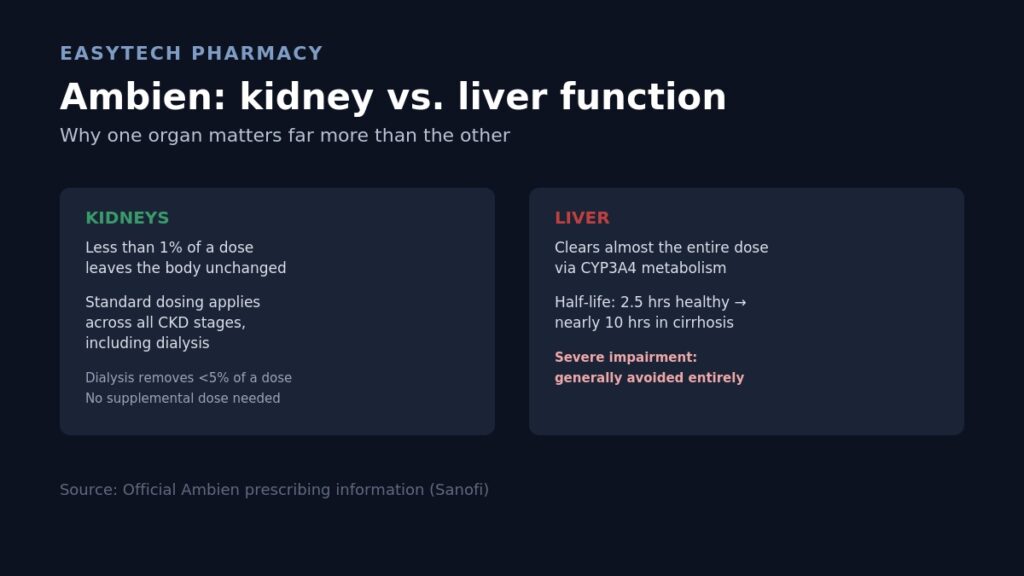
The liver clears almost all of a zolpidem dose, not the kidneys. Less than 1% of a dose leaves the body unchanged through urine. That single fact reshapes the entire conversation: liver function is the primary concern with this medication, while kidney function, on its own, generally isn’t.
Why the Kidneys Matter Less Than You’d Expect
The liver breaks down zolpidem almost entirely through hepatic metabolism. An enzyme system called CYP3A4 does most of the work, with smaller contributions from other liver enzymes. Because the kidneys play such a minor role in clearing the drug itself, standard dosing generally applies across chronic kidney disease, including patients on dialysis. Zolpidem’s high protein binding and its distribution through body tissue mean hemodialysis removes very little of it, less than 5% of a dose. That means patients don’t need a supplemental dose after a dialysis session.
This doesn’t mean kidney disease is entirely irrelevant. Patients with severe kidney disease sometimes still receive a lower starting dose out of general caution, particularly when other risk factors are present. This reflects overall clinical judgment rather than a documented pharmacokinetic requirement tied to the kidneys specifically.
Why the Liver Is a Completely Different Story
Here’s where the numbers get harder to ignore. In patients with hepatic impairment, zolpidem’s blood concentration and half-life change dramatically. The official prescribing data shows peak concentration roughly doubling in hepatically compromised patients compared to healthy volunteers. Overall drug exposure increases roughly fivefold. In patients with cirrhosis, the drug’s half-life can stretch from about 2.5 hours in a healthy liver to nearly 10 hours. That means the medication lingers in the system far longer than intended.
This has real consequences. The FDA’s prescribing information specifically warns against using Ambien in patients with severe hepatic impairment. A struggling liver clears toxins from the blood less effectively, and this can contribute to hepatic encephalopathy, a serious condition involving confusion and altered mental status.
What the Dosing Adjustments Actually Look Like
- Mild to moderate liver impairment. Guidelines recommend a reduced starting dose of 5 mg, regardless of sex.
- Severe hepatic impairment. Clinicians generally avoid Ambien entirely here due to encephalopathy risk.
- Extended-release formulations. These aren’t a good fit for anyone with hepatic impairment, since the extended clearance time compounds the accumulation risk.
- Chronic kidney disease, including dialysis. Standard dosing generally applies, with no dose adjustment based on kidney function alone.
What to Watch For
Anyone with known liver disease taking Ambien should monitor a few signs closely: confusion or disorientation beyond typical grogginess, unusual drowsiness that doesn’t match the dose taken, or any signs consistent with encephalopathy. Watch for changes in alertness or a specific hand tremor called asterixis. These aren’t symptoms to wait out. They signal that the medication may be accumulating beyond what the liver can safely clear.
Zolpidem use has also produced rare reports of liver injury after the drug reached the market, including cases involving jaundice and abnormal liver enzyme levels. This is part of why doctors sometimes monitor liver function during longer courses of treatment.
After the Emergency: What Comes Next
An overdose, even a non-fatal one, is worth treating as a serious signal rather than an isolated incident. If it happened because of accidental redosing tied to memory gaps, that’s worth discussing directly with a pharmacist. If it happened because of a broader pattern of misuse, our guide on Ambien abuse and our overview of zolpidem addiction cover what to look at next, and our guide on Ambien addiction treatment options covers what real support looks like going forward.
If the plan moving forward involves stopping the medication, that should happen safely and gradually rather than abruptly. Our guide on how to stop Ambien safely walks through that process.
Why This Connects to Broader Ambien Safety
This pharmacokinetic picture connects to other risk factors we’ve covered elsewhere. Slower clearance means more of the drug lingers in the system. That can compound risks like the fall risk in elderly patients we’ve covered separately, since impaired clearance and older age often overlap. It’s also part of why dosing isn’t one-size-fits-all, a theme that runs through the oversight built into how it gets prescribed and refilled.
The Bottom Line
Kidney function and liver function aren’t equally relevant to Ambien safety. The kidneys play a minor role in clearing the drug. The liver does almost all of the work. Impaired liver function can lead to significantly higher drug levels lingering in the body for much longer than intended. Anyone with known liver disease deserves a real conversation about dosing, and in severe cases, whether Ambien is appropriate at all.
For the full prescribing information, including the pharmacokinetic data referenced here, see the official Ambien prescribing information.
Frequently asked questions
Do I need a lower Ambien dose if I have kidney disease?
Generally, no. Standard dosing applies across chronic kidney disease stages, including dialysis, since the kidneys play a minor role in clearing zolpidem from the body.
Is Ambien safe for people with liver disease?
It depends on severity. Mild to moderate impairment typically calls for a reduced 5 mg dose. Severe hepatic impairment is generally a reason to avoid the medication entirely.
Why does liver disease affect Ambien so much more than kidney disease?
The liver clears zolpidem almost entirely through metabolism. Less than 1% leaves the body unchanged through the kidneys. That makes liver function the primary factor in how long the drug stays active in the body.
What symptoms should I watch for if I have liver disease and take Ambien?
Confusion, unusual drowsiness beyond the expected effect, or any signs of altered mental status deserve prompt attention. These can signal the medication is accumulating beyond what the liver can clear.
For local pharmacy access near you, our Ambien near me guide covers pharmacies across the world.
Visit EasyTech Pharmacy — age-appropriate sleep medication with real pharmacist guidance.