Sleep Disorder Doctor vs Sleep Specialist: Who Should You See?
Snoring that shakes the walls. Nights spent staring at the ceiling. Falling asleep at your desk by 2 p.m. Sleep problems come in many forms, and so do the experts who treat them. That’s why so many people search “sleep disorder doctor vs sleep specialist” before they book anything.
The short answer? The two terms overlap, but they don’t always mean the same thing. This guide clears up the confusion. You’ll learn who does what, which expert fits your problem, and how to pick the right one.
Sleep Disorder Doctor vs Sleep Specialist: The Quick Answer
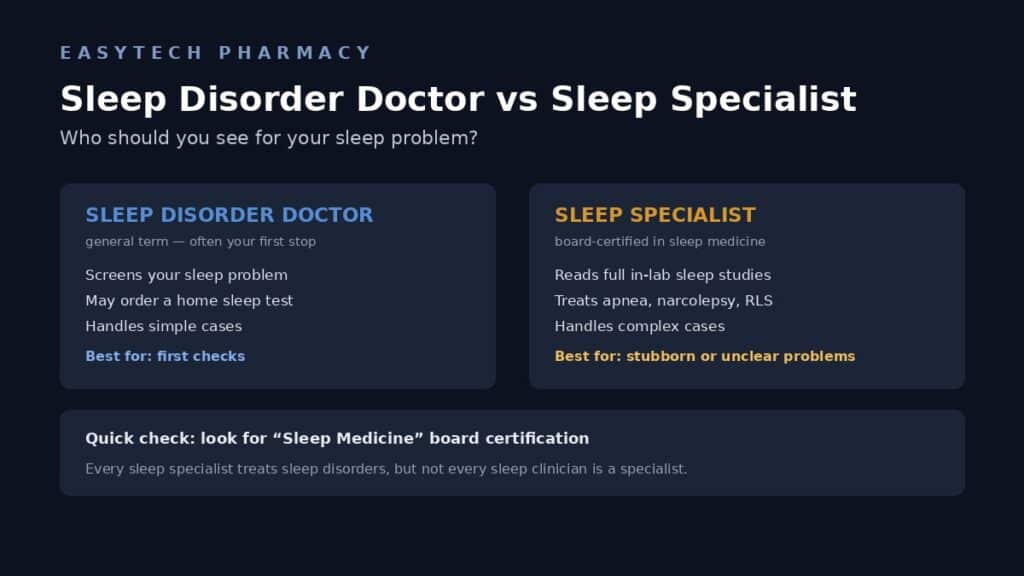
“Sleep disorder doctor” is a broad, everyday phrase. People use it for anyone who treats sleep trouble, from a family clinician to a sleep center team. A “sleep specialist,” on the other hand, usually means someone with extra, formal training in sleep medicine.
Think of it like this. Every sleep specialist treats sleep disorders. However, not everyone who treats sleep disorders is a sleep specialist.
What Makes Someone a Sleep Specialist?
In the US, a true sleep medicine specialist completes extra training after their main field. Many start in one of these areas:
- Pulmonology: lungs and breathing, a natural fit for sleep apnea
- Neurology: the brain and nerves, key for narcolepsy and restless legs
- Psychiatry: mood and mental health, often linked with insomnia
- Internal or family medicine: whole-body care
- Ear, nose, and throat (ENT): airway structure and surgery
- Pediatrics: sleep problems in children and teens
After that, they complete a sleep medicine fellowship and pass a board exam. You can check this credential for free on ABMS Certification Matters. Just search their name and look for “Sleep Medicine.”
Other Sleep Experts You Might Meet
Sleep care often works as a team. Besides a board-certified specialist, you may meet these experts:
- Primary care clinician: your first stop for screening and simple fixes
- Sleep therapist: treats insomnia through habits and thoughts, mainly with CBT-I
- Dentist with sleep training: fits oral devices for snoring and mild sleep apnea
- Sleep technologist: runs your overnight sleep study
- Respiratory therapist: helps you set up and adjust a CPAP machine
Curious about the therapy side? Our guide to what a sleep therapist does walks you through each session.
Which Sleep Expert Fits Your Sleep Problem?
Your symptoms point the way. Here’s a simple match-up for common sleep issues.
Loud Snoring or Gasping at Night
These signs often point to sleep apnea. A sleep specialist, often with a lung or ENT background, is your best bet. The National Heart, Lung, and Blood Institute notes that untreated sleep apnea can strain your heart over time.
Trouble Falling or Staying Asleep
For insomnia, start with a sleep therapist or a sleep medicine specialist. Many people do best with CBT-I first. Our CBT-I vs Ambien comparison explains why.
Waking Up Again and Again
Frequent waking can come from apnea, pain, stress, or even your medicines. A sleep specialist can sort out the cause. Meanwhile, our guide on the best sleep aids for nighttime waking covers your options.
Falling Asleep During the Day
Sudden daytime sleep attacks may signal narcolepsy. In this case, a sleep specialist with a neurology background fits best.
Restless, Crawling Feelings in Your Legs
Restless legs syndrome often gets worse at night. A neurologist or sleep specialist can help.
Strange Behavior While Asleep
Sleepwalking, sleep eating, and acting out dreams all need a sleep specialist’s eye. Some sleep medicines can trigger these events too. Learn more in our post on Ambien complex sleep behaviors.
Sleep Disorder Doctor vs Sleep Specialist: Side-by-Side
- Training: A general clinician has broad training. A sleep specialist adds a sleep medicine fellowship and board exam.
- Best for: General care handles first checks and simple cases. A specialist handles complex, stubborn, or unclear cases.
- Sleep studies: General clinicians may order a home test. Specialists read and act on full lab studies.
- Wait time: General care is usually faster. Specialists may have waits of several weeks.
- Cost: Primary visits often cost less. Specialist visits may carry a higher copay.
What Happens at a Sleep Specialist Visit?
Your first visit usually starts with questions. Expect to talk about your bedtime, wake time, snoring, naps, and daytime energy. Bring a list of everything you take, including supplements. Some medicines quietly disrupt sleep, as our guide on drugs that cause insomnia explains.
Next, your sleep expert may suggest a sleep test. The main types include:
- Home sleep apnea test: a small device you wear in your own bed for one night
- In-lab sleep study (polysomnography): an overnight stay that tracks brain waves, breathing, and movement
- Daytime nap test (MSLT): a series of short naps that checks for narcolepsy
Then, you’ll come back to review the results and build a plan.
How Much Does a Sleep Specialist Cost?
Costs depend on your plan, state, and the tests you need. As a rough guide:
- Specialist visit: often a specialist copay with insurance
- Home sleep test: commonly a few hundred dollars before insurance
- In-lab sleep study: often $1,000 or more before insurance
Before you book, call your insurer. Ask whether you need a referral, and whether they cover home or in-lab studies. HMO plans usually require a referral, while many PPO plans don’t.
How to Find a Good Sleep Medicine Specialist
- Look for an accredited center. The American Academy of Sleep Medicine accredits sleep centers that meet strict standards.
- Check board certification. Search the expert’s name on ABMS Certification Matters.
- Ask about telehealth. Many follow-ups and insomnia visits now happen by video.
- Confirm insurance. Use your plan’s provider search tool.
- Read recent reviews. Look for comments on wait times and clear communication.
Questions to Ask Your Sleep Expert
- What do you think is causing my sleep problem?
- Do I need a home test or an in-lab study?
- Could any of my current medicines affect my sleep?
- What non-drug options can I try first?
- How soon should I expect to feel better?
Already taking a sleep aid that seems to backfire? Our post on Ambien rebound insomnia is worth a read before your visit.
FAQs: Sleep Disorder Doctor vs Sleep Specialist
Is a sleep disorder doctor the same as a sleep specialist?
Not always. “Sleep disorder doctor” is a general term. A sleep specialist has extra training and board certification in sleep medicine.
Do I need a referral to see a sleep specialist?
It depends on your insurance. HMO plans usually need one. Many PPO plans let you book directly.
What kind of expert treats sleep apnea?
A sleep specialist, often with a lung or ENT background, usually treats sleep apnea. A trained dentist may help with oral devices.
Can I see a sleep expert online?
Yes. Many US sleep clinics offer video visits, especially for insomnia and follow-ups. Some sleep tests also happen at home.
When should I skip general care and go straight to a specialist?
Go straight to a specialist if you stop breathing at night, fall asleep while driving, or act out dreams. These signs need fast, expert care.
Bottom Line — Match the Expert to the Problem
The sleep disorder doctor vs sleep specialist question comes down to depth. General care works well for first checks and simple fixes. A sleep specialist steps in when problems run deeper, last longer, or need a proper sleep study. Either way, the best first step is simply to start the conversation.
Want to know more about when to seek help? Read our guide to when to see a sleep expert. And if a sleep aid is part of your plan, our Ambien near me guide shows how to find it at a local pharmacy.