Sleep Issue Doctor: When Insomnia Needs Medical Help (and What Happens Next)
Everyone has a rough night now and then. A big meeting, a crying baby, or a late coffee can do it. But what if the rough nights never stop? At some point, home fixes run out, and it’s time to see a sleep issue doctor.
The hard part is knowing when that point arrives. This guide gives you a simple rule, a quick self-check, and clear warning signs. You’ll also learn what medical help for insomnia actually looks like, step by step.
Is It Normal Sleeplessness or Real Insomnia?
Short bouts of poor sleep happen to almost everyone. Stress, travel, illness, and big life changes can all trigger them. In most cases, sleep bounces back within a few days or weeks.
Chronic insomnia is different. It sticks around, even after the stress fades. The National Heart, Lung, and Blood Institute notes that long-term insomnia can raise the risk of other health problems. That’s why it deserves real attention.
The 3-3-3 Rule: When to See a Sleep Issue Doctor
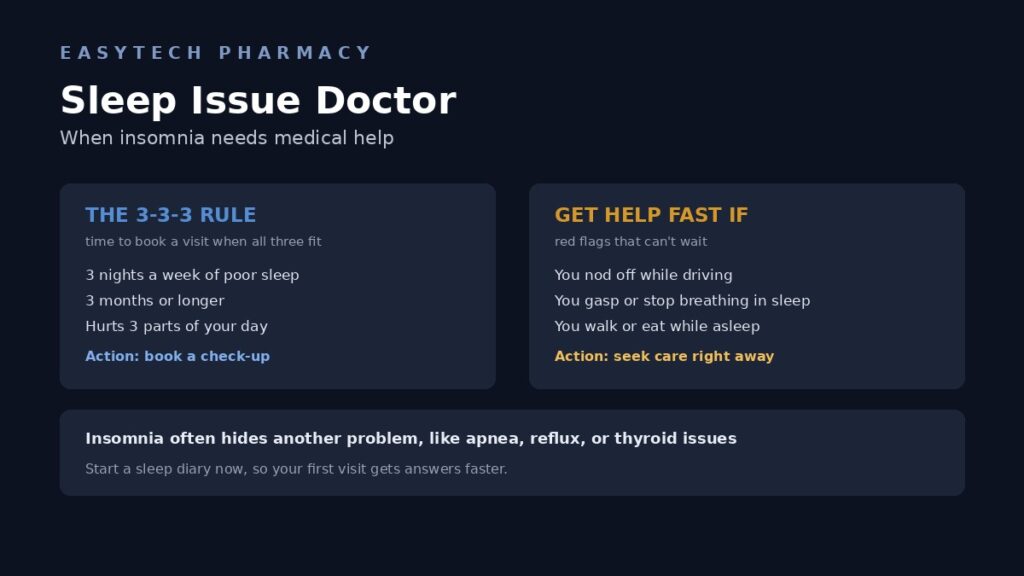
Here’s an easy way to remember when to get help. Look for these three signs together:
- 3 nights a week: You struggle to fall asleep, stay asleep, or you wake too early
- 3 months or longer: The problem has lasted a whole season
- 3 parts of your day: Poor sleep hurts your mood, focus, or energy
If all three fit, it’s time to book a visit. Even if only one or two fit, a check-up can still help. You don’t need to wait until you feel desperate.
Quick Self-Check: Do You Need Medical Help for Insomnia?
Answer yes or no to each question. Be honest with yourself.
- Does it take you more than 30 minutes to fall asleep most nights?
- Do you wake up in the night and lie awake for a long time?
- Are you waking much earlier than you want to?
- Do you feel tired, foggy, or cranky most days?
- Has bedtime turned into something you dread?
- Have you tried better sleep habits without much change?
- Do you use sleep aids more often than you’d like?
- Does someone say you snore loudly or stop breathing at night?
- Has poor sleep hurt your work, school, or relationships?
- Have you struggled with sleep for three months or longer?
Your score: Three or more “yes” answers mean you should talk to a sleep issue doctor soon. Questions 8 and 9 deserve attention on their own, even if your score is lower.
Insomnia Warning Signs That Need Fast Care
Some signs can’t wait for a routine visit. Get care quickly if you:
- Nod off while driving or using machines
- Gasp, choke, or stop breathing during sleep
- Walk, eat, or drive while asleep
- Have chest pain or a racing heart at night
- Feel hopeless, or have thoughts of harming yourself
If you ever have thoughts of self-harm, call or text 988, the Suicide & Crisis Lifeline. It’s free and open 24/7 across the US.
Hidden Health Problems a Sleep Issue Doctor Can Find
Insomnia often hides another problem underneath. Medical help can uncover causes you’d never spot on your own. Common ones include:
- Sleep apnea: breathing pauses that wake you again and again
- Thyroid problems: an overactive thyroid can keep your body revved up
- Acid reflux: heartburn often flares when you lie down
- Chronic pain: back, joint, or nerve pain makes rest hard
- Anxiety or depression: both can fuel sleepless nights
- Hormone changes: menopause and pregnancy often disrupt sleep
- Medicines: some common drugs quietly block sleep
That last one surprises many people. Our guide on drugs that cause insomnia lists the usual suspects.
What Happens When You Get Help for Insomnia
Many people put off a visit because they don’t know what to expect. Here’s how it usually goes.
Your First Visit
Expect plenty of questions about your sleep, habits, stress, and health. Bring a list of everything you take, including supplements. Your clinician may also order simple blood tests, such as a thyroid check.
Your Sleep Diary
You’ll likely track your sleep for one to two weeks. This diary shows patterns that are easy to miss.
A Referral, If Needed
Some people need a sleep specialist or a sleep study. Our guide on what a sleep specialist does explains the next steps.
Your Treatment Plan
Most plans start with better habits and CBT-I, a proven talk-based therapy. Our overview of insomnia therapies compares the options. Some people also use a sleep aid for a short time. Our post on whether you can take Ambien long term explains why most experts favor short-term use.
How to Talk to a Sleep Issue Doctor About Insomnia
Many people downplay their sleep trouble during a visit. Don’t. Use these simple talking points to paint a clear picture:
- “I’ve had trouble sleeping for about ___ months.”
- “It takes me ___ minutes to fall asleep most nights.”
- “I wake up ___ times a night.”
- “During the day, I feel ___.”
- “I’ve already tried ___.”
Fill in the blanks before your visit. Clear numbers help your clinician find answers faster.
Special Cases: Pregnancy, Older Adults, and Teens
Some groups should seek medical help for insomnia sooner. Their bodies, risks, and safe options differ from most adults.
During Pregnancy
Sleep often gets harder as pregnancy goes on. Many sleep aids aren’t a good fit right now, so medical help matters even more. Read our guides on Ambien pregnancy safety.
Older Adults
Older adults face a higher risk of falls and medicine side effects. A careful review of every medicine is key. Our post on Ambien fall risk in older adults explains why.
Teens
Late-night screens and shifting body clocks drive a lot of teen insomnia. If it lasts for months, a check-up can help rule out anxiety or other causes.
What to Do While You Wait for Medical Help
Appointments with a sleep issue doctor can take a few weeks to land. Meanwhile, these steps can ease your nights:
- Wake up at the same time every day, even on weekends
- Cut caffeine after lunch
- Keep your bedroom cool, dark, and quiet
- Get out of bed if you can’t sleep after about 20 minutes
- Start your sleep diary now
FAQs About Seeing a Sleep Issue Doctor
When should I see a sleep issue doctor for insomnia?
Book a visit if poor sleep happens three nights a week, lasts three months, and affects your days. Seek fast care for red flags like drowsy driving.
Can my regular clinician treat insomnia?
Yes, in many cases. Primary care can screen you, run basic tests, and start treatment. They can also refer you to a specialist if needed.
Will I have to take sleeping pills?
Not necessarily. Most plans start with habit changes and CBT-I. Sleep aids may play a short-term role for some people.
Is insomnia a real medical problem?
Yes. Chronic insomnia is a recognized sleep disorder. It can affect your mood, focus, and long-term health.
Can I get medical help for insomnia online?
Yes. Many US clinics offer video visits for insomnia, and some offer digital CBT-I programs.
Bottom Line — Don’t Wait Too Long to Ask for Help
A few bad nights are part of life. Months of them are not. Use the 3-3-3 rule and the self-check to decide when to act. Then book a visit with a sleep issue doctor, bring your sleep diary, and speak up. The sooner you get help, the sooner better nights return.
If a sleep aid becomes part of your plan, our Ambien near me guide shows how to find it at a local pharmacy and compare prices.