Sedating Antidepressants Explained: Why Some Make You Sleepy and What That Means
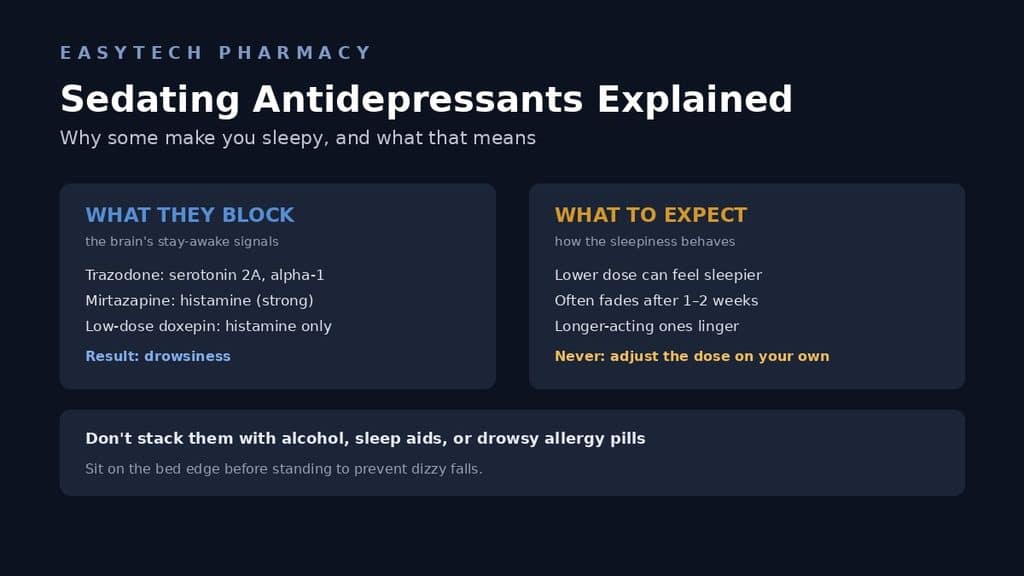
Sedating antidepressants puzzle a lot of people. Why does one antidepressant make you sleepy while another keeps you wide awake? And why can a smaller dose sometimes feel stronger than a bigger one? The answers come down to a few brain signals.
This guide explains how these medicines cause drowsiness, in plain English. You’ll also learn how long the sleepiness lasts, why it often fades, and how to handle morning grogginess.
What Makes an Antidepressant Sedating?
Antidepressants act on chemical messengers in the brain. Some of those messengers help keep you alert. When a medicine blocks them, drowsiness follows. In many cases, that drowsiness is a side effect, not the main goal.
Three “alertness signals” matter most:
- Histamine: a key “stay awake” signal in the brain
- Serotonin 2A: a serotonin pathway that affects deep sleep and wakefulness
- Alpha-1: a signal linked to alertness and blood pressure
Each calming antidepressant blocks a different mix of these signals. That mix shapes how sleepy it makes you and which side effects show up.
Sedating Antidepressants, One by One
Trazodone: Blocks Serotonin 2A and Alpha-1
Trazodone blocks the serotonin 2A pathway, which promotes deeper sleep. It also blocks alpha-1, which adds drowsiness but can cause dizziness when you stand up. That’s why falls are a concern, especially for older adults. The MedlinePlus trazodone page lists its main side effects. Compare it in trazodone vs Ambien.
Mirtazapine: Blocks Histamine Strongly
Mirtazapine strongly blocks histamine, much like a drowsy allergy pill. That’s why it causes deep sleepiness and a bigger appetite. The MedlinePlus mirtazapine page covers its uses and warnings. Weight gain is a real concern, a topic our post on sleep aids and weight gain explores.
Low-Dose Doxepin: A Targeted Histamine Blocker
At tiny doses, doxepin blocks histamine almost exclusively. That focused action helps people stay asleep with fewer side effects. Learn more in doxepin vs Ambien.
Amitriptyline and Other Tricyclics: Block Many Signals
These older medicines block histamine, alpha-1, and acetylcholine all at once. As a result, they cause drowsiness plus dry mouth, constipation, blurry vision, and confusion in older adults.
The Low-Dose Paradox of Calming Antidepressants
Here’s something that surprises many people. With some calming antidepressants, a lower dose can feel more sedating than a higher one.
Mirtazapine shows this best. At low doses, its histamine-blocking effect dominates, so drowsiness is strong. At higher doses, other effects that boost alertness kick in and partly balance it out. Trazodone works in a similar way. Low doses mostly cause sleepiness, while higher doses add stronger mood effects.
That’s why the same medicine can act like a sleep aid at one dose and an antidepressant at another. It’s also why you should never adjust a dose on your own.
How Long Antidepressants That Cause Drowsiness Last
Every medicine has a half-life, which is roughly how long your body takes to clear half of it. A longer half-life means drowsiness may carry into the next morning.
- Shorter-acting: trazodone tends to wear off sooner for many people
- Longer-acting: mirtazapine and tricyclics often linger into the next day
Our guide on short-acting vs long-acting sleep medications explains how half-life shapes your morning.
Why the Sleepiness Often Fades
Many people feel very drowsy during the first week or two. Then the effect softens. Your brain adapts to the blocked histamine signal over time.
For some, that’s good news, because daytime grogginess eases. For others who rely on the medicine for sleep, it means the effect may weaken. If that happens, talk with your pharmacist rather than taking more.
When Drowsiness Is the Goal vs a Side Effect
The same drowsiness can help one person and bother another. It all depends on why someone takes the medicine.
- When sleep is the goal: drowsiness at bedtime is the whole point, so the dose usually goes at night
- When mood is the goal: drowsiness is a side effect, so timing and dose may need tweaks
- When both matter: one calming medicine may ease low mood and poor sleep together
Knowing which camp you fall into helps you judge whether the drowsiness is helping or hurting.
Handling Side Effects of Sleepy Antidepressants
Morning Grogginess
- Take the dose earlier in the evening, if your care team agrees
- Allow a full night in bed after each dose
- Skip driving until you know how it affects you
Dizziness When Standing
- Sit on the edge of the bed for a moment before standing
- Use night-lights for bathroom trips
- Drink enough water during the day
Dry Mouth and Constipation
- Sip water and chew sugar-free gum
- Add fiber and stay active
Don’t Stack Sedating Antidepressants With Other Sleep Aids
Drowsiness adds up quickly. Combining a calming antidepressant with alcohol, sleep aids, or drowsy allergy pills raises the risk of falls and next-day impairment.
- Alcohol: worsens drowsiness and sleep quality. See our guide on mixing sleep aids and alcohol.
- Drowsy antihistamines: block the same histamine signal. Our Ambien vs Benadryl post explains this group.
- Other sleep medicines: always ask your pharmacist before combining them.
Sedating Antidepressants and Older Adults
Older adults feel these effects more strongly. Tricyclics and paroxetine carry extra risks because they block acetylcholine, which affects memory and balance. Low-dose doxepin often fits better. Our guide to the safest sleep medication for elderly patients ranks the options.
Questions to Ask About Calming Antidepressants
- Which alertness signals does my medicine block?
- How long will the drowsiness last each day?
- Should I take it earlier in the evening?
- Does it interact with my other medicines or supplements?
- What should I do if the sleepiness fades?
Where to Learn More
Want to know which options help sleep most, and when? Our overview of antidepressants that help with sleep covers that. For SSRIs specifically, read our guide to the best SSRI for sleep.
FAQs: Sedating Antidepressants Explained
Which antidepressant is the most sedating?
Mirtazapine and older tricyclics like amitriptyline tend to cause the most drowsiness. Trazodone is also strongly calming at low doses.
Why does a lower dose of mirtazapine make me sleepier?
At low doses, its histamine-blocking effect dominates. At higher doses, other alerting effects partly balance it out.
Will the drowsiness go away?
Often, yes. Many people feel less drowsy after one to two weeks as the brain adapts.
Are sedating antidepressants addictive?
They generally don’t cause the same dependence as some sleep aids. Still, stopping suddenly can cause discontinuation symptoms, so a slow taper helps.
Can I drive on a sedating antidepressant?
Wait until you know how it affects you. Morning drowsiness can slow your reactions, even when you feel alert.
Bottom Line — Understand the Signal, Manage the Side Effect
Sedating antidepressants cause drowsiness by blocking alertness signals like histamine, serotonin 2A, and alpha-1. That explains why each one feels different, why low doses can feel stronger, and why sleepiness often fades. Know your medicine, time it well, and never stack it with other sedatives without advice.
If a sleep aid becomes part of your plan, our Ambien near me guide shows how to find a local pharmacy and compare prices.