Ambien Overdose: Signs and Effects You Need to Recognize
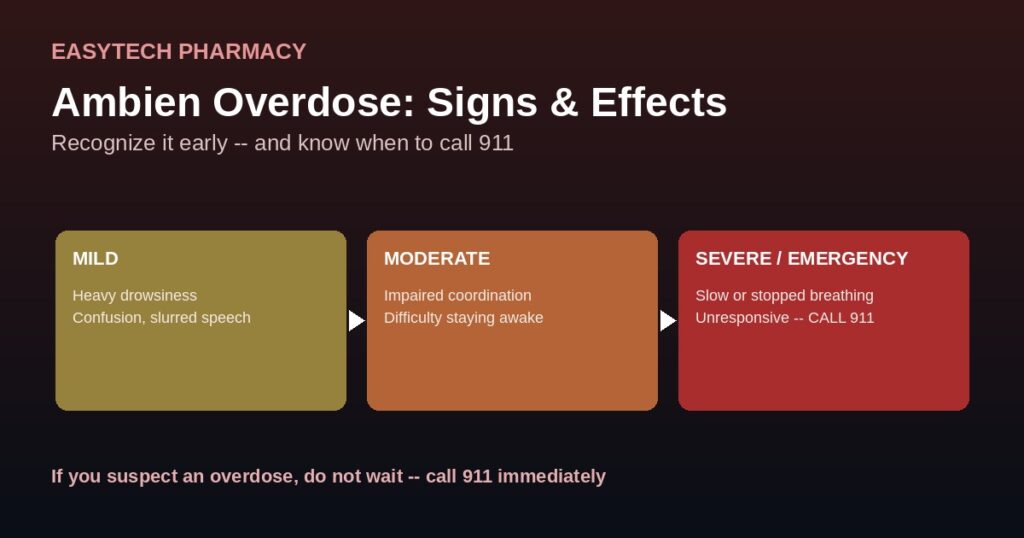
Most overdoses involving Ambien aren’t dramatic movie scenes. They start quietly, sometimes as confusion that looks like ordinary grogginess, sometimes as a second dose taken without any memory of the first. Knowing what to actually watch for, and how the signs escalate, makes the difference between catching it early and missing it until it’s a genuine emergency.
This guide covers the real signs of Ambien overdose, why it happens more easily than people expect, and exactly what to do if you suspect it’s happening.
How an Overdose Actually Happens
Overdose doesn’t always mean someone deliberately took too much. Zolpidem’s well-documented amnesia effect means people sometimes take a second dose with no memory of taking the first. This accidental pattern is genuinely common. Our guide on does Ambien cause memory loss explains exactly why this happens.
Combining zolpidem with alcohol or other sedating medications is another major factor. These substances stack on top of each other, and a dose that would be manageable alone becomes dangerous in combination. Our guide on Ambien and alcohol covers this interaction directly.
Mild Signs: The Early Warning Stage
These signs often get mistaken for ordinary next-day grogginess, which is exactly why they’re worth knowing clearly.
- Unusually heavy drowsiness, beyond typical sedation
- Confusion or disorientation that doesn’t clear quickly
- Slurred speech
- Noticeable clumsiness or poor coordination
On their own, these signs might not signal a full overdose. But they’re worth taking seriously, especially if they appear alongside a known extra dose or a combination with alcohol.
Moderate Signs: When It’s Escalating
These signs indicate the situation is progressing beyond mild sedation.
- Difficulty staying awake, even with active attempts to rouse the person
- Significantly impaired coordination, well beyond normal grogginess
- Unusual or shallow-seeming breathing patterns
- Low blood pressure, sometimes noticeable as dizziness or a weak pulse
At this stage, don’t wait to see if things improve. Move toward getting help rather than continuing to monitor at home.
Severe Signs: This Is a Medical Emergency
These signs mean immediate emergency action, without hesitation.
- Slowed, shallow, or stopped breathing
- Unresponsiveness, or inability to wake the person
- Bluish tint to the lips, fingertips, or skin
- Loss of consciousness
If you see any of these signs, call 911 immediately. Don’t wait, and don’t try to manage this at home.
Why Combined Overdoses Are Especially Dangerous
Zolpidem alone carries real overdose risk, but combined overdoses are significantly more dangerous and harder to predict. Alcohol, opioids, and other sedatives all depress the central nervous system through their own mechanisms, and together with zolpidem, these effects compound rather than simply add up.
One important detail: naloxone, the medication that reverses opioid overdoses, doesn’t work on zolpidem itself. Our guide on is Ambien an opiate explains why. If someone has taken zolpidem alongside an opioid, naloxone might address part of the danger, but the situation still needs full emergency medical response.
Who Faces Higher Risk
- Older adults — bodies process zolpidem more slowly with age, and standard doses can affect older adults more strongly. Our guide on Ambien side effects in elderly patients covers this in detail
- Anyone taking multiple sedating medications — the combined effect isn’t always obvious until it’s already dangerous
- People experiencing memory gaps around dosing — this specific pattern is a real, documented cause of accidental redosing
- Anyone combining zolpidem with alcohol, even occasionally — this risk applies regardless of how long someone has used the medication safely before
What to Do If You Suspect an Overdose
- Call 911 immediately if you notice any severe signs, or if you’re genuinely unsure how serious the situation is. Err on the side of calling
- Stay with the person until help arrives. Don’t leave them alone
- Turn them on their side if they’re unconscious but breathing, to help prevent choking if they vomit
- Gather information for responders — what was taken, roughly how much, and when, along with any other substances involved
- Don’t try to induce vomiting. This can cause additional harm and isn’t a recommended response
- Don’t assume they can simply sleep it off. This is one of the most dangerous and common misconceptions about sedative overdose
For guidance in situations that don’t yet feel like a clear emergency, Poison Control offers free, confidential support around the clock at 1-800-222-1222. They can help you assess the situation and advise on next steps.
After the Emergency: What Comes Next
An overdose, even a non-fatal one, is worth treating as a serious signal rather than an isolated incident. If it happened because of accidental redosing tied to memory gaps, that’s worth discussing directly with a pharmacist. If it happened because of a broader pattern of misuse, our guide on Ambien abuse and our overview of zolpidem addiction cover what to look at next, and our guide on Ambien addiction treatment options covers what real support looks like going forward.
If the plan moving forward involves stopping the medication, that should happen safely and gradually rather than abruptly. Our guide on how to stop Ambien safely walks through that process.
Frequently Asked Questions
What are the signs of an Ambien overdose?
Signs range from extreme drowsiness and confusion at the mild end, to impaired coordination and trouble staying awake as it escalates, up to slowed or stopped breathing, unresponsiveness, and loss of consciousness at the severe stage. Severe signs require immediate emergency care.
Can you accidentally overdose on Ambien?
Yes, and it’s genuinely common. Zolpidem’s documented amnesia effect means people sometimes take a second dose without remembering the first, which is one of the more frequent causes of accidental overdose.
Does naloxone work on an Ambien overdose?
No, not on its own. Naloxone specifically reverses opioid overdoses. If zolpidem is combined with an opioid, naloxone may help with the opioid component, but the full situation still needs emergency medical care.
What should I do if I suspect someone has overdosed on Ambien?
Call 911 immediately if you notice severe signs like slowed breathing or unresponsiveness. Stay with the person, turn them on their side if unconscious, and give responders as much information as possible about what was taken.
Is an Ambien overdose more dangerous with alcohol?
Significantly, yes. Alcohol and zolpidem both depress the central nervous system, and combining them raises overdose risk well beyond what either substance carries alone.
Bottom Line — Know the Signs, Act Without Delay
Ambien overdose often builds gradually rather than announcing itself clearly, which makes recognizing the early and moderate signs genuinely important. If you notice severe symptoms like slowed breathing or unresponsiveness, call hospital immediately rather than waiting to see if things improve. And if an overdose happens, treat it as a signal worth following up on, not just an isolated event to move past quietly.
For local pharmacy access, our Ambien near me guide covers options across the world.
👉 Visit EasyTech Pharmacy — find the right sleep medication for your situation today.