Best SSRI for Sleep: How Each One Affects Your Nights
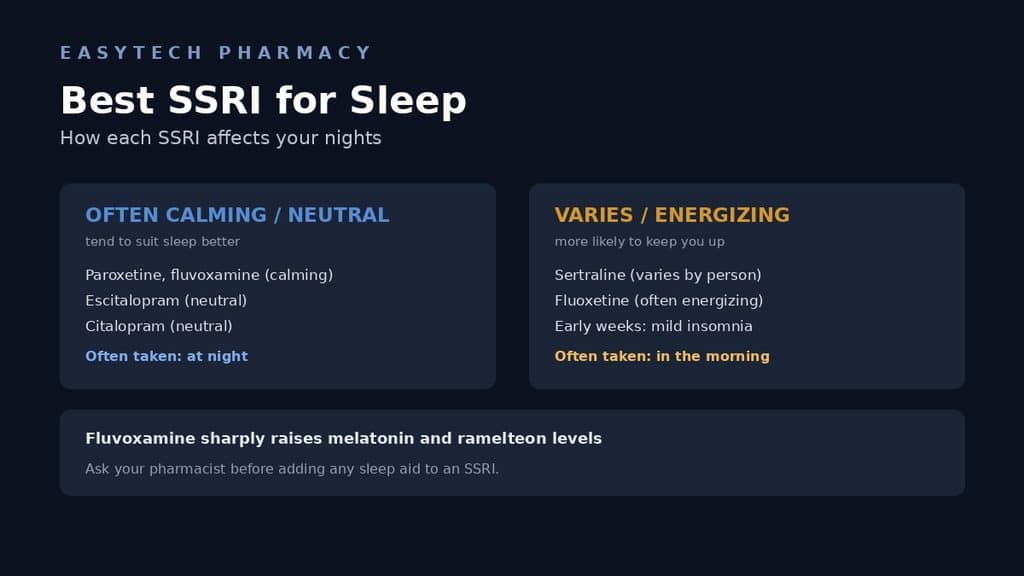
If you’re searching for the best SSRI for sleep, you’ve probably noticed something odd. Some people say their SSRI makes them drowsy. Others say it keeps them up all night. Both can be true, because each SSRI affects sleep in its own way.
This guide compares the common SSRIs side by side. You’ll learn which tend to feel calming, which feel neutral, and which feel energizing. You’ll also get simple fixes for SSRI sleep side effects.
How SSRIs and Sleep Interact
SSRIs raise serotonin levels in the brain to ease depression and anxiety. Serotonin also helps control sleep and dreaming. As a result, SSRIs can change sleep in several ways:
- They may cause trouble falling asleep, especially in the first few weeks
- They often reduce REM sleep, the dreaming stage
- Some people get vivid or strange dreams
- Others feel drowsy or tired during the day
Here’s the encouraging part. Treating depression or anxiety often improves sleep over time, even when the first weeks feel rocky. The National Institute of Mental Health explains how these medicines work.
Best SSRI for Sleep: Each Option Compared
Everyone responds differently. Still, each SSRI tends to follow a general pattern.
Paroxetine (Paxil): Often the Most Calming
Paroxetine tends to cause more drowsiness than other SSRIs. Many people take it at night for that reason. However, it can cause dry mouth, constipation, weight gain, and tough withdrawal symptoms. Experts also advise most older adults to avoid it.
Fluvoxamine (Luvox): Often Calming
Fluvoxamine often causes drowsiness, so people usually take it in the evening. It has an important catch, though. It sharply raises levels of melatonin and ramelteon in the body. That’s why you shouldn’t combine it with ramelteon. Learn more about ramelteon in our ramelteon vs Ambien guide.
Escitalopram (Lexapro): Usually Neutral
Escitalopram tends to sit in the middle. Some people feel a bit drowsy, while others notice mild insomnia. For many, it barely affects sleep at all.
Citalopram (Celexa): Usually Neutral
Citalopram works much like escitalopram. Most people find it fairly sleep-neutral, though a few feel tired or restless.
Sertraline (Zoloft): It Varies
Sertraline is unpredictable for sleep. Some people feel energized, while others feel sleepy. Your own response guides the best time to take it.
Fluoxetine (Prozac): Often the Most Energizing
Fluoxetine tends to feel activating, so it’s the SSRI most likely to cause insomnia. It also lasts a long time in the body. Most people take it in the morning.
Quick Ranking: SSRIs and Sleep
- Often calming: paroxetine, fluvoxamine
- Usually neutral: escitalopram, citalopram
- Varies by person: sertraline
- Often energizing: fluoxetine
Keep in mind that the “best” choice also depends on mood symptoms, side effects, other medicines, and age. Sleep is only one piece of the puzzle.
Common SSRI Insomnia and Sleep Side Effects
Even the best SSRI for sleep can cause some night-time changes at first. Most are mild, and many fade as your body adjusts. Knowing what to expect makes them less worrying.
Trouble Falling Asleep
This often shows up in the first two to four weeks. For many people, it eases as the body adjusts.
Vivid Dreams and Nightmares
Changes in REM sleep can make dreams feel intense or strange. Sleep aids can also change dreams, as our post on Ambien dreams and nightmares explains.
Restless Legs
Some people notice an urge to move their legs at night. Low iron can make this worse, as our guide to the right vitamin that promotes sleep explains.
Teeth Grinding
SSRIs can trigger jaw clenching or grinding during sleep. A dentist can fit a night guard if it causes pain.
Daytime Tiredness
Some people feel drained during the day, even after a full night. This often improves after a few weeks.
Track these changes in a simple sleep diary. Note when you take your SSRI, how long you sleep, and how you feel the next day. That record makes any review with your pharmacist far more useful.
Simple Fixes for SSRI Insomnia
- Change the timing. Take energizing SSRIs in the morning and calming ones at night.
- Give it a few weeks. Early sleep problems often fade on their own.
- Cut afternoon caffeine. It stacks with activating SSRIs.
- Keep a steady sleep routine. A fixed wake time helps your body adjust.
- Ask about a dose review. Sometimes a small change makes a big difference.
For more timing tips, see our guide on what medications keep you awake. Our list of drugs that cause insomnia covers other common culprits.
Combining an SSRI for Sleep With Sleep Aids
Some people add a sleep aid on top of their SSRI. A common pairing is a low dose of trazodone at night. Our trazodone vs Ambien guide compares that option with a standard sleep medicine.
Still, combinations need care. Drowsiness can add up, and some serotonin-boosting combinations raise the risk of serotonin syndrome. Watch for agitation, fast heartbeat, sweating, or muscle twitching, and seek help right away if they appear. Always ask your pharmacist before you add anything, even melatonin.
When an SSRI Isn’t the Best Fit for Sleep
Sometimes an SSRI treats mood well but leaves sleep poor. In that case, other antidepressants may suit you better. Our overview of antidepressants that help with sleep covers calming options outside the SSRI group.
Anxiety often plays a role too. Our post on whether Ambien helps with anxiety explains why sleep aids don’t treat the worry itself. For more on mood and sleep, read Ambien and depression risk.
Safety Notes When Using an SSRI for Sleep
- Never stop an SSRI suddenly, since a slow taper prevents discontinuation symptoms
- Report any worsening mood, especially in the first few weeks
- Avoid alcohol, which worsens both sleep and mood
SSRIs carry an FDA boxed warning about suicidal thoughts in people under 25. If you or someone you love has thoughts of self-harm, call or text 988 any time.
FAQs: Best SSRI for Sleep
Which SSRI is most sedating?
Paroxetine tends to cause the most drowsiness, followed by fluvoxamine. Both often fit best at night.
Which SSRI is least likely to cause insomnia?
Escitalopram and citalopram tend to be fairly sleep-neutral for many people.
Should I take my SSRI at night or in the morning?
It depends on how it affects you. If it keeps you up, try mornings. If it makes you drowsy, nights may work better.
Does SSRI insomnia go away?
Often, yes. Many people sleep better after two to four weeks as their body adjusts.
Can SSRIs cause weird dreams?
Yes. SSRIs change REM sleep, which can make dreams vivid or unusual.
Bottom Line — The Best SSRI for Sleep Depends on You
There’s no single best SSRI for sleep. Paroxetine and fluvoxamine tend to feel calming, escitalopram and citalopram stay fairly neutral, and fluoxetine often feels energizing. Smart timing, a little patience, and a pharmacist review usually solve most SSRI sleep problems.
If a sleep aid becomes part of your plan, our Ambien near me guide shows how to find a local pharmacy and compare prices.